On October 21, 1911, representatives from the Alberta, Saskatchewan, and Manitoba rugby football unions met at the King’s Hotel in Regina to form the Western Canada Rugby Football Union. The new league was considered to be the largest in the world in terms of geography, one that would eventually feature clubs from the entire territory “north of the 49th parallel from Lake Superior to the Pacific Coast” (Calgary Herald, 25 October 1911).
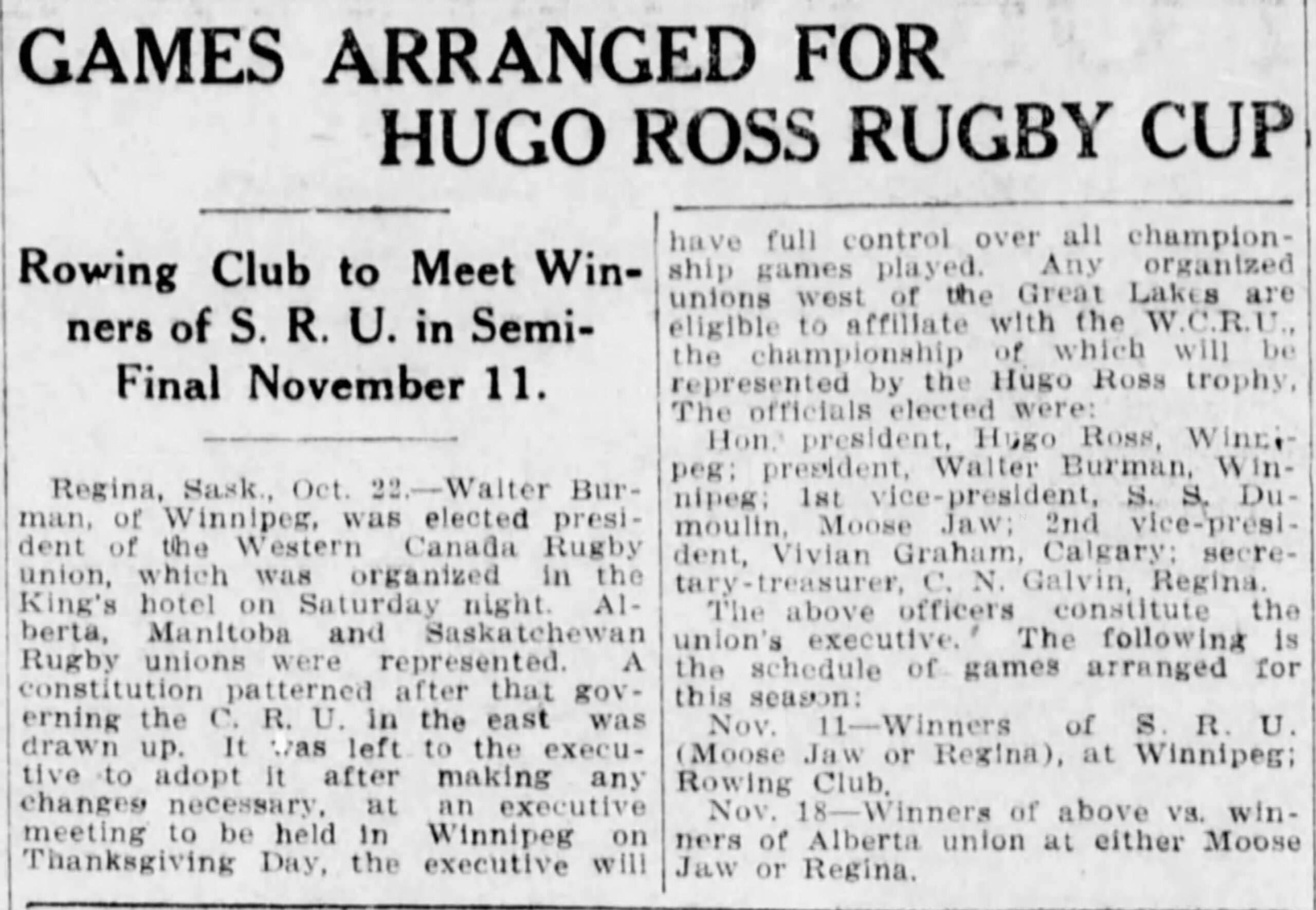
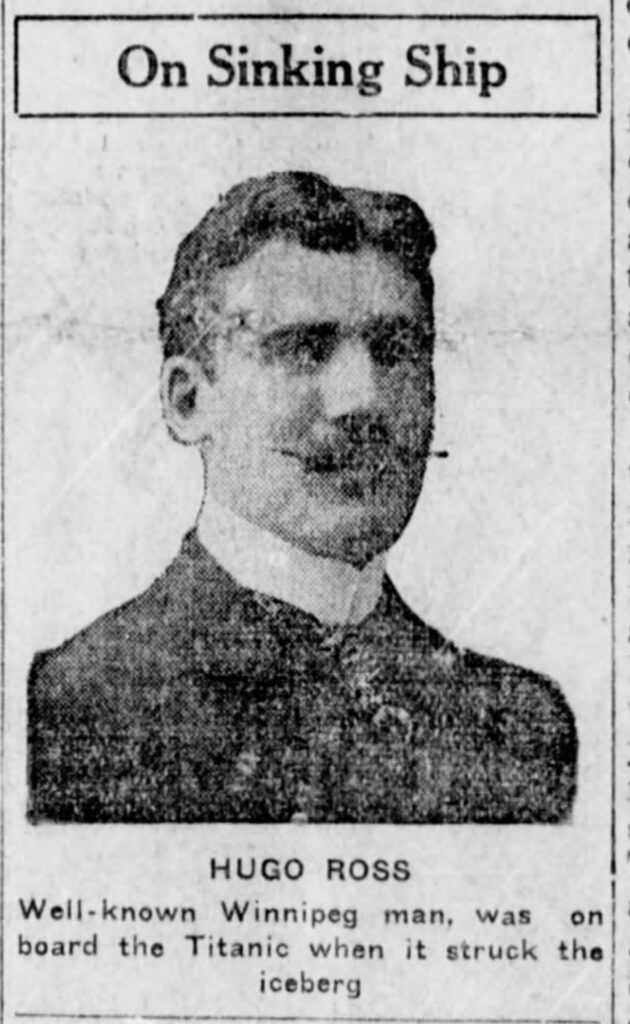
Article in the Winnipeg Tribune (23 October 1911) about the new WCRFU and Hugo Ross trophy.
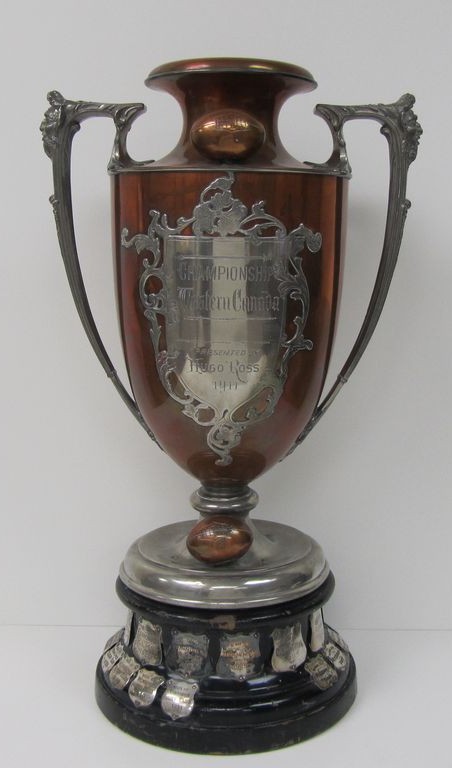
Hugo Ross, a Winnipeg-based real estate agent, served as the WCRFU’s honorary president. He donated a trophy bearing his name in time for the 1911 playoffs between the three provincial champions. The Hugo Ross trophy was branded as the amateur rugby championship of western Canada.
Representatives of the WCRFU devised a playoff system for 1911 where the Saskatchewan champion would travel to Manitoba to play the champion of that union. Alberta would host the winner of that game the following week.
Rules for the new Hugo Ross trophy championship of the WCRFU
The Regina Rugby Club were set to play the Winnipeg Rowing Club in the Hugo Ross cup semi-final at River Park in Winnipeg on November 11th. However, the game was cancelled due to the extreme cold. Winnipeg controversially claimed victory by way of default and earned their berth in WCRFU championship.
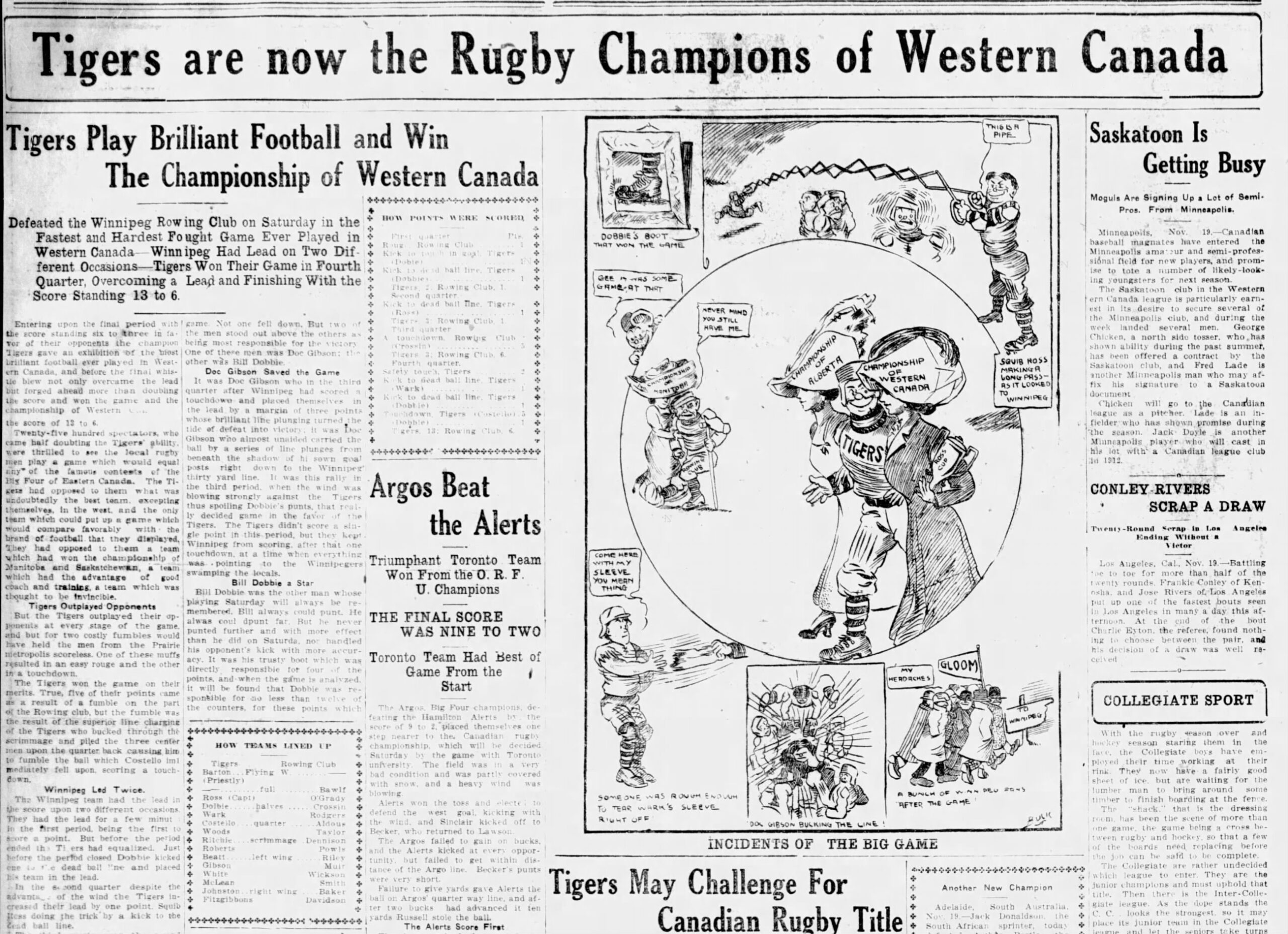
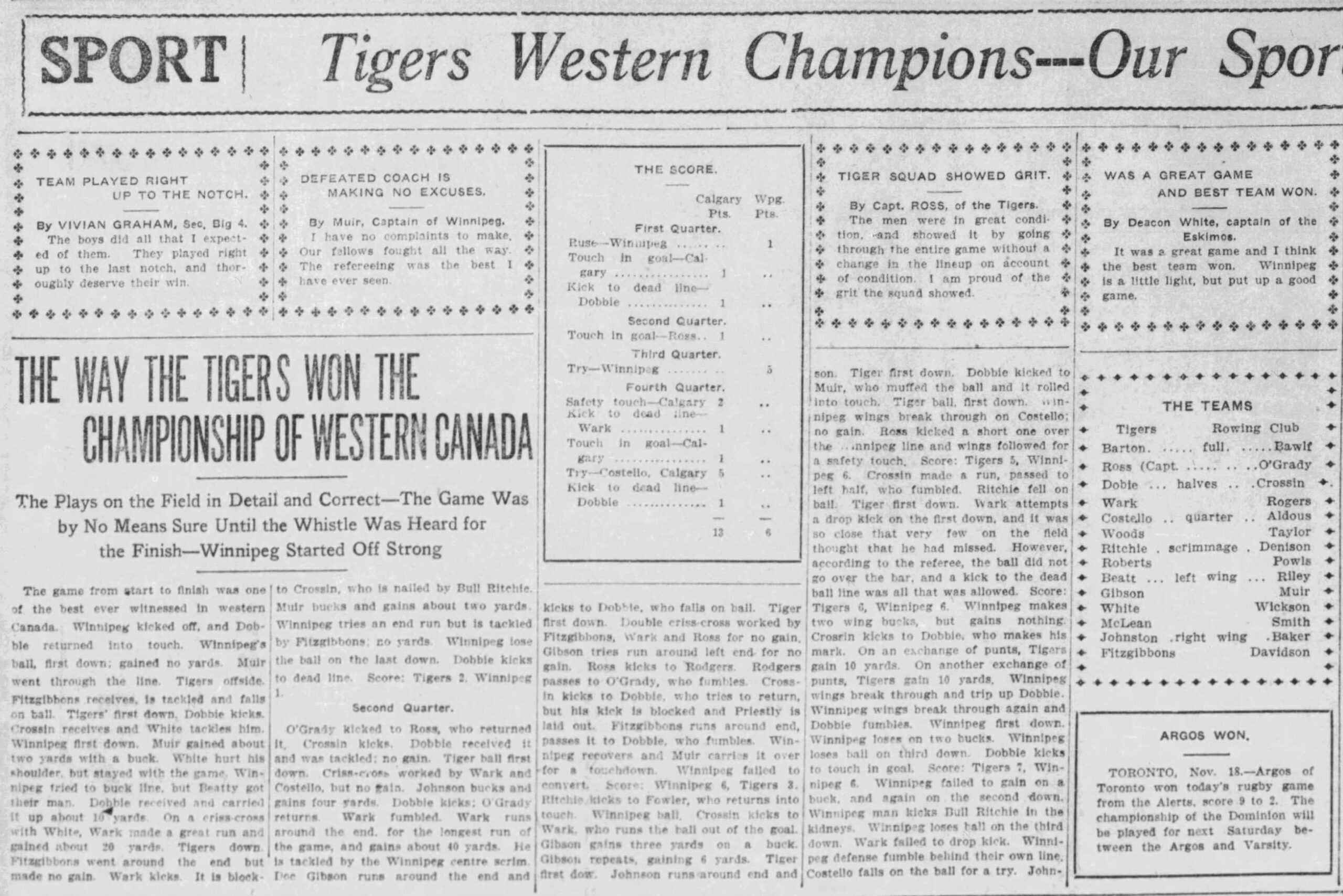
Coverage of the Tigers’ win in the Calgary Albertan (20 November 1911).Coverage of the Tigers’ win in the Calgary Herald (20 November 1911).
On Saturday November 18th, Winnipeg travelled to Calgary to play the hometown Tigers. The Calgary Albertan described the contest as the “fastest and hardest fought game ever played in Western Canada.” The Tigers came from behind in the fourth quarter to win the game by a score of 13 to 6, becoming the first winners of the Hugo Ross trophy.
The Hugo Ross Trophy (photo: Canadian Football Research Society)
The following year, Hugo Ross died in the Titanic disaster. But his trophy continued to be the symbol of western Canadian football dominance up until 1948 when it was replaced by the N.J. Taylor Trophy as the championship of the Western Interprovincial Football Union.
Sources: The Calgary Albertan, 20 November 1911 The Calgary Herald, 20 November 1911 The Edmonton Journal, 14 November 1911 The Winnipeg Tribune, 23 October 1911 The Winnipeg Tribune, 6 November 1911
In the Spring of 1948, the Hamilton Tigers shocked the Canadian football world when they announced their withdrawal from the Interprovincial Rugby Football Union. A founding member of the league also known as the Big Four, the Tigers traced their roots back to 1869. They were undoubtedly the face of Hamilton football.
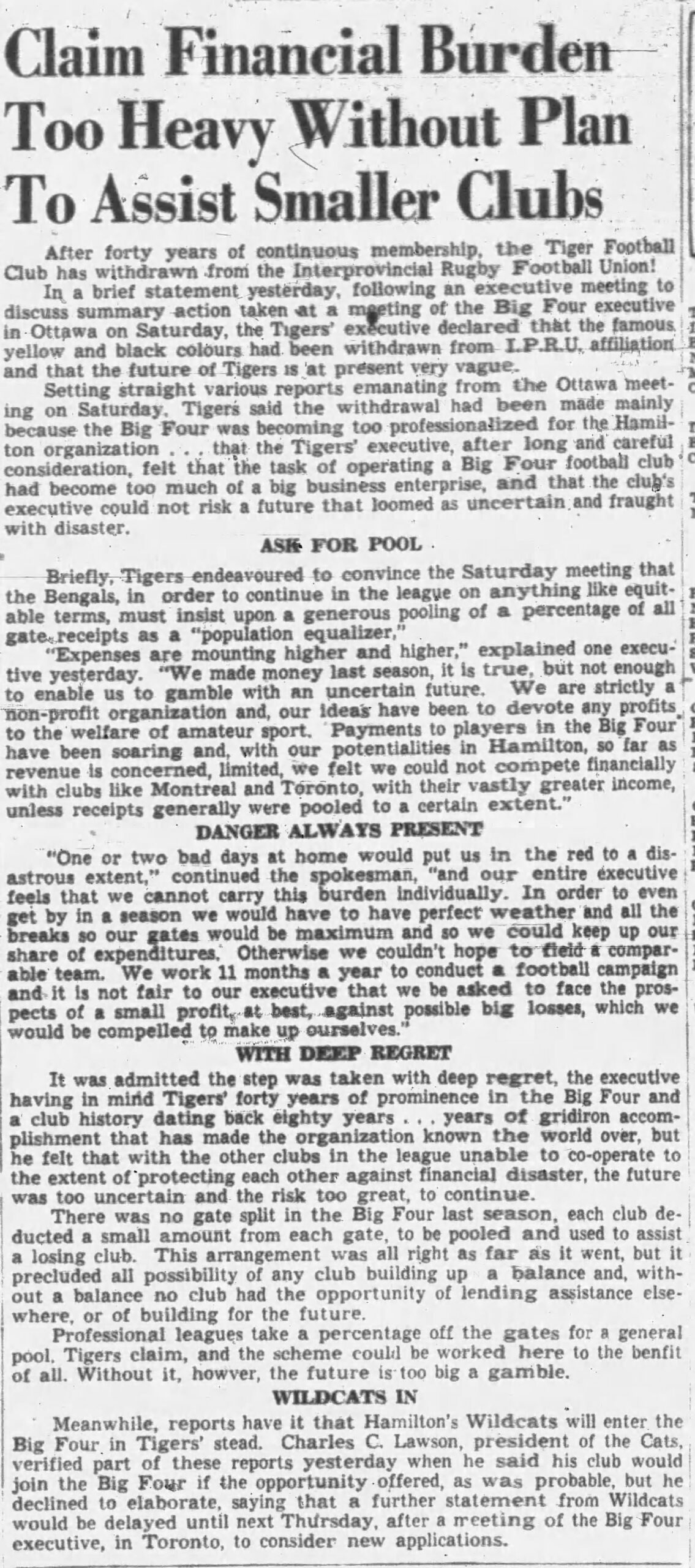
Hamilton Spectator article about the Tigers’ leaving the IRFU (22 March 1948).
Like other teams in the IRFU, the Tigers temporarily disbanded during the Second World War. However, the Ontario Rugby Football Union, one of the other three major football leagues at the time, carried on. Hamilton had a team in the ORFU, as well – the Hamilton Wildcats. The Wildcats helped fill the void for Hamilton football fans in the absence of the Tigers.
Once the war ended and a sense or normalcy returned, the IRFU resumed operations. Suddenly, Hamilton had not one but two top tier football teams to root for. But sometimes more is not necessarily merrier.
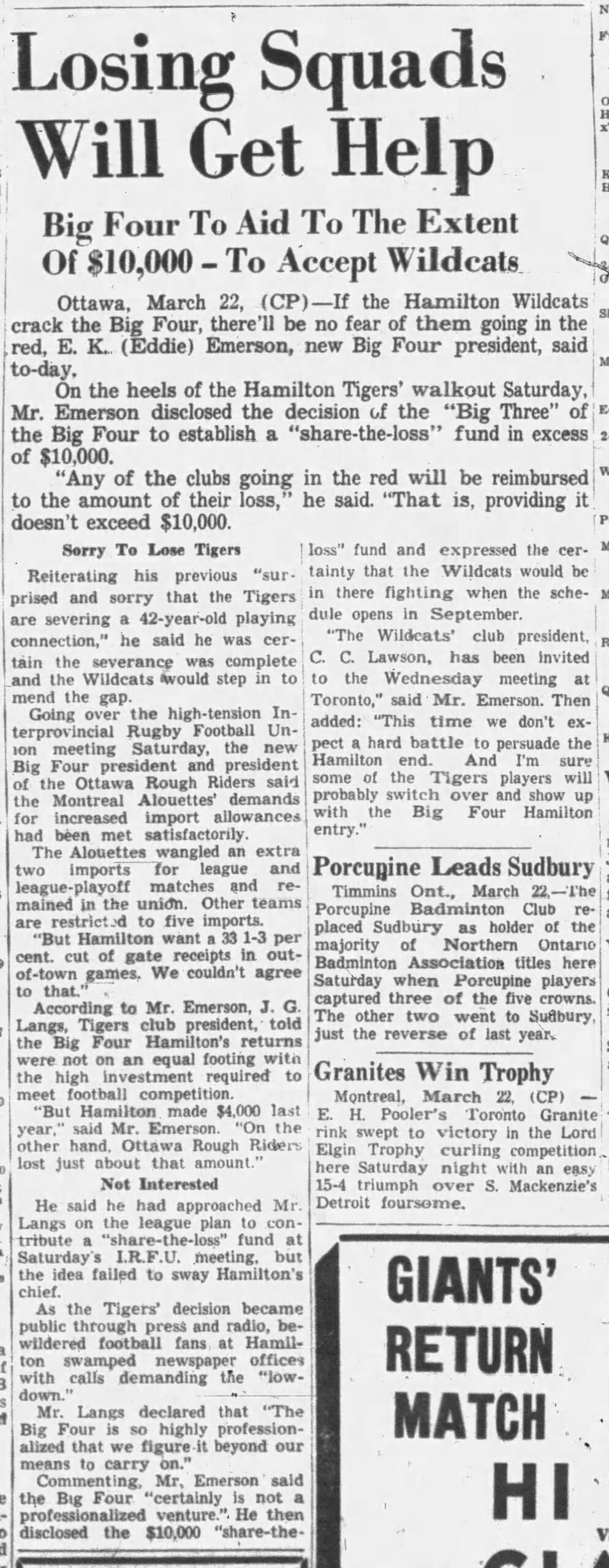
Faced with competition from the ORFU’s Wildcats and being at odds with fellow IRFU clubs when it came to revenue sharing, the Tigers found themselves in a precarious financial position. The team did make money but had a harder time competing against the larger clubs in Toronto and Montreal. The Tigers advocated for a scheme that would have IRFU teams split revenue by giving the visiting team up to a third of game day receipts. The other IRFU teams rejected the idea and instead offered up a $10,000 “share the loss” fund that would, in effect, reimburse teams operating in the red up to $10,000.
The IRFU’s “share the loss” scheme to assist smaller clubs (Hamilton Spectator, 22 March 1948)
The Tigers and IRFU found themselves at a stalemate. At an IRFU meeting held at the Chateau Laurier in Ottawa on Saturday March 20, 1948, the Tigers announced they were quitting the Big Four. Tigers President J.G. Langs suggested the IRFU was becoming too professional and that the rising costs of competing couldn’t be offset without a more generous revenue sharing model. The Tigers’ abrupt withdrawal set off a chain reaction that would create some rather interesting drama in the days ahead.
Almost immediately, reports began to circulate that the Wildcats would join the IRFU as Hamilton’s Big Four replacement team. At the time, they were arguably the best team in the ORFU and felt a jump to the IRFU would be a seamless transition. (Unfortunately, they struggled in the IRFU and won only a single game in their two seasons of play in that league.)
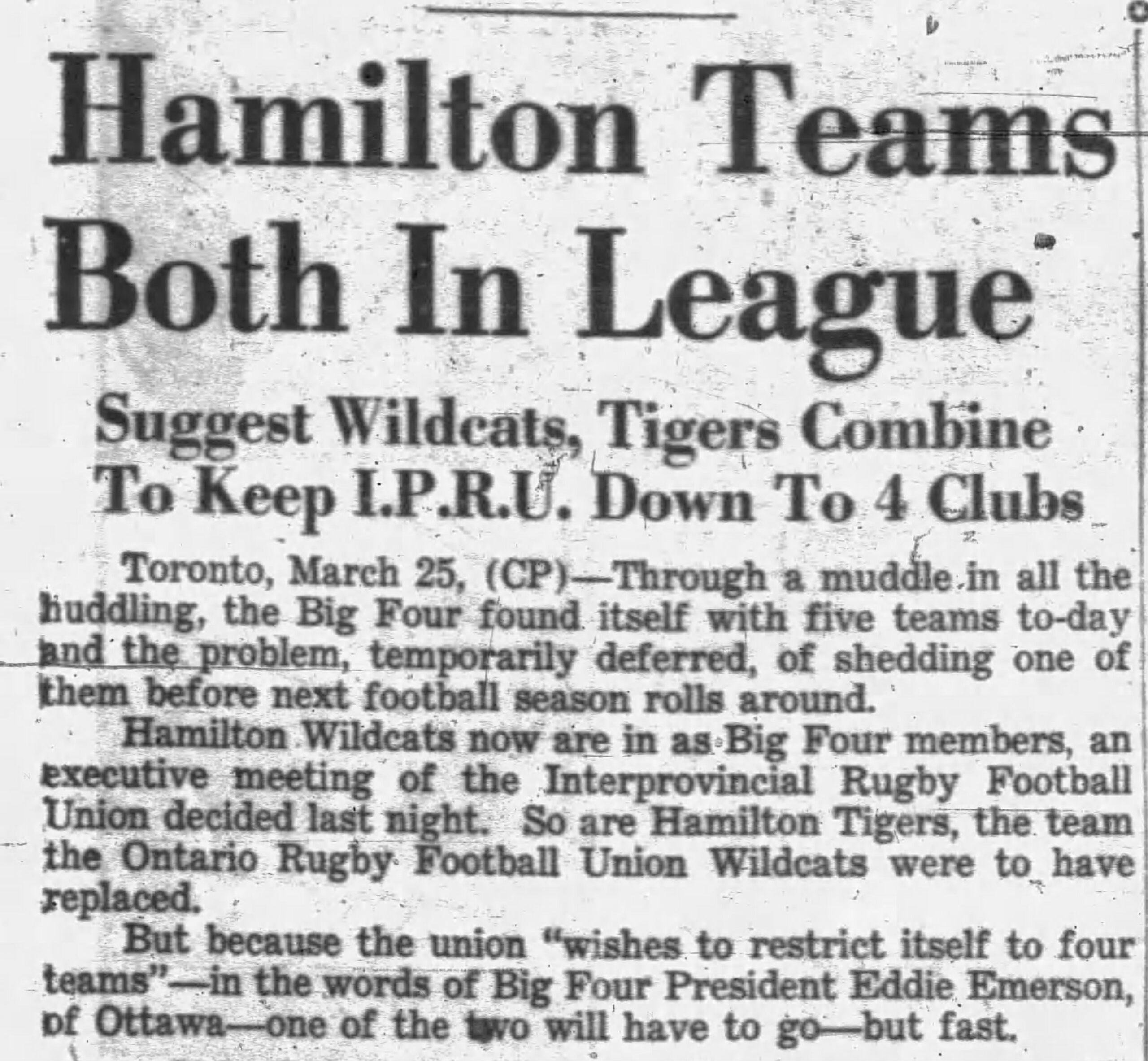
IRFU officials met again in Toronto to formally admit the Wildcats into the Big Four. Faced with mounting pressure from Hamilton fans, the Tigers withdrew their withdrawal and insisted on staying in the Big Four circuit. Their re-entry was approved. However, in a seemingly comedy of errors, it turns out that the IRFU had already admitted the Wildcats previously when the Tigers originally quit. So, the Big Four now had five teams, two in Hamilton.
Two Hamilton teams in the Big Four?
Although there were rumours of admitting a sixth team (likely Toronto Balmy Beach) to create a “Big Six” the IRFU executive team insisted on maintaining a four-team loop. They were adamant that one of the Hamilton teams had to go.
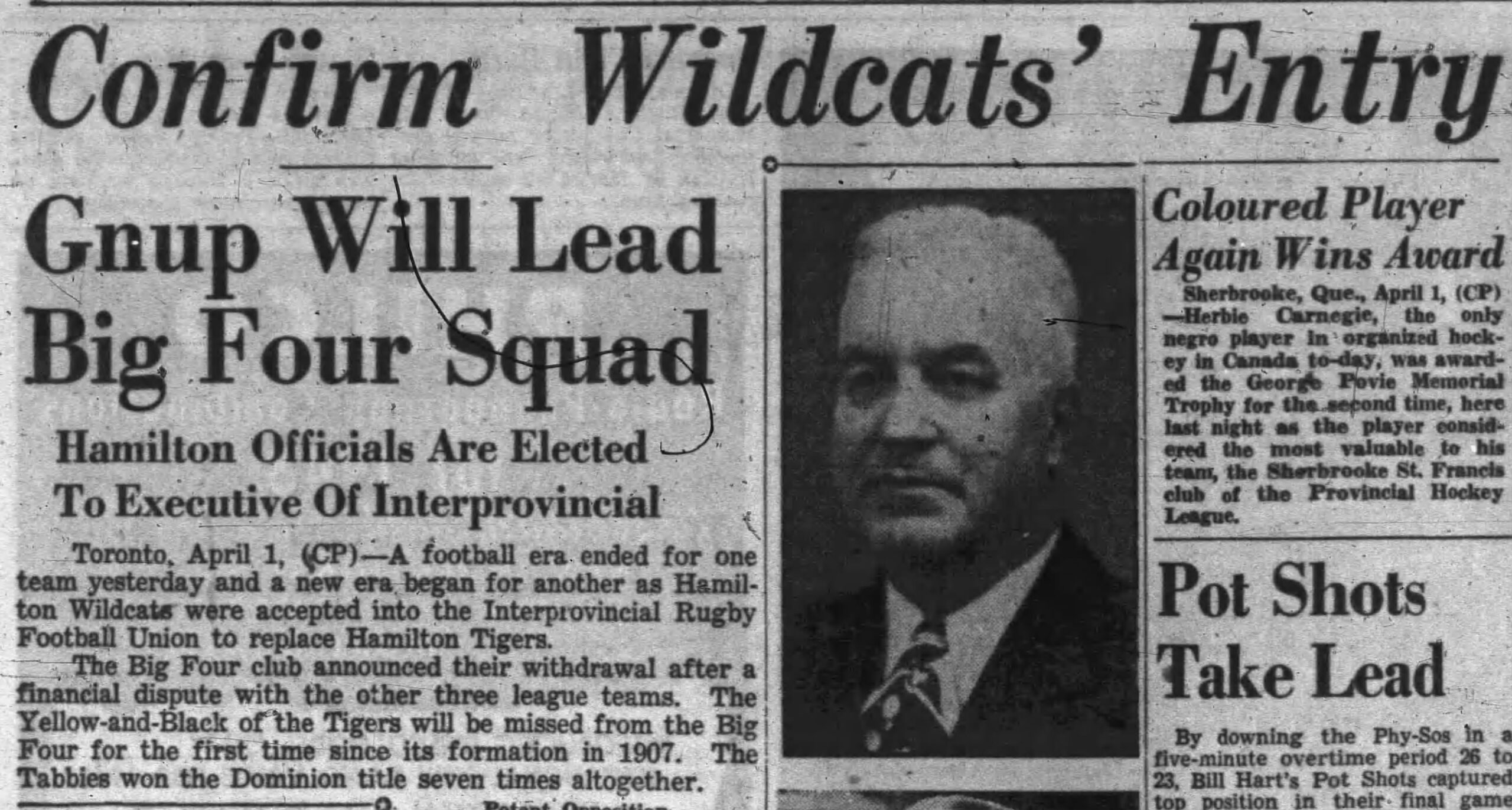
Hamilton Wildcats were finally confirmed into the IRFU (Hamilton Spectator, 1 April 1948).
IRFU president Eddie Emerson was tasked with finding a solution. The “ideal” solution, it appeared, was for the Wildcats and Tigers to unite as one team in the Big Four. But the notion was nixed by both teams. In the lead up to what could have been one of the more dramatic football meetings the country has ever seen, the Tigers announced that they would no longer seek to stay in the IRFU, saving a potential showdown with football executives. Eddie Emerson was surely relieved. Instead, the Tigers would take the Wildcats’ place in the ORFU.
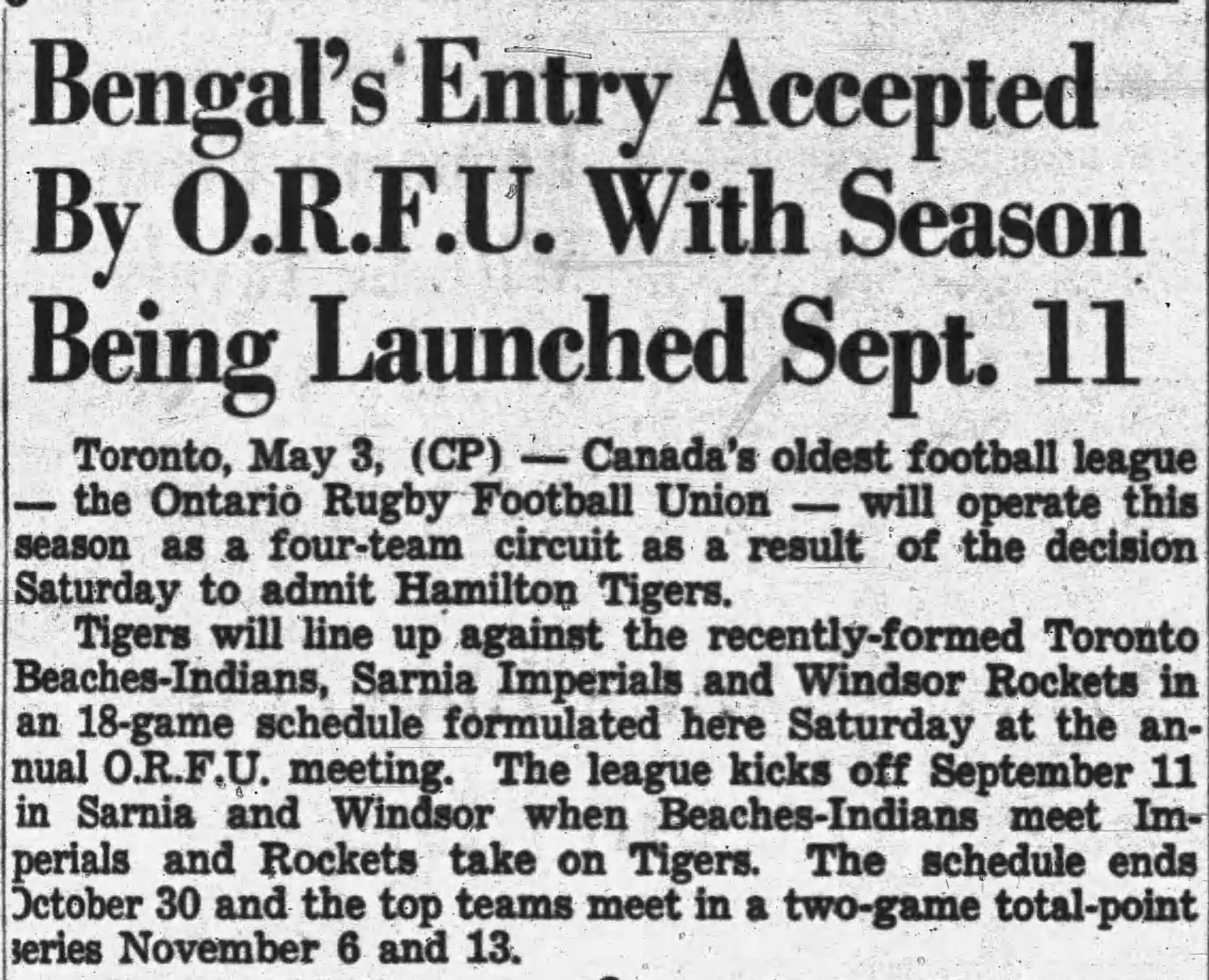
Hamilton Tigers joined the ORFU for the 1948 season (Hamilton Spectator, 3 May 1948)
So, for two seasons – 1948 and 1949 – the Wildcats and Tigers played football in their new respective leagues. As mentioned earlier, the Wildcats struggled significantly in the Big Four. The Tigers fared better, at least on the field, finishing in first place in the ORFU. Off the field was another matter altogether. It was abundantly clear that Hamilton just couldn’t support two football teams in the increasingly professional era. As financial losses mounted, a group of Hamilton citizens revisited the idea of merging the two teams. In 1950, the original “ideal” solution was finally realised – the Tigers and Wildcats amalgamated and became the Hamilton Tiger-Cats.
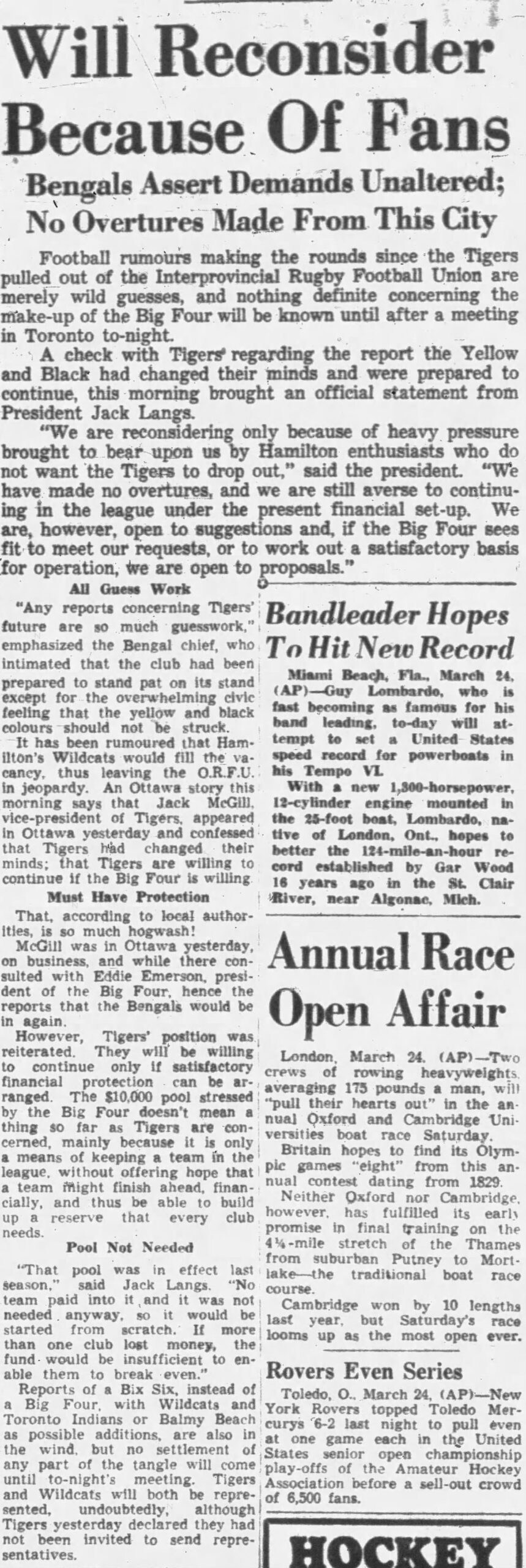
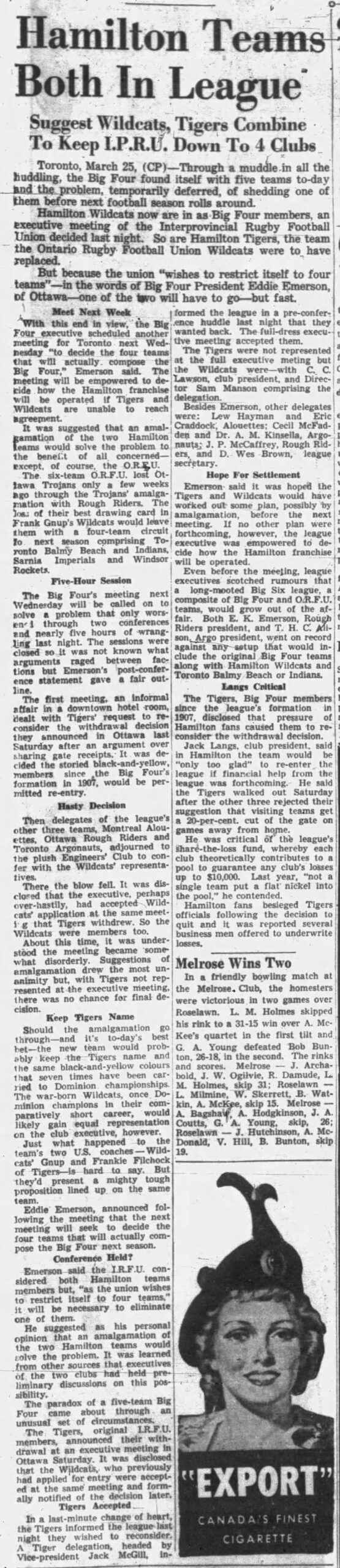
Articles in the Hamilton Spectator about the Tigers wanting to stay in the IRFU and the the meetings that ended with both Hamilton teams briefly being in the Big Four.
Sources: The Hamilton Spectator, 22 March 1948 The Hamilton Spectator, 24 March 1948 The Hamilton Spectator, 25 March 1948 The Hamilton Spectator, 1 April 1948 The Ottawa Citizen, 31 March 1948
At high school in the mid 1990s we were asked to use a new technology called the “World Wide Web” for a research project. Yours truly balked and wanted to stick with the tried-and-true volumes of Encyclopedia Britannica. I told my friend that I would give it a go but that the Internet was nothing more than a mere fad, something that would surely pass. Over thirty years later, here I am writing an article online publicly admitting that ridiculous prediction of mine.
I slowly came around to the web. The early web was an imperfect place full of imperfect homepages and websites. There were no algorithms, no ads, and no AI. Ah, serenity! Over time, I became fascinated with it, eager to “surf the web” and explore new things on the so-called information highway and to connect with others across Canada and around the world. The CFL’s presence on the World Wide Web played a large part in my gradual acceptance and adoption of this new technology. I was a new football fan, and I wanted to consume football content.
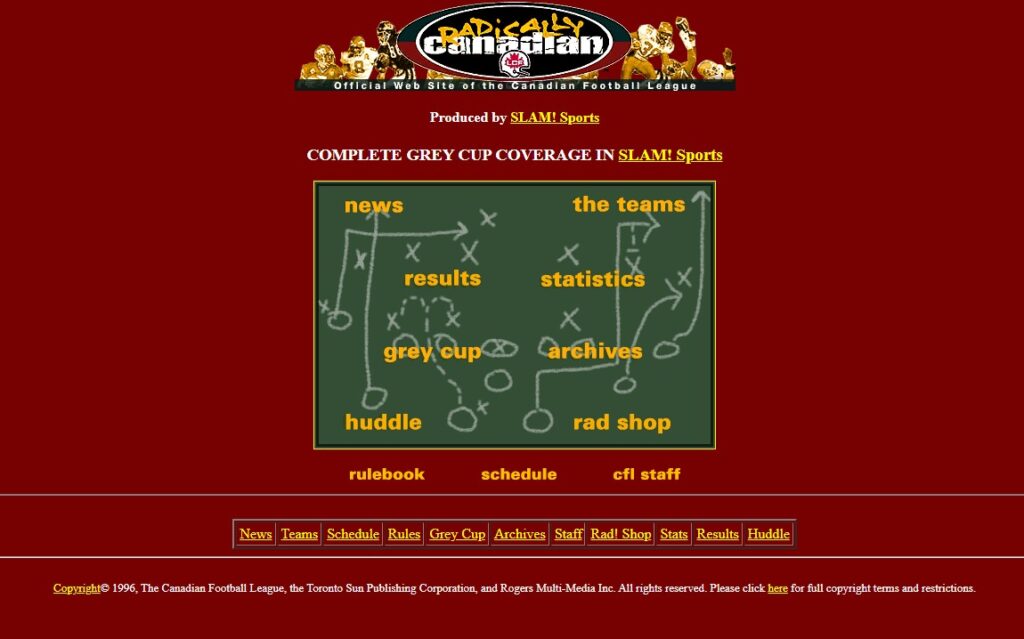
The CFL’s homepage in 1996
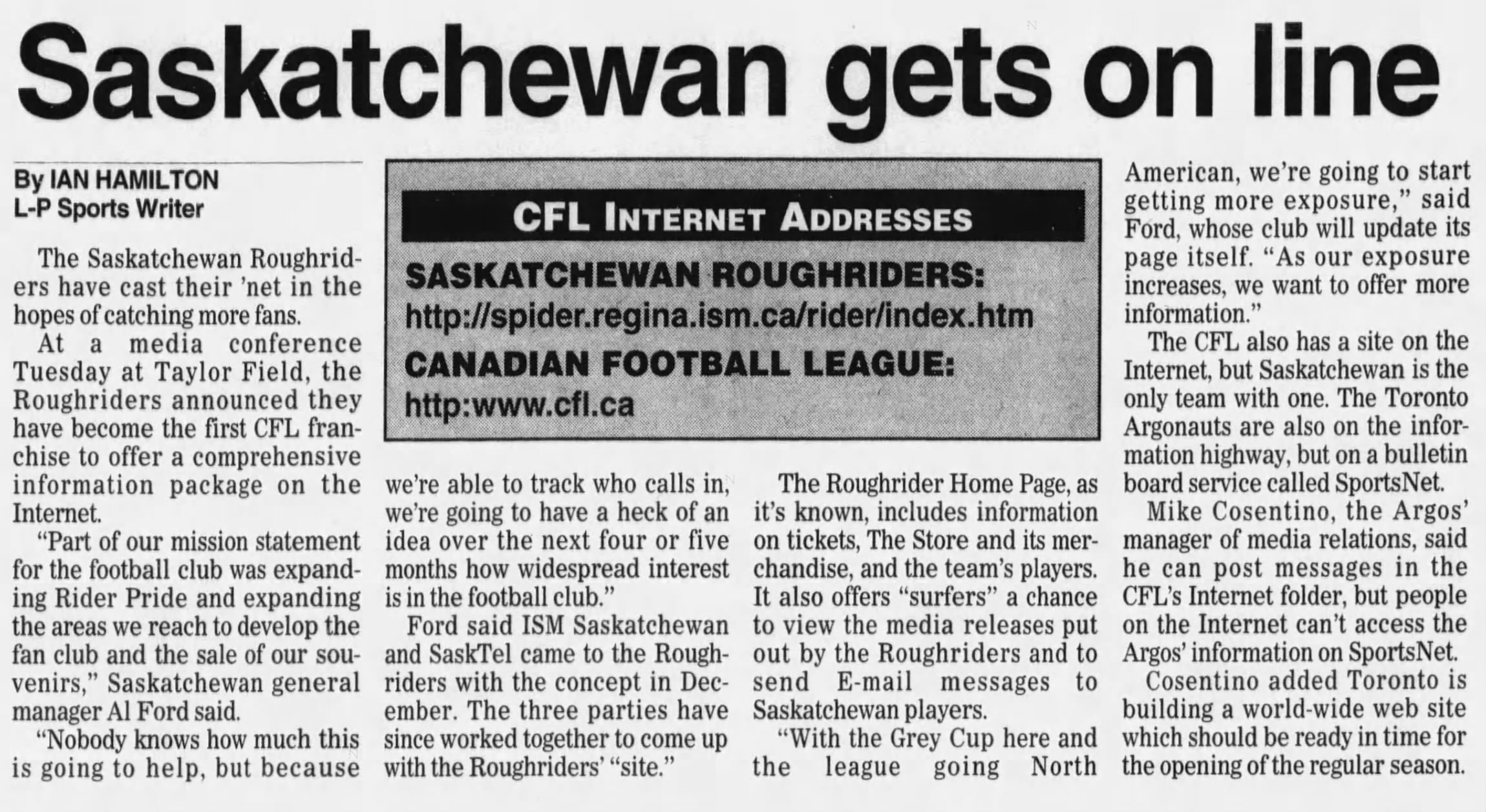
The Canadian Football Leagued launched its CFL.ca website just prior to the 1995 season. Like most websites of this era, it consisted largely of blocks of text with some limited graphics. Remember, people connected to the Internet via dial-up in those days. The site comprised simple static pages featuring team information, schedules, game scores, and statistics. The Saskatchewan Roughriders were the first team to launch an official website. The Riders went online in May of that year, a site that would eventually become riderville.com.
Article in the Regina Leader-Post about the Saskatchewan Roughriders becoming the first CFL team to have its own website (31 May 1995).
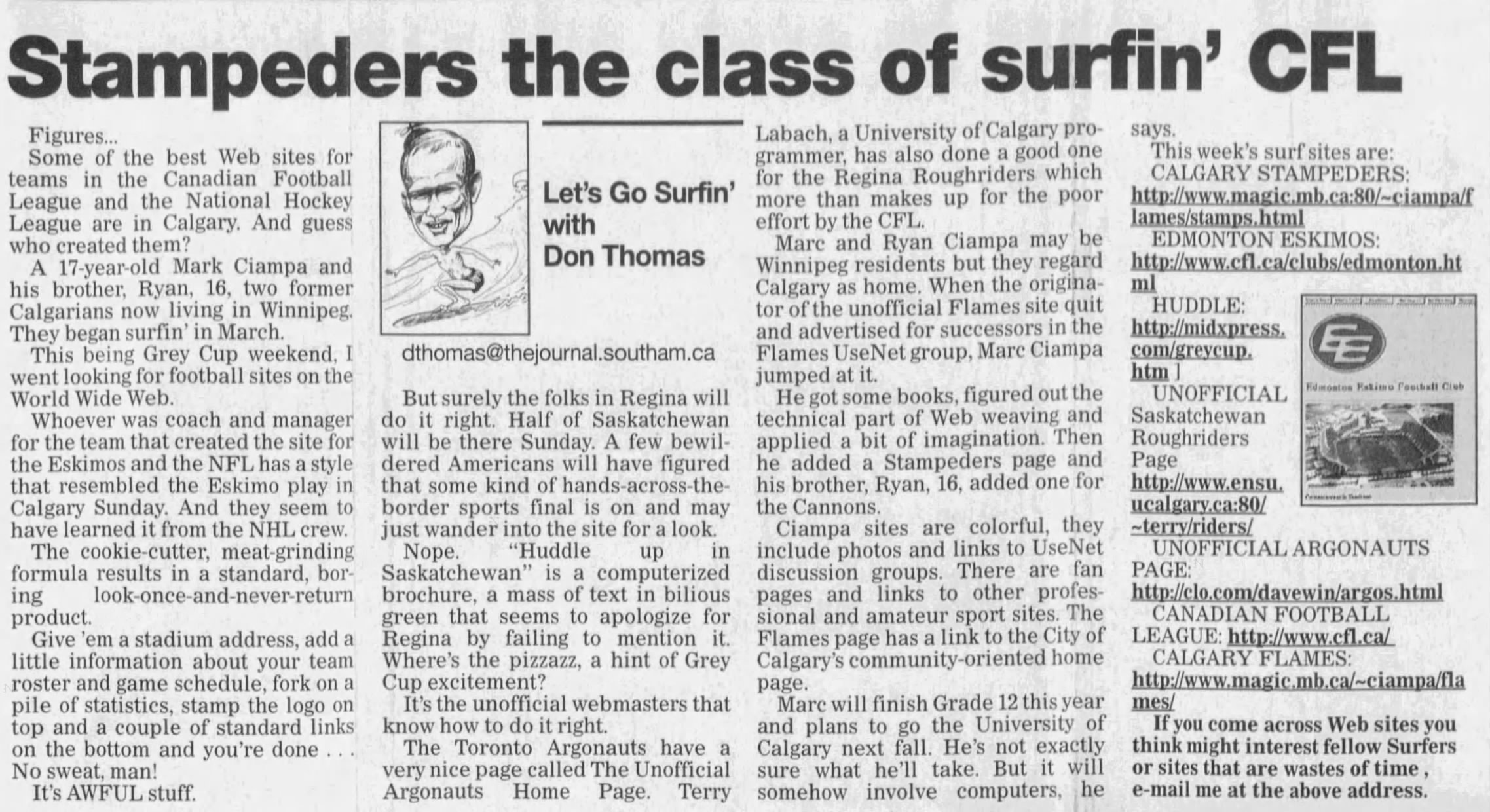
Several other teams had unofficial webpages, usually designed and maintained by computer hobbyists who happened to be fans of the team. For instance, the Calgary Stampeders’ website was designed by two teenaged brothers Mark and Ryan Ciampa. Often, these webpages had convoluted URLs that seem so awkward today but were not out of place in the 1990s.
Edmonton Journal article praising the Calgary Stampeders’ website designed by brothers Mark and Ryan Ciampa (16 Nov 1995)
In 1996, the CFL partnered with Slam Sports to launch a revamped website in line with its Radically Canadian marketing campaign. This site featured a hotspot graphic with links (a trendy web feature for the time) on the homepage and included an e-commerce store as well as the first online forum or message board for fans to connect and discuss the league. The forum was called the “Huddle.”
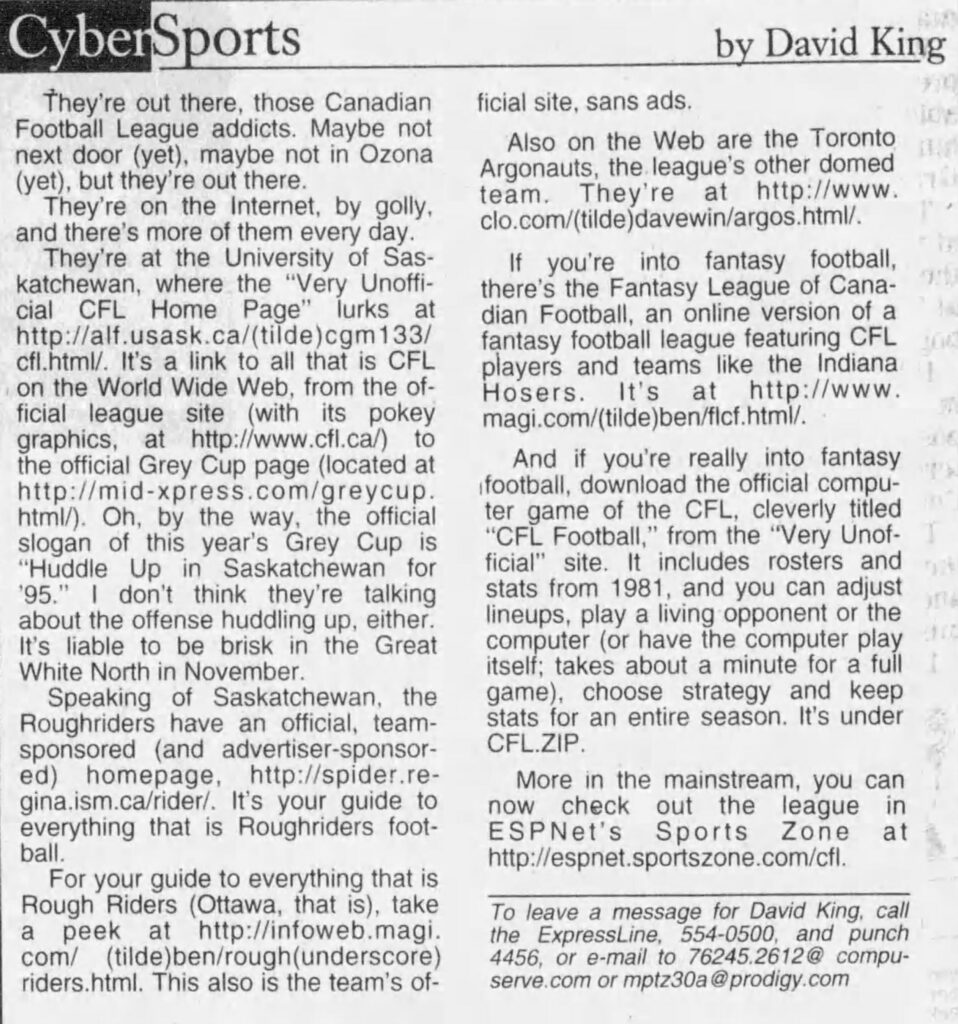
Column in the San Antonio Express about the early CFL websites (21 July 1995).
By 1998, all CFL teams had an official online presence although the sites had their own look and feel to them. In the 2000s – especially after Bob Young purchased the Hamilton Tiger-Cats in 2003 – the CFL began to incorporate a consistent theme for all CFL websites. Young’s MRX company eventually took over the design and management of CFL.ca and team sites. This led to the launch of the CFL.ca Network in 2009, with a focus on video content and social links. The Web 2.0 era had arrived. All CFL and partner websites were now under one umbrella.
Call it nostalgia, I guess. But there’s something special about looking back at the early CFL websites. It takes me back to a simpler time when I first became a CFL fan.
So, if you are a football fan who grew up in the early web era and want to relive it or if you simply want to explore these retro CFL websites, here’s your opportunity. Keep scrolling and happy surfing.
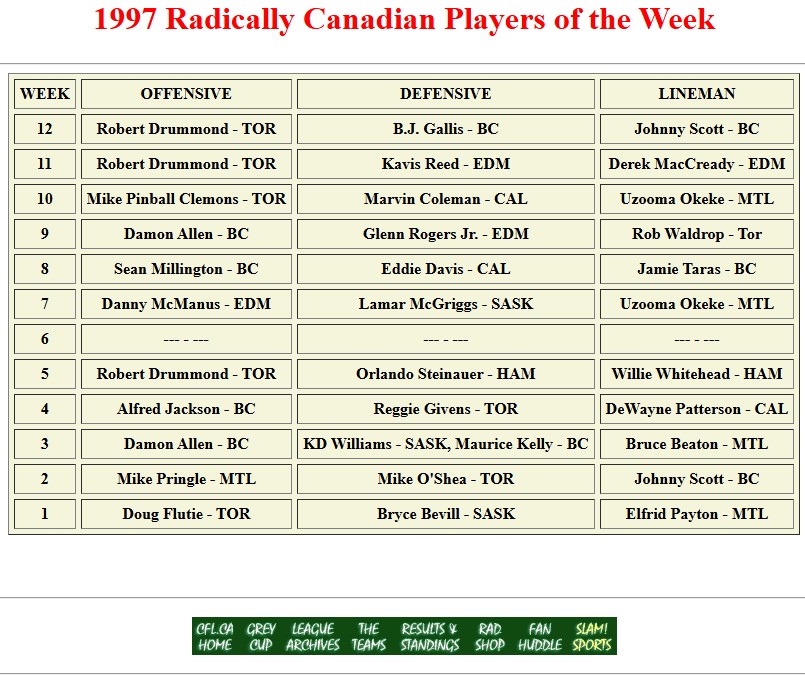
Here is the type of content you could expect to see on the CFL’s early website. A simple table with text.
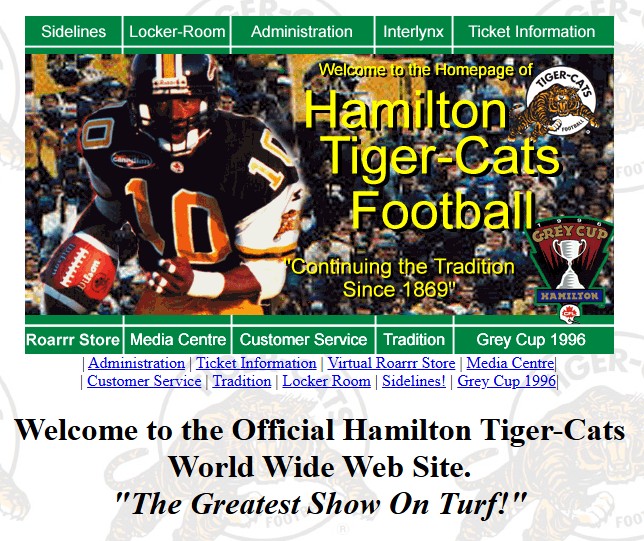
The first website for the Hamilton Tiger-Cats used the domain www.tigercats.on.ca and included a virtual Roar Store.
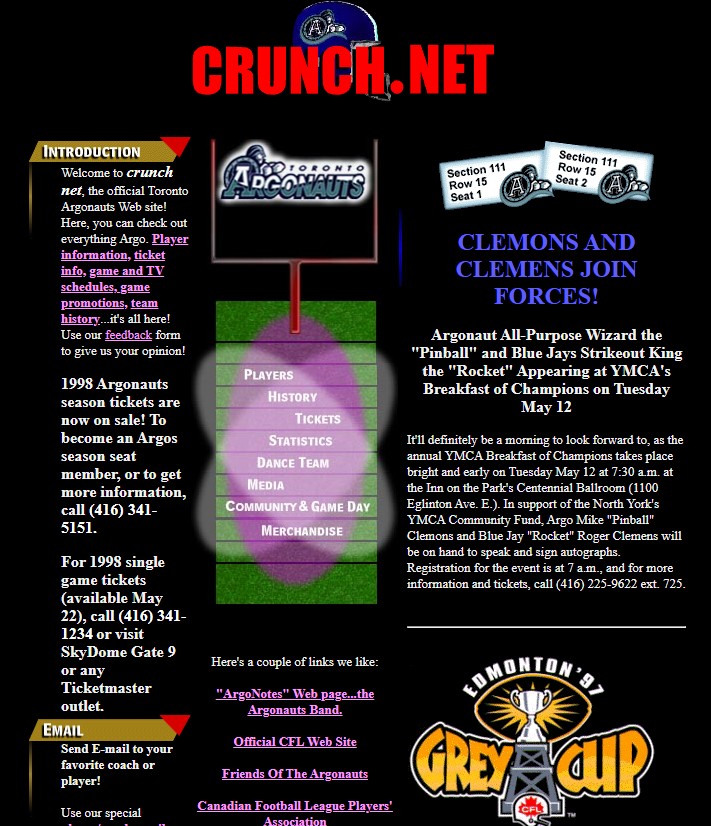
The Toronto Argonauts’ official website in 1997 was crunch.net and reflects the look and feel of websites in the mid 1990s.
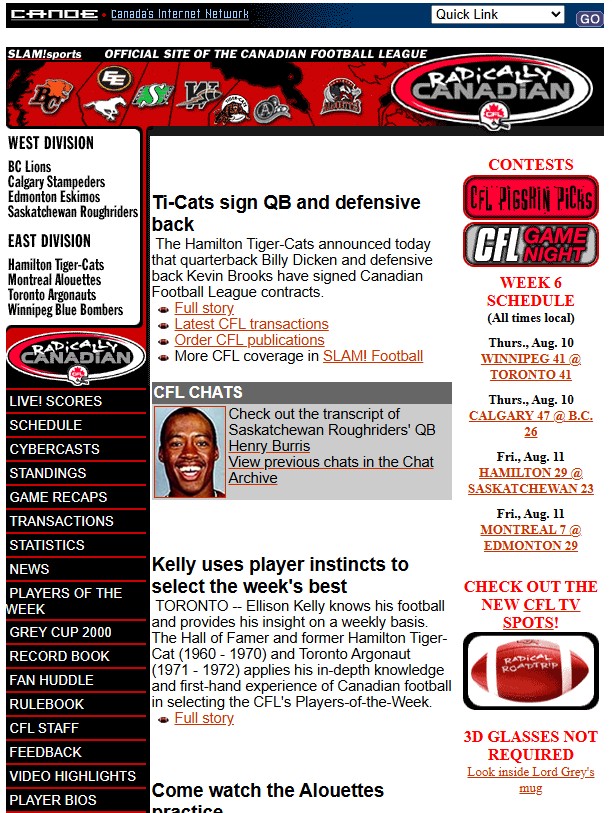
By 2000, the CFL website was a little more polished and included content such as video that more web surfers could view thanks to faster internet connections.
Now, for the really fun part…check out the Internet Archive’s Wayback Machine: https://web.archive.org/ Enter the cfl.ca URL into the search box and you will have the opportunity to play around with the old CFL websites from the 1990s and 2000s. You can try the URLs of your favourite team, as well. Keep in mind that some of the content may not load and some of the links may not work. But it should give you an idea of what surfing the CFL website was like in the “early” days.
Sources: The Edmonton Journal, 16 November 1995 The Regina Leader-Post, 31 May 1995 The San Antonio Express, 21 July 1995
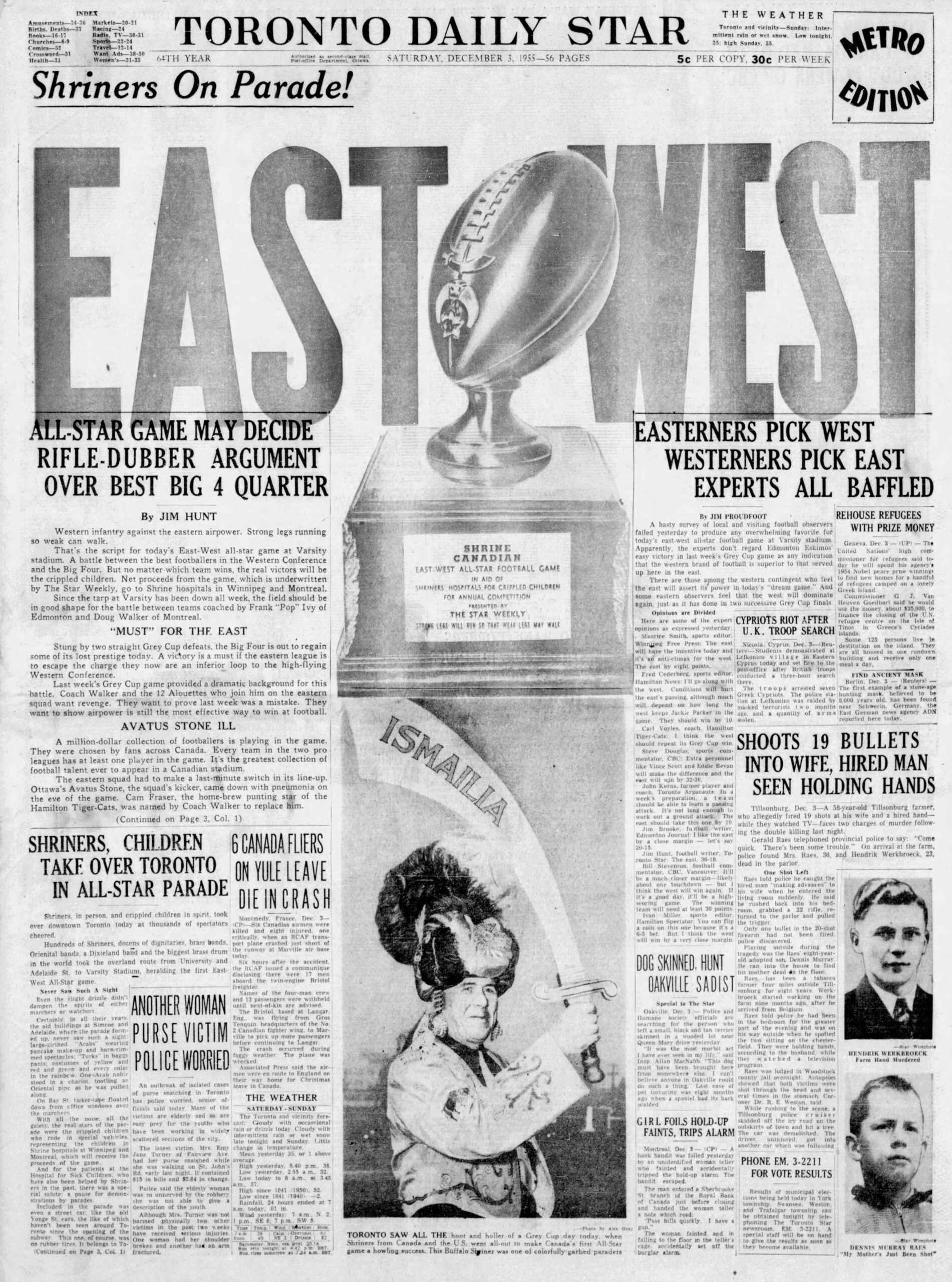
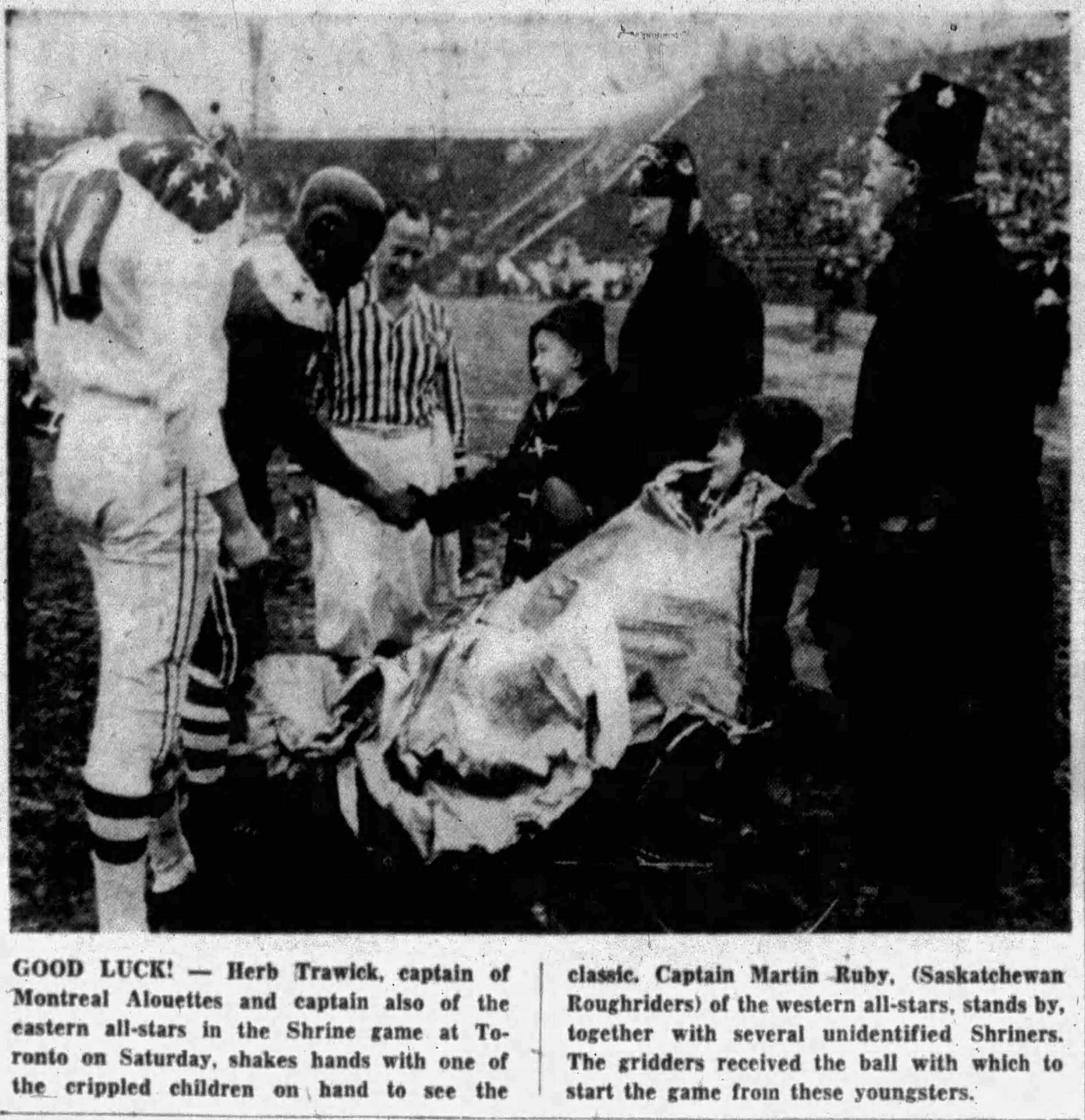
In the 1950s, the Shriners organization sponsored an East-West all-star game featuring the best players of Canadian football. The game was played the week after the Grey Cup between all-stars from the Interprovincial Rugby Football Union (IRFU) and the Western Interprovincial Football Union (WIFU). The first such game was played on December 3, 1955, at Varsity Stadium in Toronto.
Front page of the Toronto Star on December 3, 1955 previewing the first-ever East-West game.
There was much anticipation in the lead up to the game. Edmonton had just beaten Montreal handily in the Grey Cup the previous week. It was the second year in a row that the west had prevailed in the national championship. So, bragging rights were up for grabs between the IRFU (aka the Big Four) and WIFU when it came which union was the superior football league in Canada.
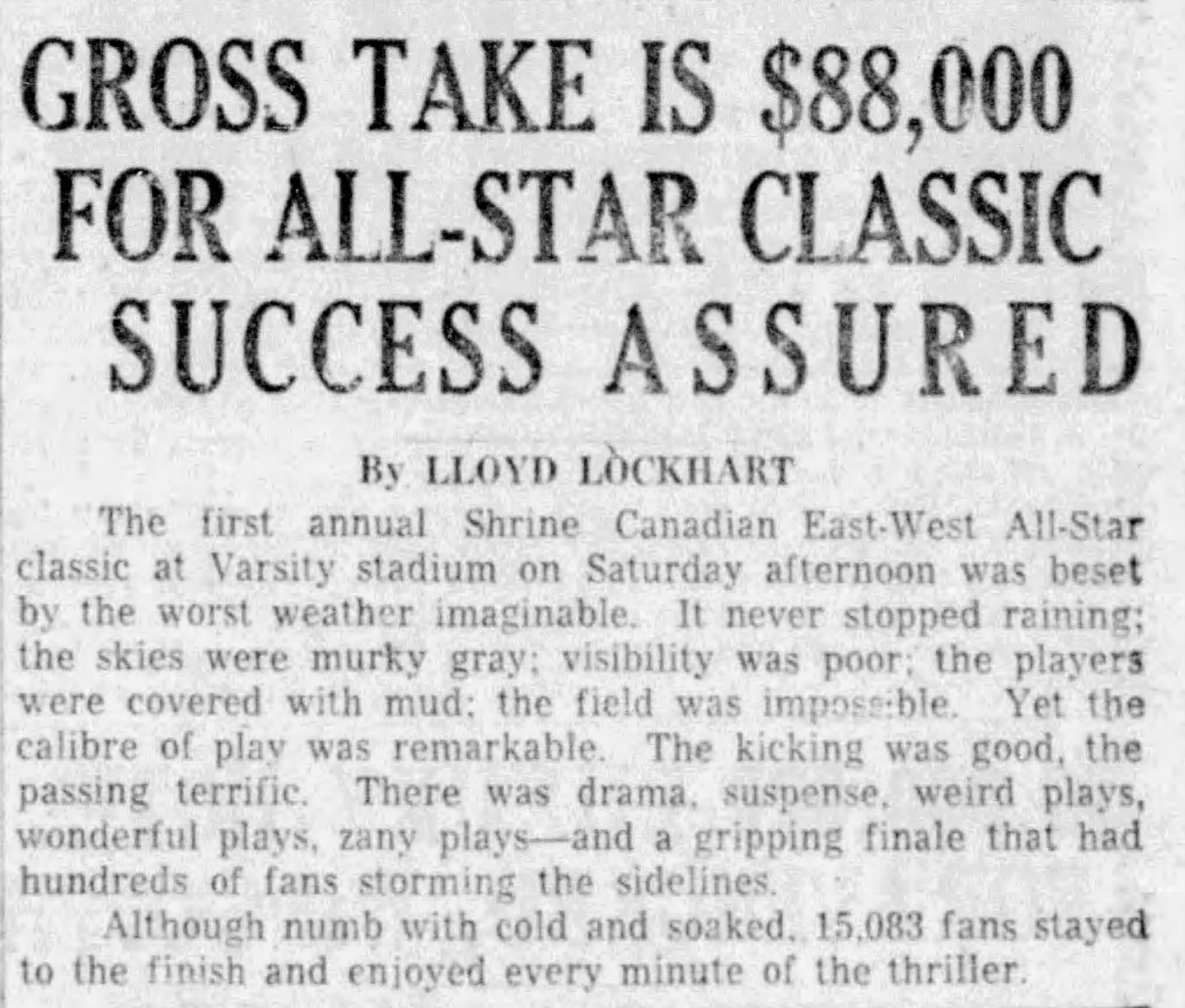
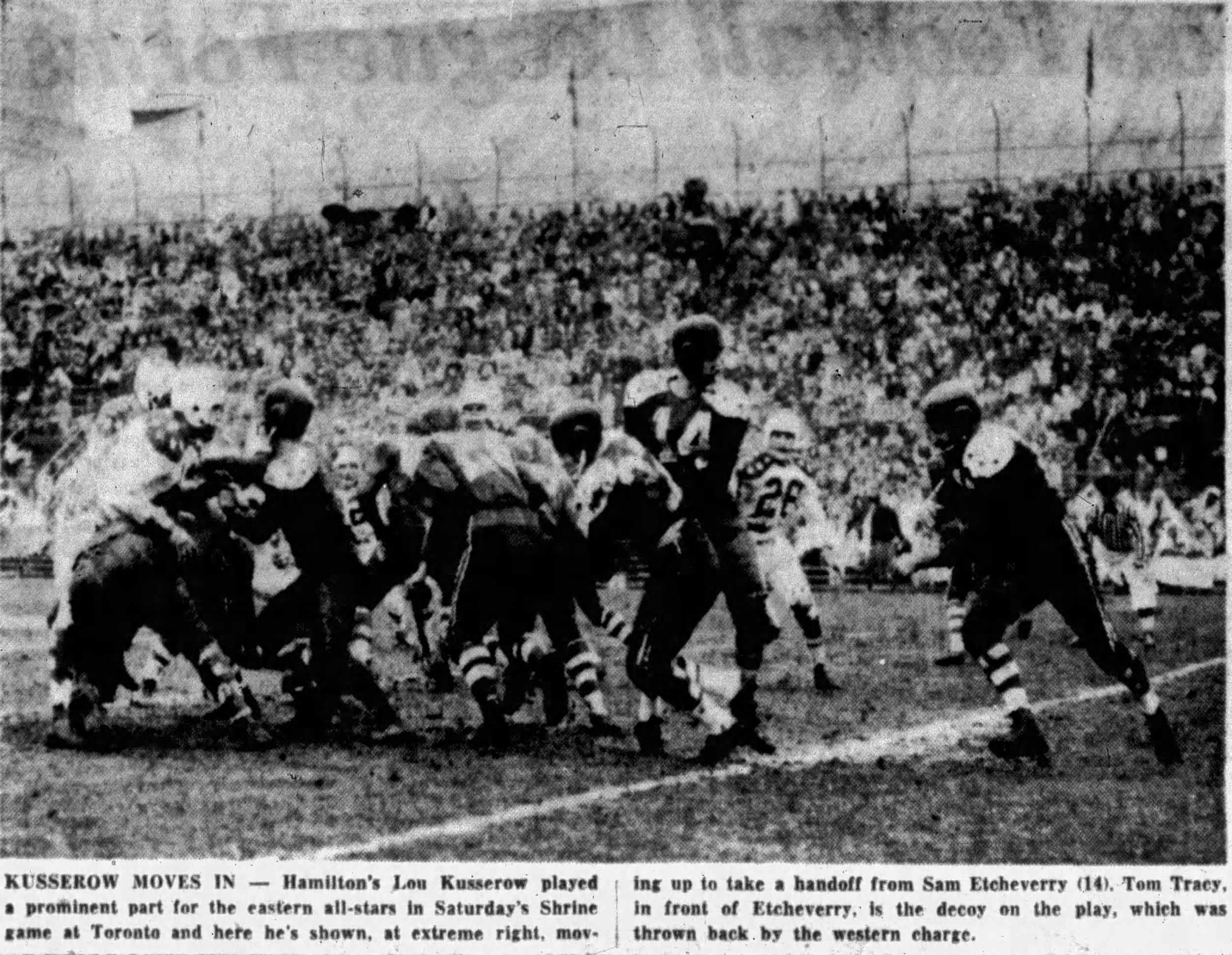
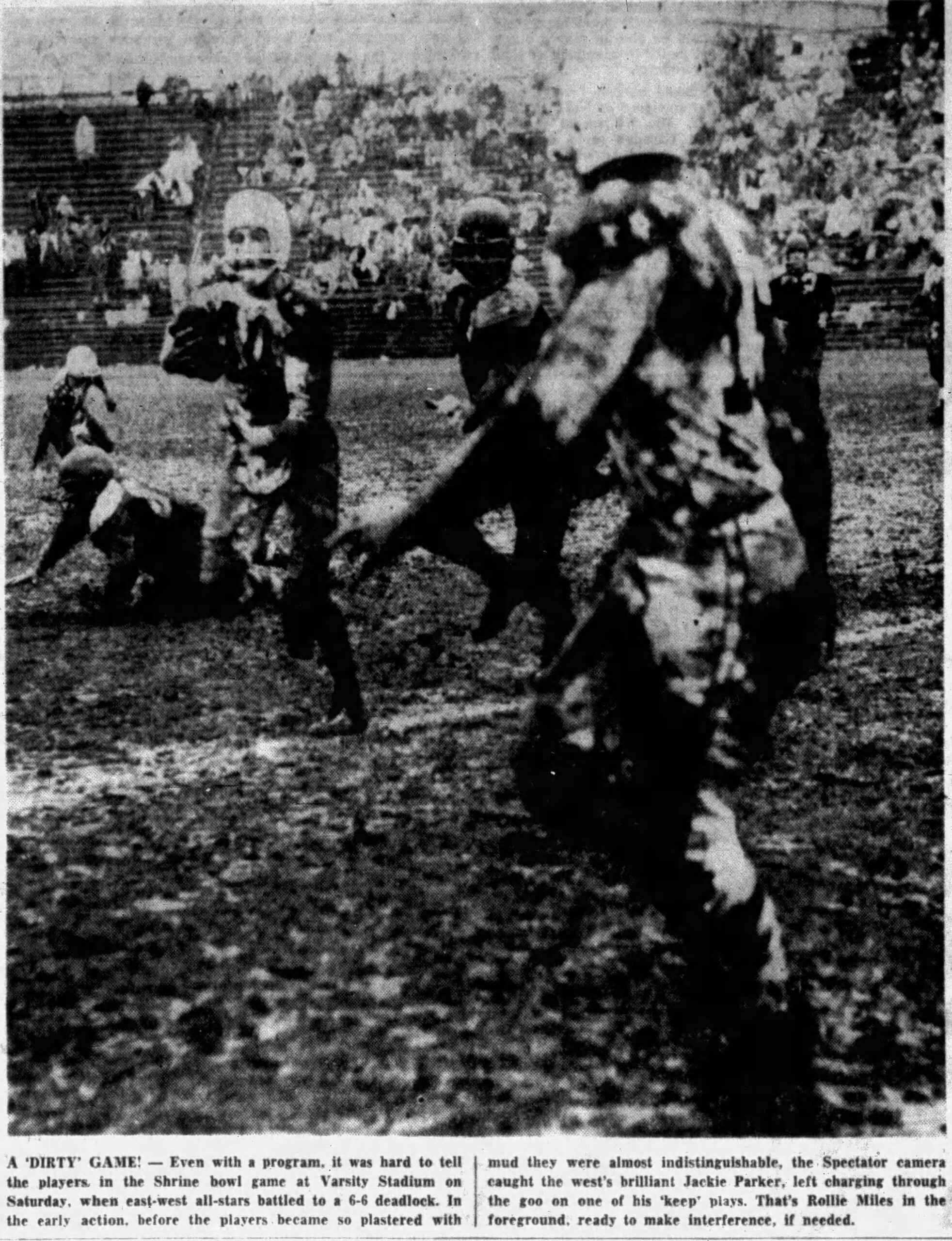
A crowd of over 15,000 braved the rain to watch the top names in Canadian football – chosen by the fans – compete in a defensive battle. Playing in muddy conditions at Varsity, the players put on an exciting performance despite the game ending in a 6-6 tie.
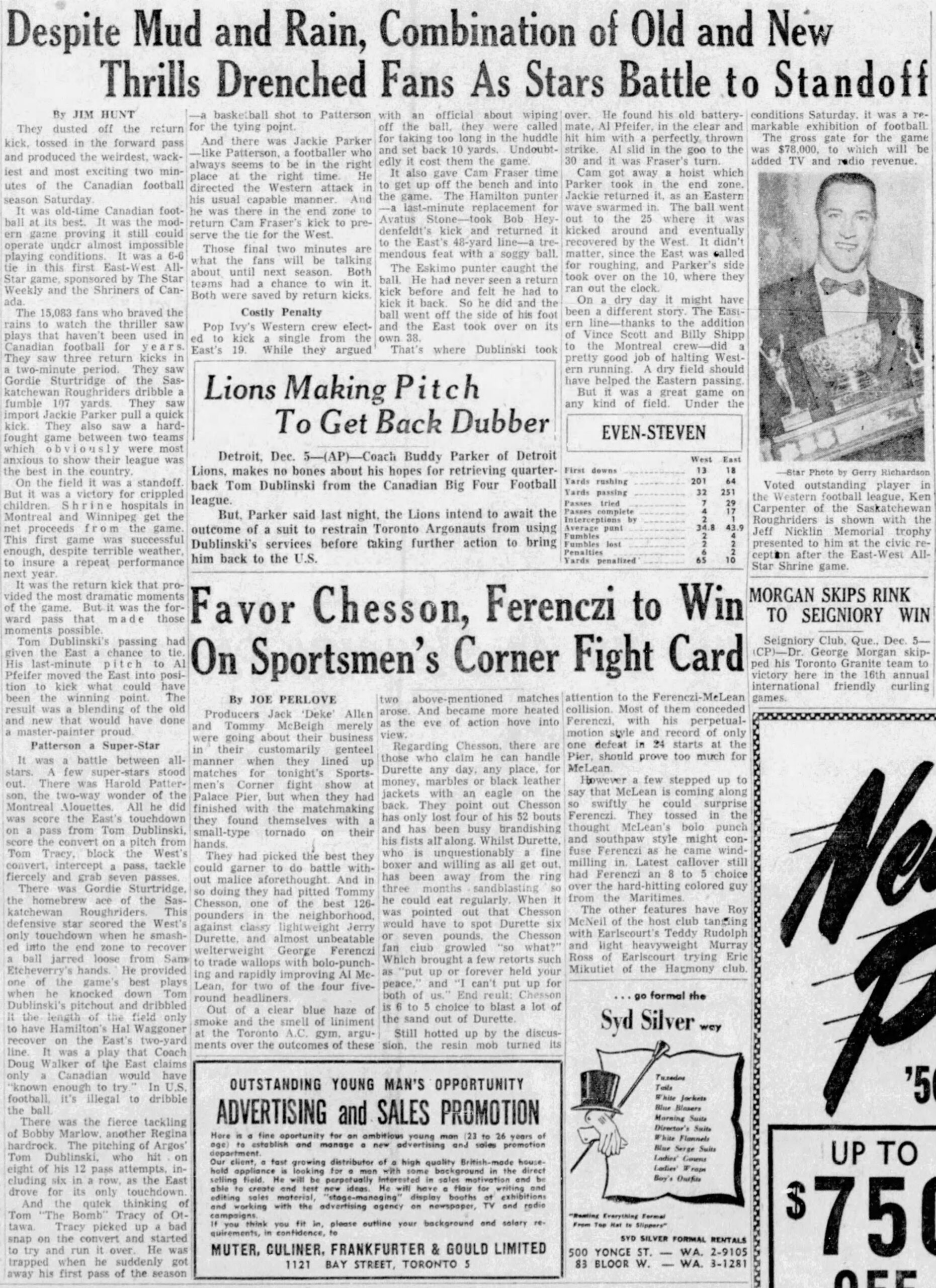
Jim Hunt’s account of the 1955 East-West game in the Toronto Star (December 5, 1955).
An account of the game by legendary reporter Jim Hunt in the Toronto Star summed it up perfectly:
They dusted off the return kick, tossed in the forward pass and produced the weirdest, wackiest and most exciting two minutes of the Canadian football season Saturday.
It was old-time Canadian football at its best. It was the comeback game proving it still could operate under almost impossible playing conditions. It was a 6-6 tie in this first East-West All-Star game, sponsored by The Star Weekly and the Shriners of Canada.
The 15,083 fans who braved the rains to watch the thriller saw plays that haven’t been used in Canadian football for years. They saw three return kicks in a two-minute period. They saw Gordie Sturtridge of the Saskatchewan Roughriders dribble a fumble 107 yards. They saw import Jackie Parker play a quick kick.
They also saw a hard-fought game between two teams which obviously were more anxious to show their league was the best in the country.
I’m reminded by the commentary for this game that despite horrible weather, awful field conditions, and a seemingly ho-hum 6-6 score, football can still be very exciting during defensive stalemates when there’s a meaningful game to play. You don’t always have to light up the scoreboard to provide entertaining football. By the way, how neat is it read Jim Hunt’s work from early in his lengthy career?
The inaugural East-West game grossed $88,000. Net proceeds from the game were given to the Shriners’ children’s hospitals in Montreal and Winnipeg. The event was deemed a smashing success and would return the following year.
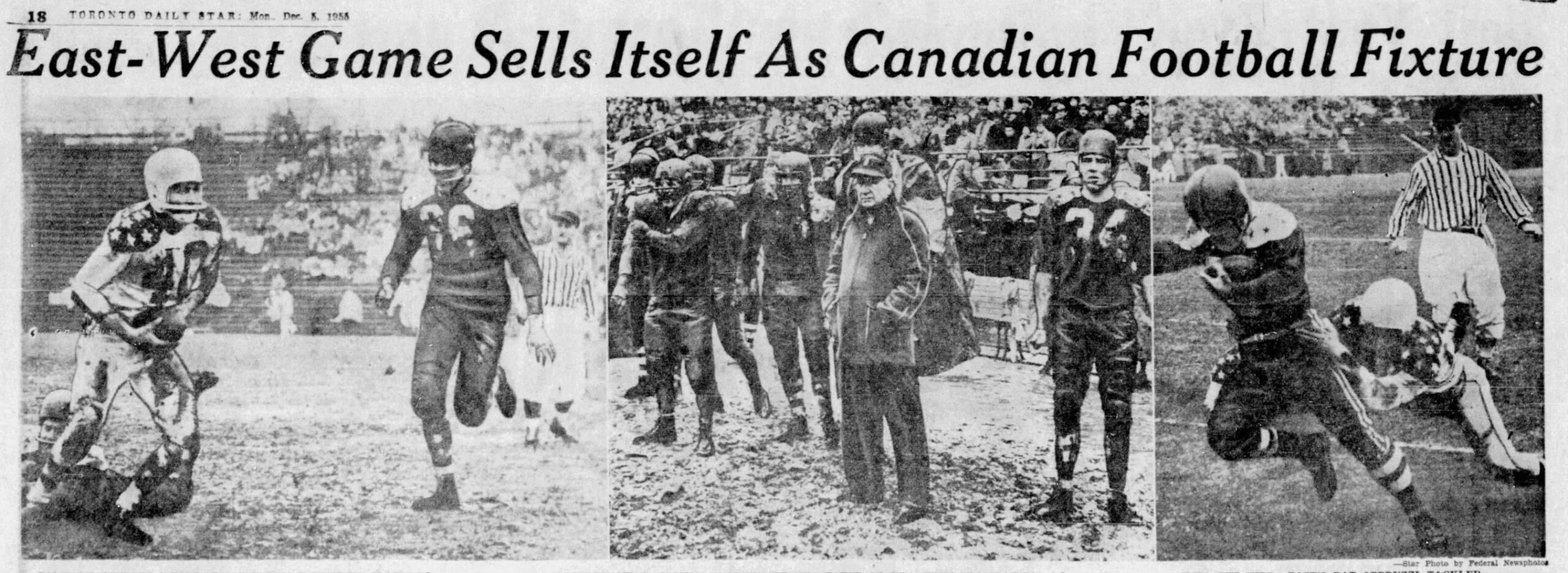
Some photos of the action, as published in the Toronto Star and Hamilton Spectator:
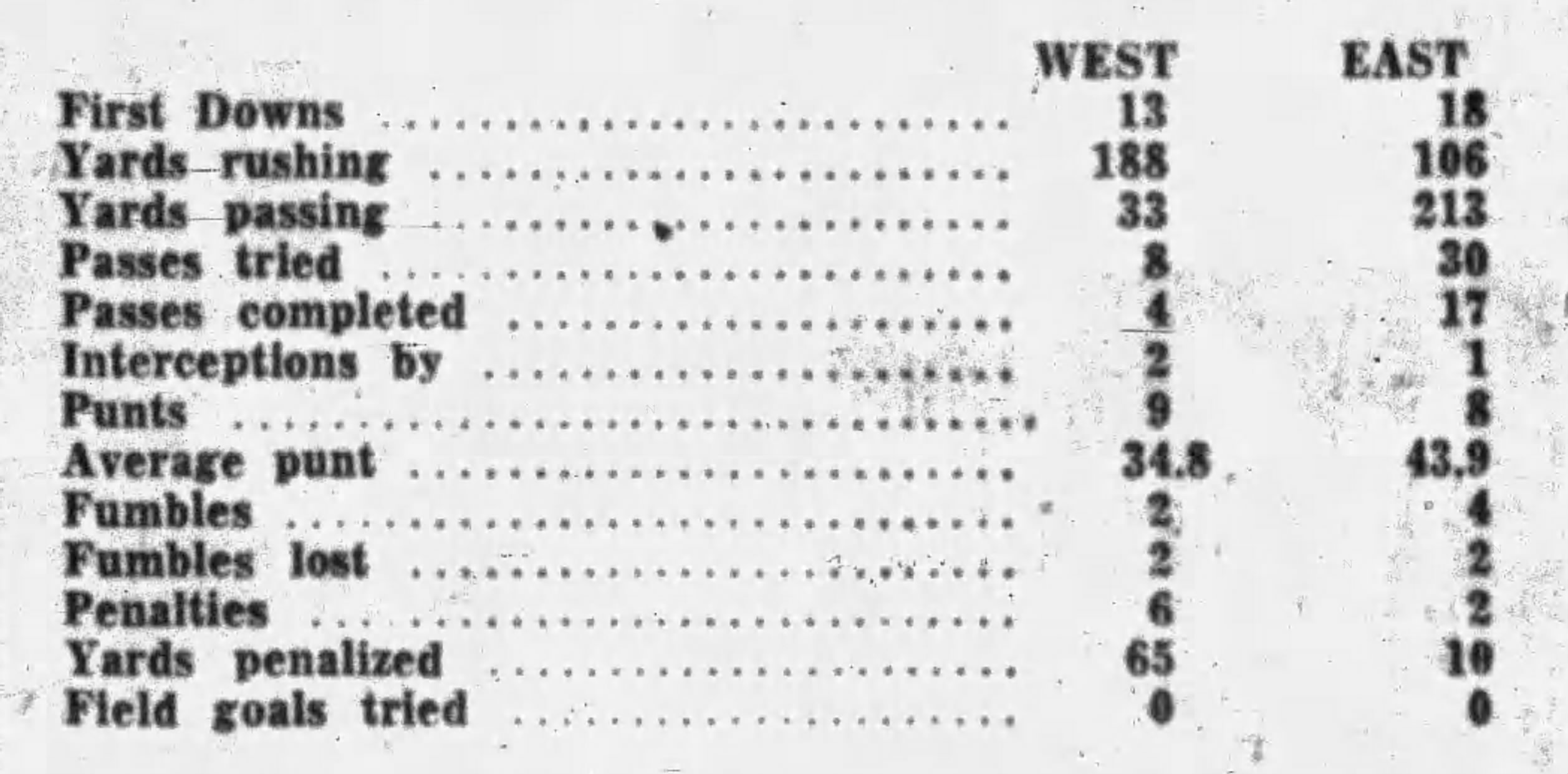
Final stats:
Sources:
Hamilton Spectator, 5 December 1955 Toronto Star, 3 December 1955 Toronto Star, 5 December 1955
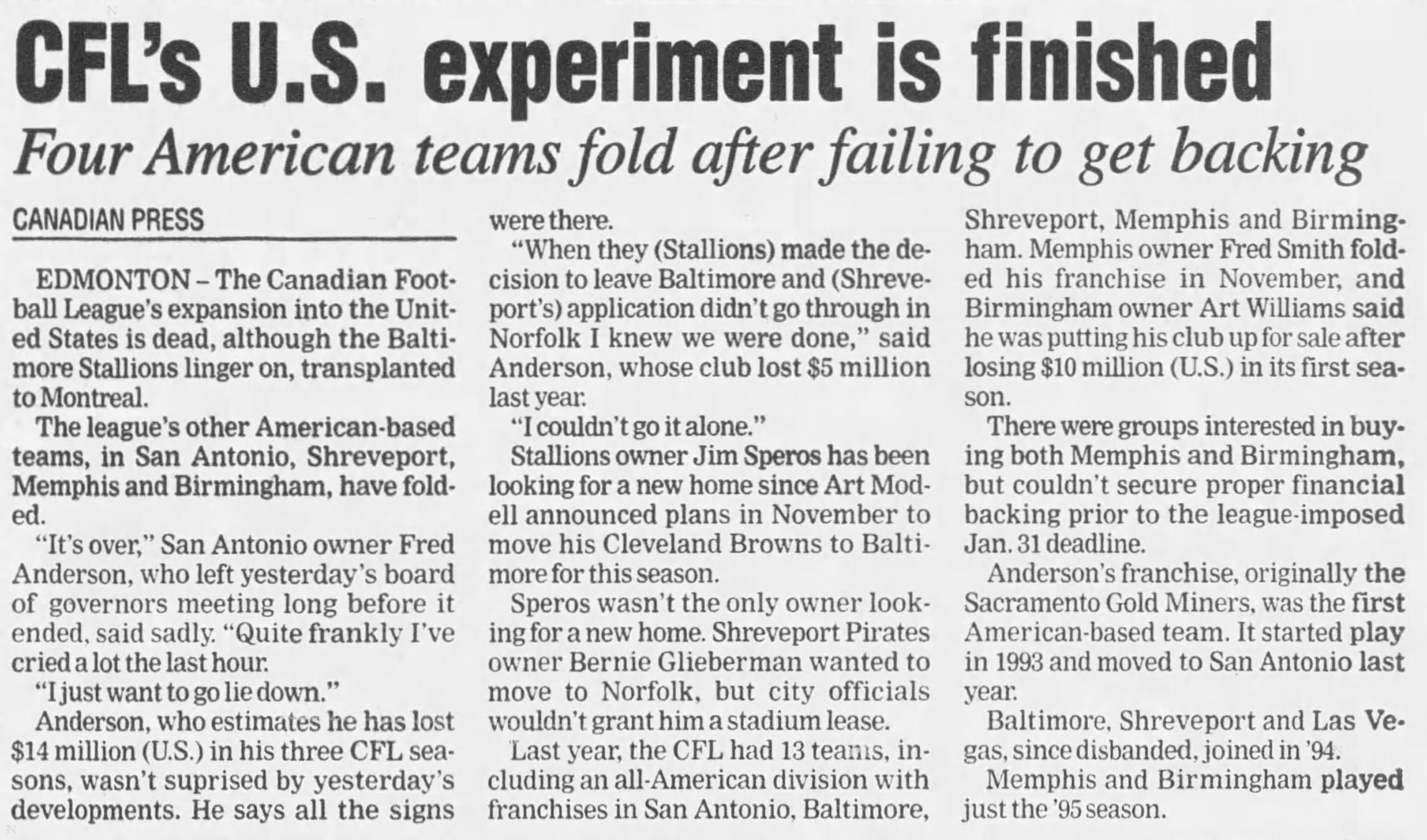
On Friday February 2, 1996, the Canadian Football League officially ended its American expansion efforts. During the CFL’s annual winter meetings, the league announced that the Birmingham Barracudas, Memphis Mad Dogs, San Antonio Texans, and Shreveport Pirates were ceasing operations. And the Baltimore Stallions, having just won the Grey Cup a few months earlier, were relocating to Montreal.
Canadian Press article on the end of CFL U.S. expansion.
It was game over for the CFL’s grand vision of becoming a North American-wide professional sports league. The promised windfall of expansion fees and the hope of a multimillion-dollar U.S. television deal (all in American dollars to boot) never materialized. I suppose the only silver lining was that U.S. expansion had thrown the CFL a lifeline. For a few years, there was some new blood and some new interest generated. Personally, I enjoyed watching the American teams come to Ivor Wynne Stadium to play the Tiger-Cats. It was sure better than watching the Ti-Cats play the Rough Riders and Argos four times. It added variety and a bit of intrigue.
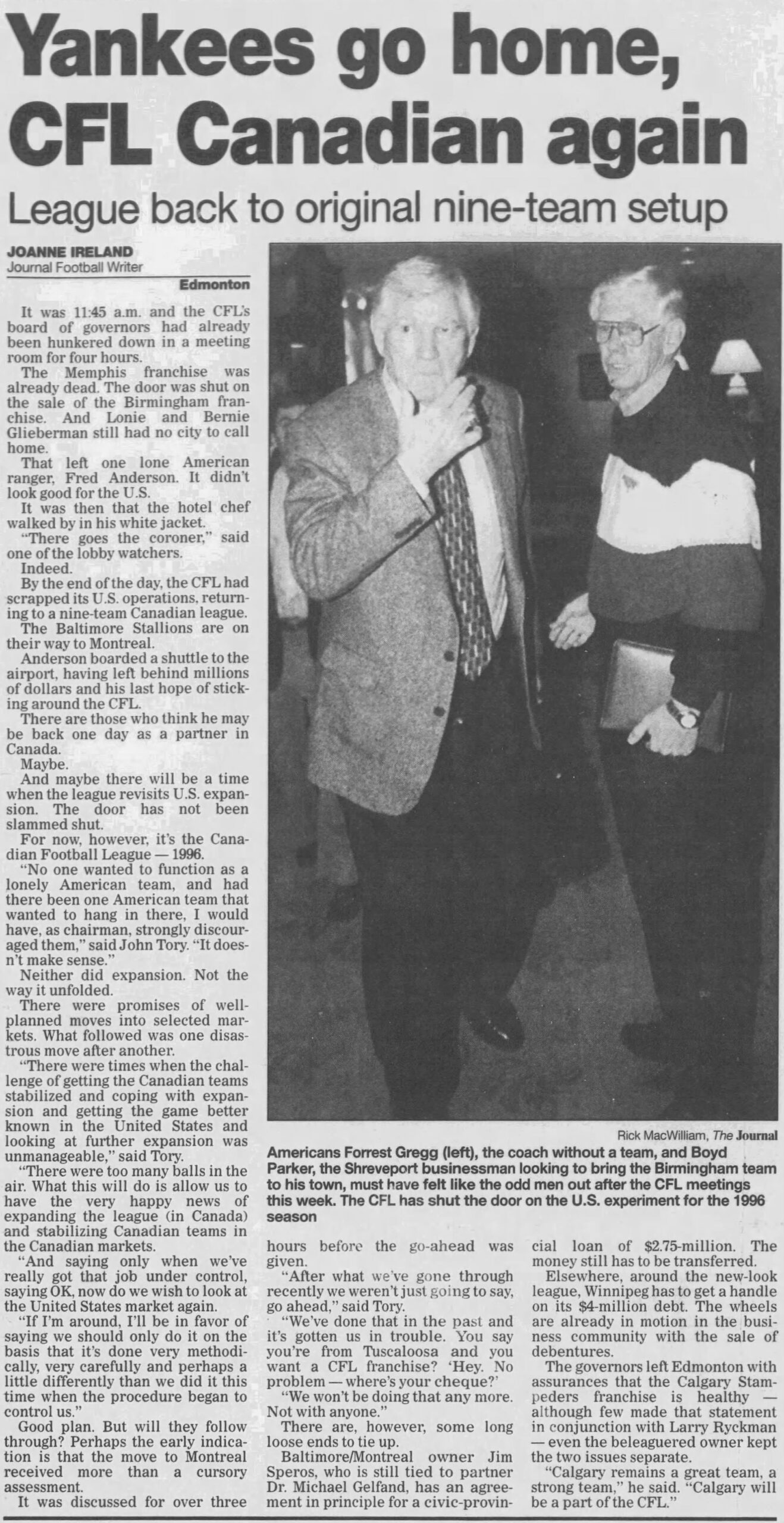
The take in the Edmonton Journal (3 February 1996).
The writing was on the wall for the CFL’s demise in America once the National Football League announced it was returning to Baltimore. That move ultimately spelt the end for the Stallions in Baltimore. The other chips began to fall.
The Pirates attempted to relocate to Virginia but were unable to secure a stadium lease. A new group tried to purchase the Barracudas and move them to Shreveport, where the CFL enjoyed at least modest support, but were rejected by the CFL. Memphis, despite having one of the wealthiest owners in Fred Smith of FedEx fame, was dead in the water. The Stallions, having run out of options in Maryland, considered a move to Houston, Texas. When they decided to move to Montreal instead, that left the San Antonio Texans as the lone U.S.-based team remaining. “It’s over!” admitted a dejected Fred Anderson, the Texans’ owner. With no other team south of the border, he wasn’t going to go it alone whether he wanted to or not. The CFL was done with its American clubs.
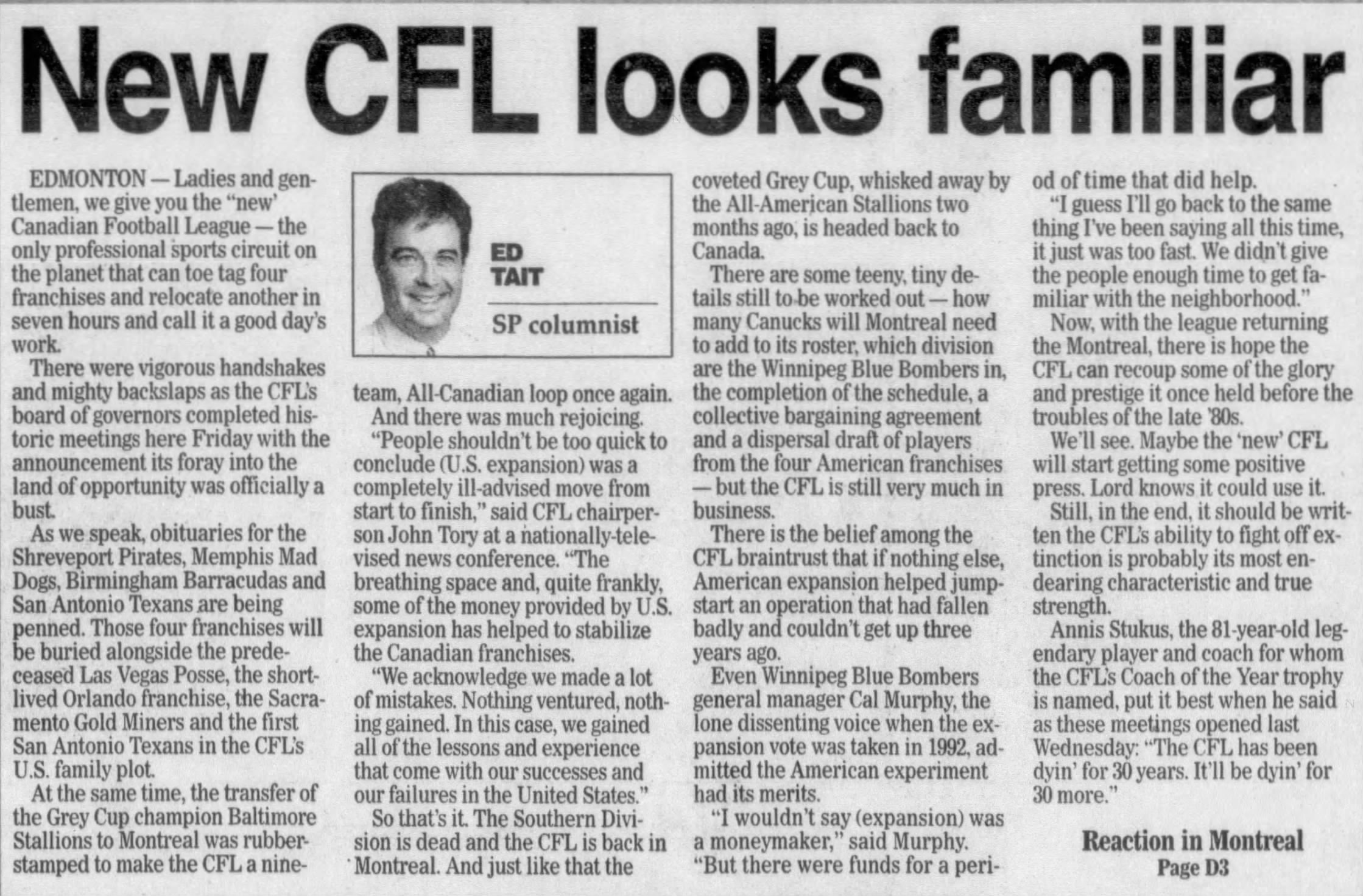
Ed Tait’s column about the new, old CFL (Saskatoon Star Phoenix, 3 February 1996).
The CFL didn’t close the door permanently on future U.S. expansion and hinted that American teams could possibly return to the league in 1997. But most agreed that was unlikely and that the CFL was going to stick with its new, old all-Canadian lineup.
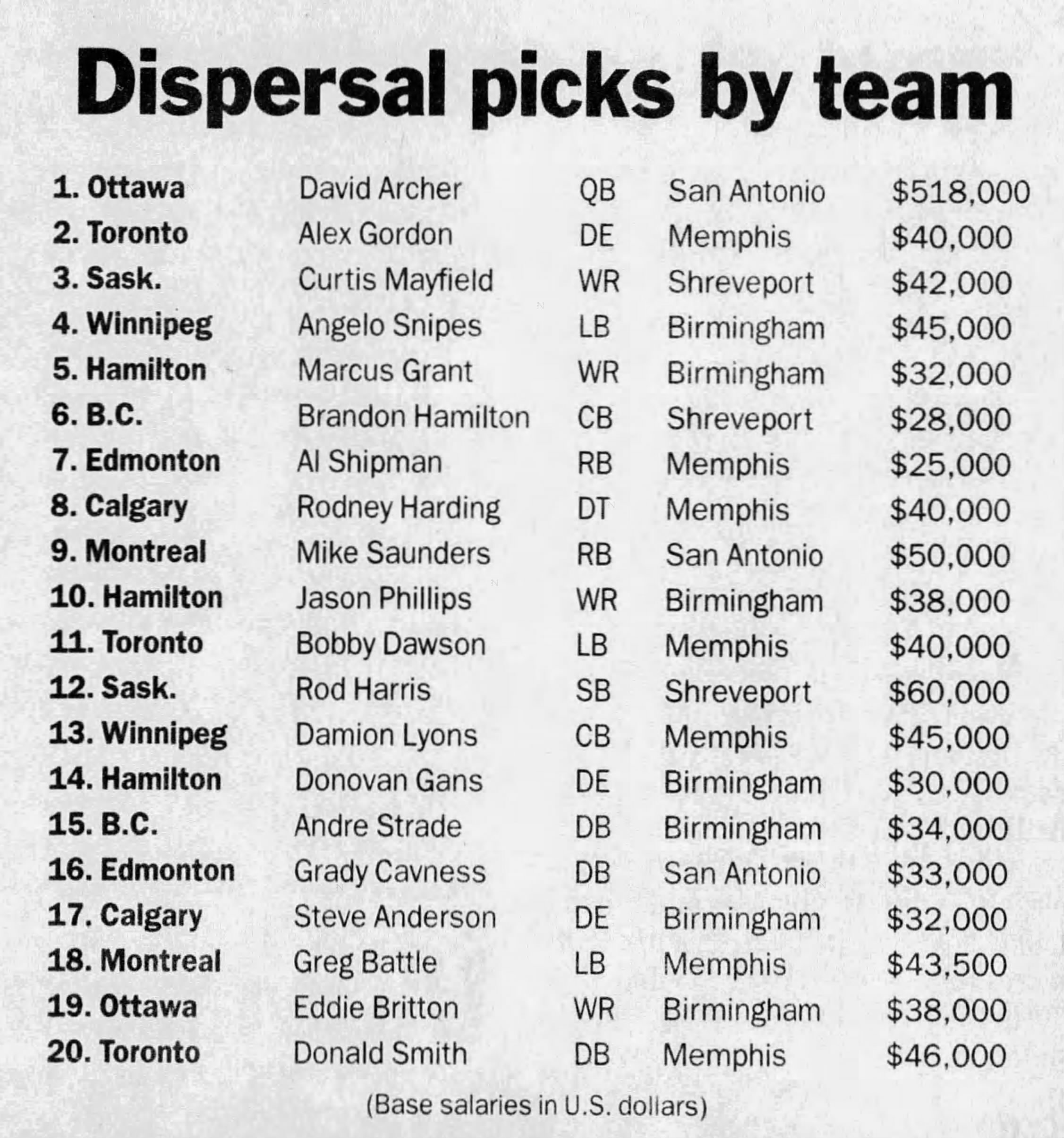
The players signed to the now folded American teams were put into a dispersal draft and divvied up amongst the nine Canadian teams. San Antonio’s quarterback David Archer was chosen first overall by Ottawa. A special expansion draft was held as well to help stock the reincarnated Montreal Alouettes with Canadian players.
Top 20 players chosen in the dispersal draft held (Ottawa Citizen, 8 March 1996)
The 1996 CFL season kicked off on June 23 in Regina. Four days later, the first CFL game played in Montreal in almost a decade saw the Toronto Argonauts defeat the Alouettes 27-24.
With the CFL’s exit from the U.S., the league launched a bold new marketing campaign highlighting its Canadian roots and unique brand of football. The American dream was no more. The CFL entered its Radically Canadian era.
Sources:
Edmonton Journal, 3 February 1996 Montreal Gazette, 3 February 1996 Ottawa Citizen, 8 March 1996 Saskatoon Star Phoenix, 3 February 1996