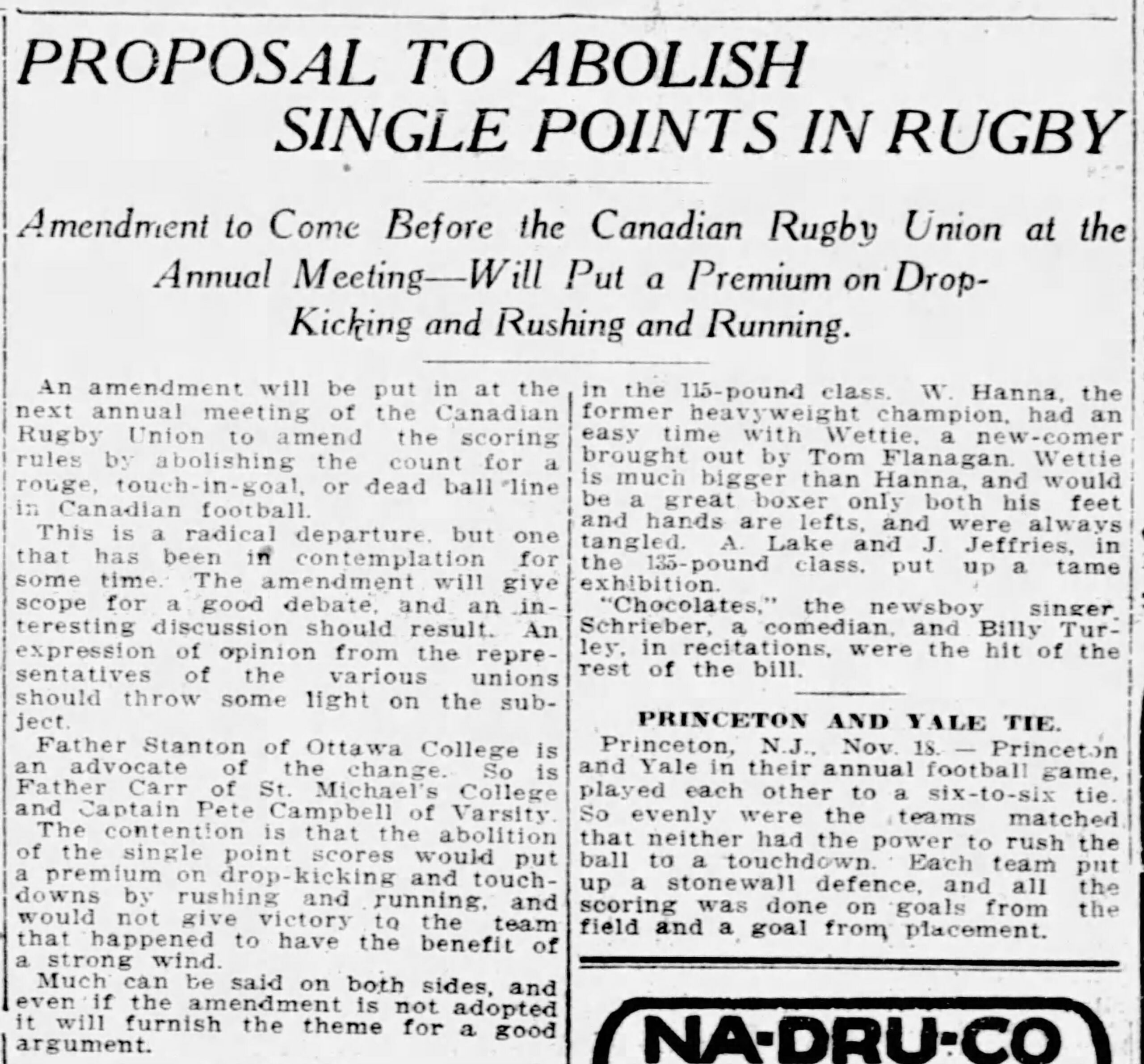
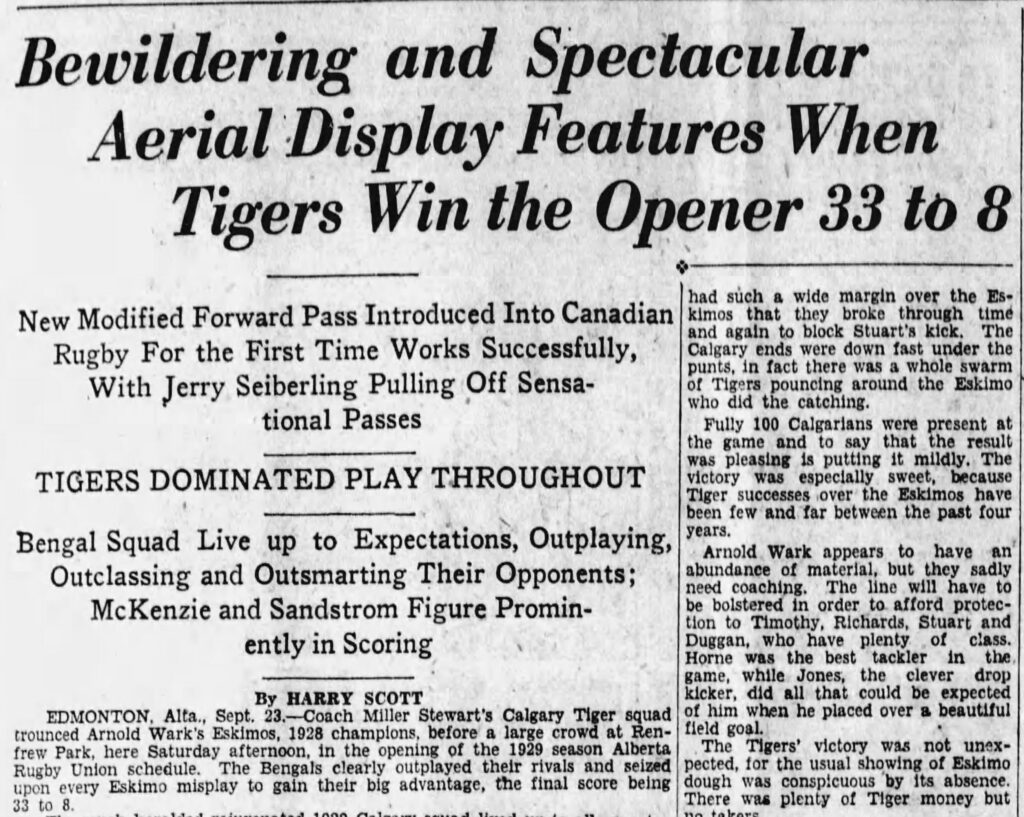
An observer today would simply shrug his shoulders after reading the contents. “What’s the big deal?” he would ask. But around the turn of the 20th century the Burnside Rules would revolutionize Canadian football. Named after Thrift Burnside, who captained the University of Toronto varsity football team, the so-called Burnside Rules helped transform Canadian football from a rugby-style game to the modern gridiron game we recognize today.
Proponents of the Burnside Rules promoted the idea that they made the game more open, more exciting, and easier to follow. Opponents argued they changed the very essence of Canadian football and risked the Americanization of the game. In hindsight, both sides were probably right.
So, what the heck were the Burnside Rules anyway? And how did they change the game of Canadian football so much? Let’s take a quick look.
Perhaps the biggest difference in Mr. Burnside’s rules compared to traditional Canadian rugby at the time was the introduction of the downs system. The team with possession would now have three chances (or downs) to advance the ball ten yards. The other significant difference was adoption of the snap-back formation. Instead of a rugby scrum where players heeled the ball backwards, the offence would now line up along a fixed line of scrimmage and have the centre player on the line “snap back” the ball. Both the downs system and the snap-back formation were already being used in American football at the time.
Other rule changes included the reduction of the number of players from fifteen to twelve, scrimmaging instead of throw-ins from the sideline, and capping the number of players on the line of scrimmage at six. They also made some minor kicking and scoring adjustments.
A Fine Exposition of New Rugby
The first use the Burnside Rules was the first game of the Toronto city championship between the University of Toronto and the Toronto Argonauts on November 15, 1902. The rules received rave reviews from the Toronto Star, which hailed the game a “fine exposition of new rugby.”

(“Fine Exposition of New Rugby.” Toronto Star, 17 November 1902, p. 10.)
Still, the Burnside Rules were considered so radical by purists that their adoption divided clubs and unions and threatened to wreak havoc on Canadian football. On December 13, 1902, the Ontario Rugby Football Union formally adopted the Burnside Rules for the 1903 season. The Canadian Rugby Union and its other unions refused to adopt them initially. This led to the three CRU unions in Ontario and Quebec to play by three different sets of rules.
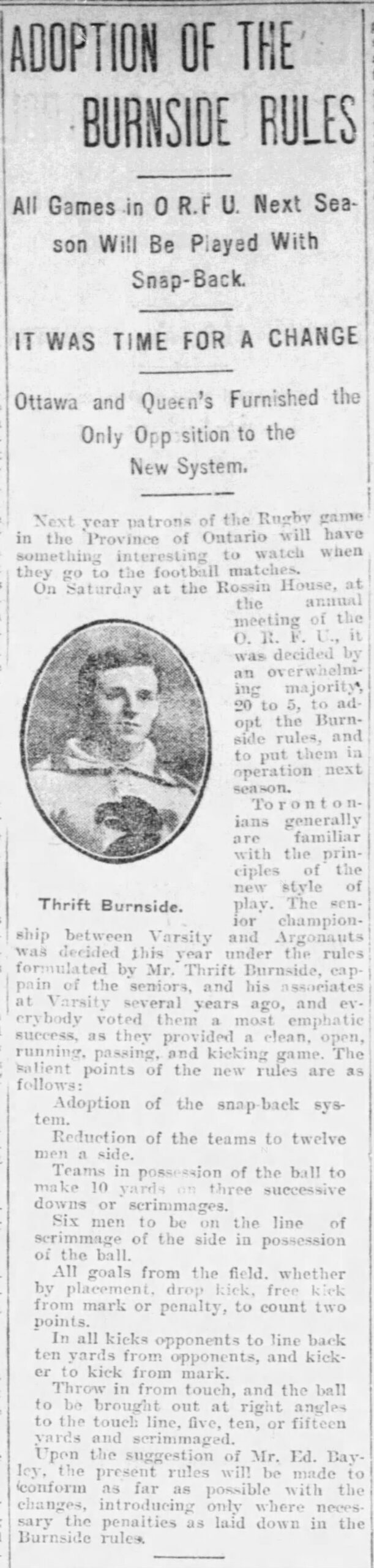
(“Adoption of the Burnside Rules.” Toronto Star, 15 December 1902, p. 10.)
By the way, the Quebec Rugby Football Union probably had the most radical rule of all. While it didn’t adopt the snap-back formation it did implement its own version of a downs system. Basically, teams had to gain at least five yards on their third down, regardless of yards gained on the previous first or second down.

(Toronto Star, 22 December 1902, p. 9.)
Ottawa Opposed the Burnside Rules
The Ottawa Rough Riders lead the opposition to the ORFU’s adoption of the Burnside Rules. A column appearing in the Ottawa Citizen made abundantly clear Ottawa’s stance on the new rules and took to personally attacking Thrift Burnside. Such was the passion and divisiveness surrounding these sweeping changes.

(Ottawa Citizen, 16 December 1902, p. 6.)
After unsuccessfully trying to convince the CRU to adopt the Burnside Rules, the ORFU opted to switch back to CRU rugby-style football in 1906. But in the years ahead, the down system and snap-back formation were eventually adopted across the country.
By the 1920s Canadian football had evolved and started to resemble the game we play and watch today. The Burnside Rules played a pivotal role in this evolution. By incorporating popular aspects of American football into the traditional Canadian game, the ORFU’s early adoption of the Burnside Rules helped shape the future of Canadian football.

(Toronto Star, 17 November 1902, p. 10.)