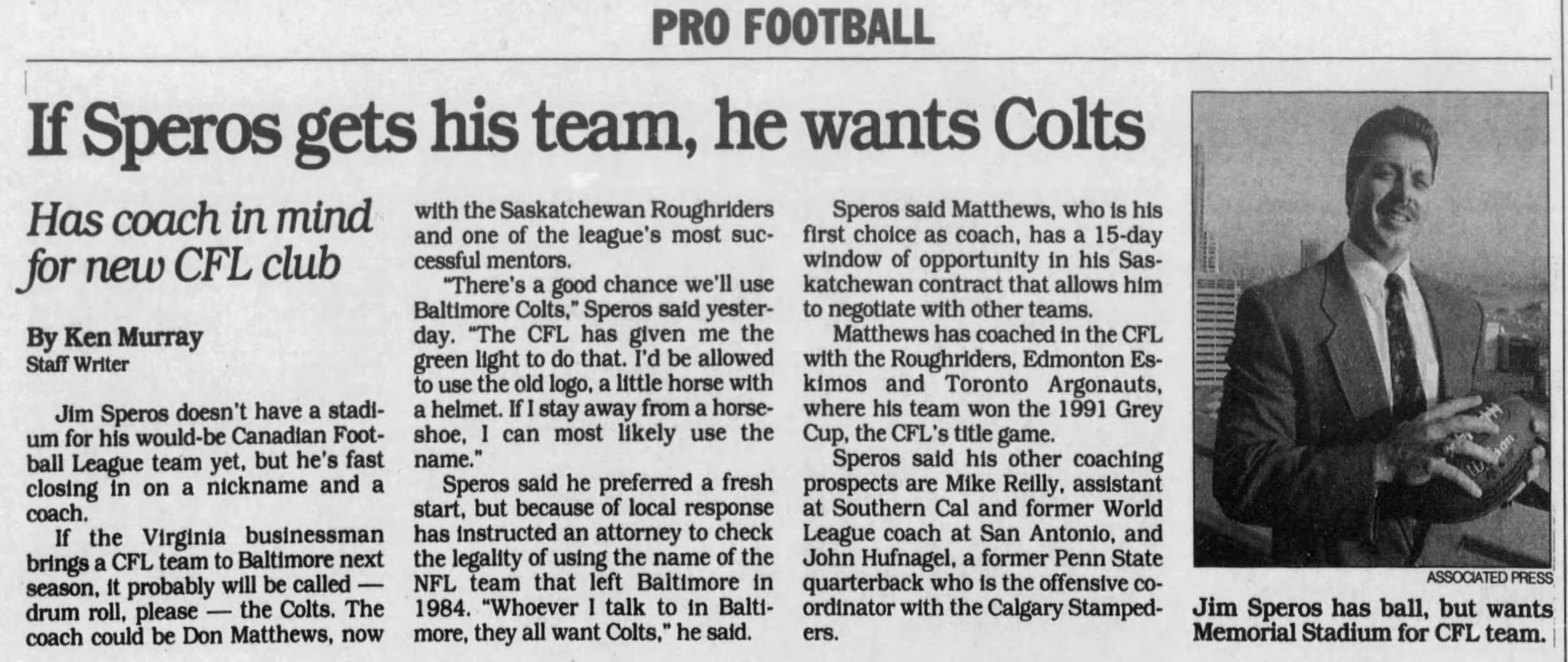
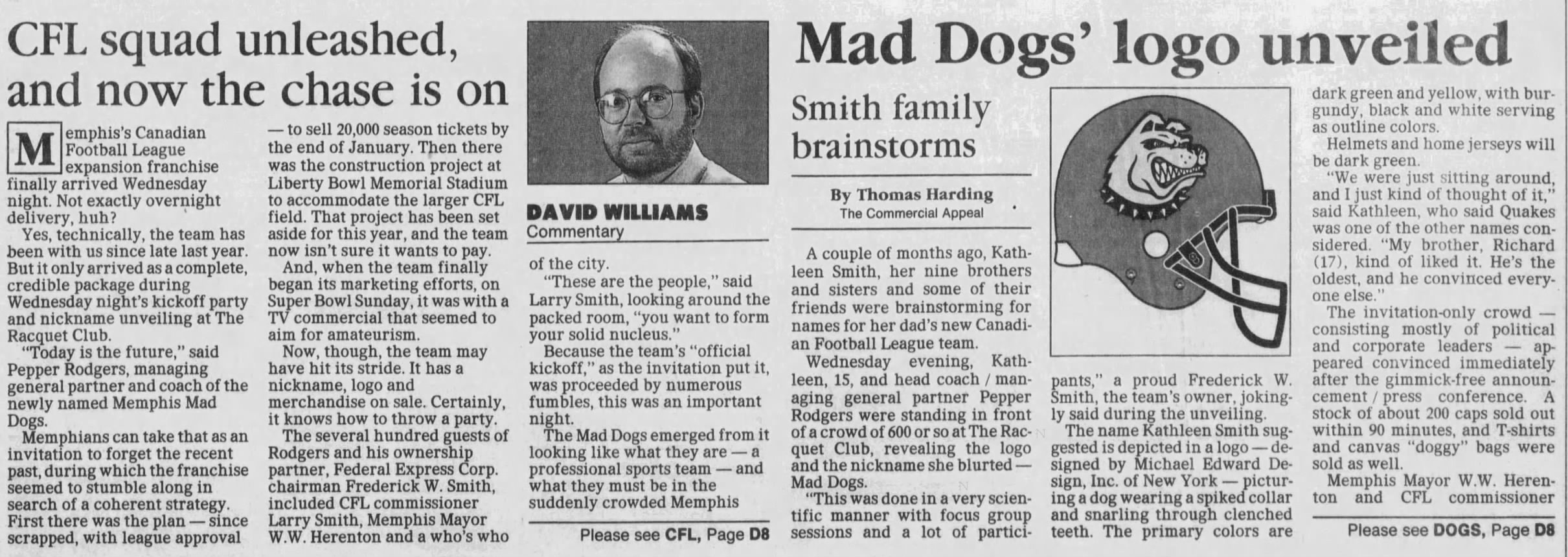
Of all the U.S. cities that the CFL awarded teams to as part of its American expansion in the 1990s, Shreveport had to be the most obscure choice. Whereas the other cities had teams in the defunct World League of American Football (e.g., Sacramento, San Antonio, and Birmingham) or were brought onboard after failed NFL expansion efforts (e.g., Baltimore and Memphis), Shreveport seems so random when you think about it.


I suspect most Canadians had never heard of Shreveport, Louisiana until the CFL set up shop down there. But for two years the CFL put Shreveport on the map – at least for us Canadians. And you know what? The city seemed to really embrace the Canadian brand of football. In fact, I would argue that Shreveport was the most successful U.S.-based CFL team outside of Baltimore. At least from a business perspective.
So, how the heck did Shreveport land a CFL team in the first place? Well, the Shreveport story actually starts in Ottawa. In 1991, Bernie Glieberman, a Detroit-based real estate developer, purchased the struggling Ottawa Rough Riders. His son Lonie oversaw the day-to-day operations as team president. It seemed like an uphill battle, though, and the Gliebermans found themselves at odds with Ottawa’s city council, an impatient fanbase, and a sceptical local media. They threatened to move the team. But rather than relocating the Rough Riders, the CFL arranged for them to be sold to local interests while granting the Gliebermans an expansion franchise in the United States.
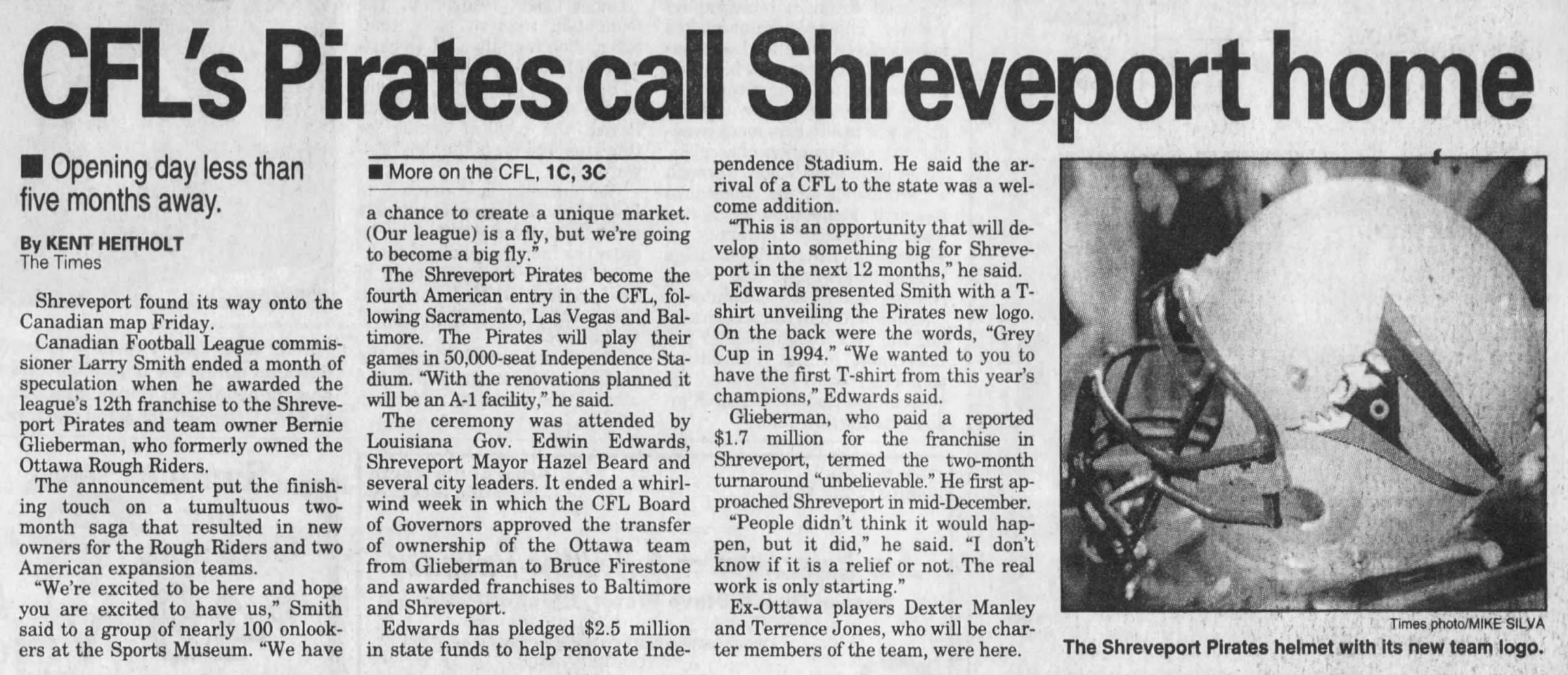
Why Shreveport? I asked that question directly to Lonie Glieberman. Hearing his rationale for the Shreveport market almost makes me think the CFL should go back there. OK. Maybe that’s a bit of a stretch. But Lonie speaks highly of Shreveport. “Shreveport was a football town. We had hardcore fans. We were important. The Mayor and city council supported us,” Lonie says. The fans supported the CFL, too. They had over 12,000 season ticket holders and averaged about 17,000 fans per game, which is not bad considering the team’s poor on-field performance. “It was more than some of the teams in Canada,” Lonie points out.
One of the main reasons Shreveport was chosen was the favourable rent agreement for Independence Stadium. The city charged Glieberman only $2500 per game to play at the 40,000-seat stadium.
Steve Effler worked in corporate sales and stadium operations for the Pirates. He, too, couldn’t say enough good things about the Shreveport market when I spoke to him. “We were the big fish in a small pond. People supported us and we were everywhere in the media,” he said. I can attest to that. A quick browse through the local Shreveport newspapers paints a picture of solid media penetration for the Pirates.
I was a bit surprised that Steve still follows the CFL. It turns out he was actually a CFL fan long before expansion and considers the job he had in Shreveport a dream come true. You can definitely tell he likes the CFL, and he possesses volumes of Pirates-related content. His YouTube channel has game day coverage and includes a must-see music video called “Pirate Ball.”
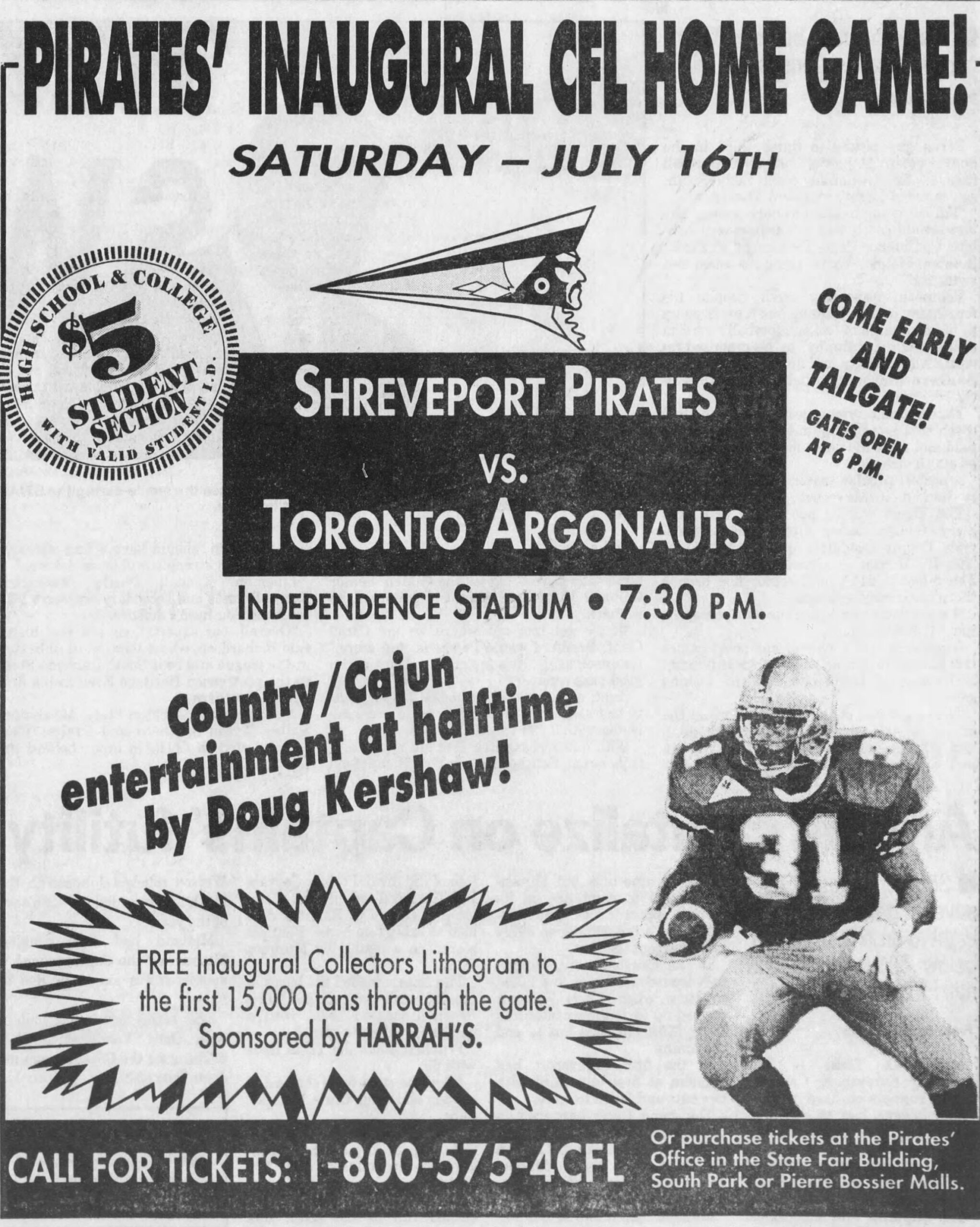
Shreveport’s soon-to-be CFL team was officially branded as the Pirates on January 21, 1994. Lonie says he and his high school friend decided on the name. The runner up nickname was the Jackrabbits. “We were kind of limited by what we could do with Jackrabbits but you can do a lot with Pirates,” he said. The team logo was unveiled about four weeks later when CFL Commissioner Larry Smith formally welcomed Shreveport into the fold. And while Lonie wasn’t entirely sold on the Pirates logo, he was a huge fan of the team uniforms. “We had the best the uniform in the CFL, the best uniform in all of football besides maybe the Raiders,” he boasted. Pirate Ball was now a thing.
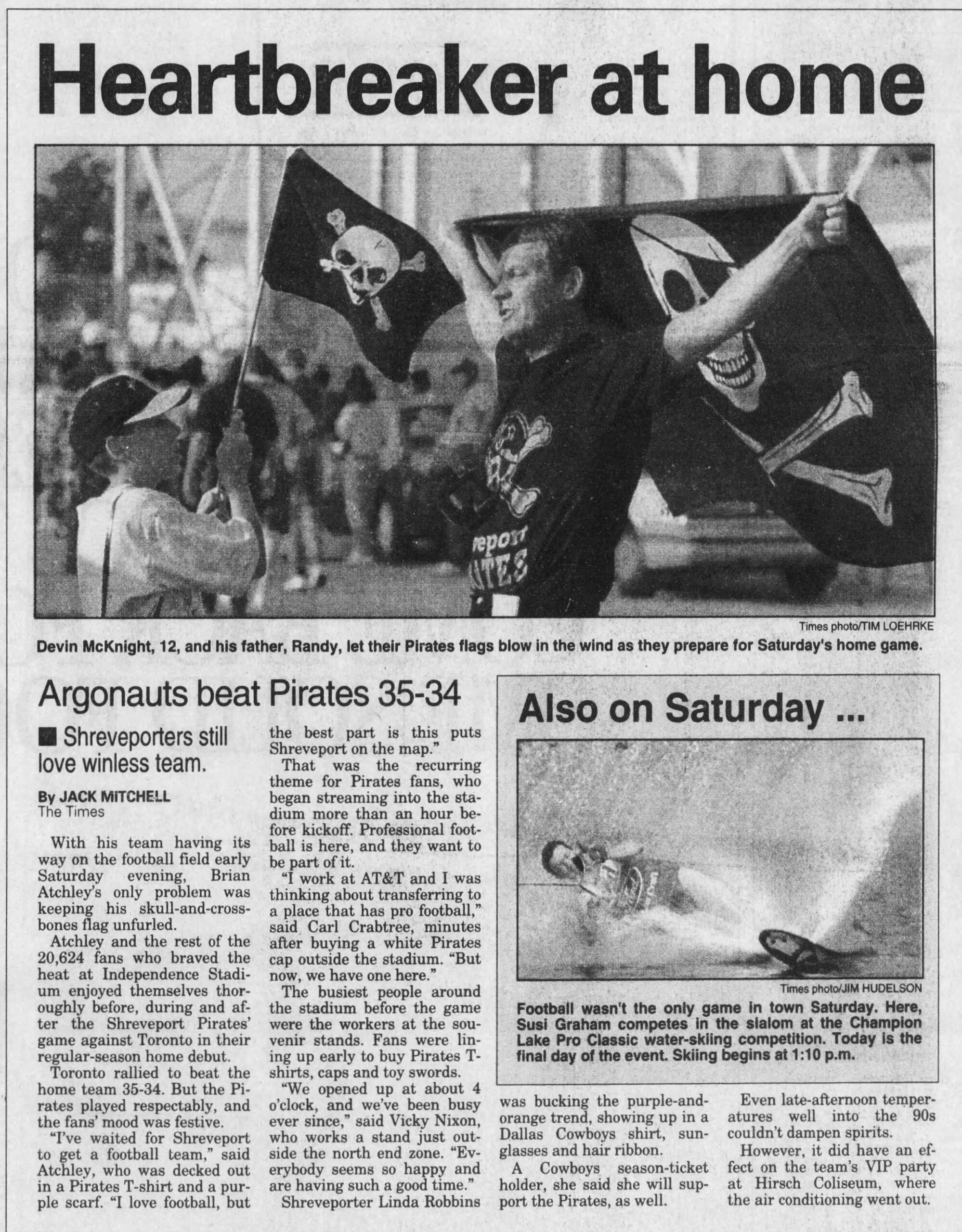
The Pirates got off to a rather rocky start in training camp. Head coach John Huard was abruptly fired and was replaced by Forrest Gregg. The home opener at Independence Stadium saw the Pirates lose to the Toronto Argonauts by a score of 35-34. A respectable crowd of 20,624 attended the game.

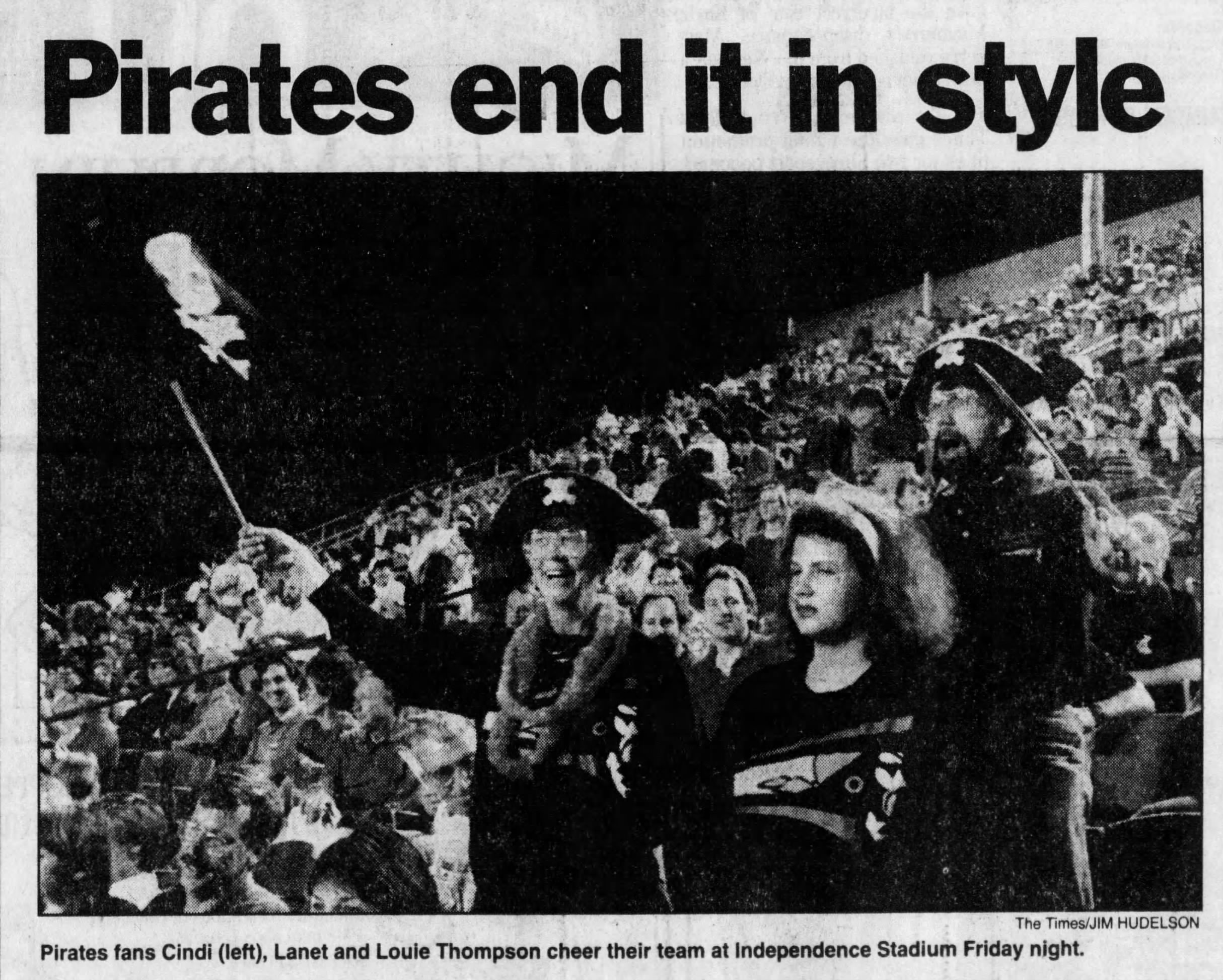
The Pirates sat in last place in the East Division throughout their inaugural season. They had a dismal 0-14 record before finally picking up their first win during a torrential rainstorm over Sacramento. They managed to pick up two more victories to end the season with a 3-15 record. Their final game of the season resulted in a 28-24 win over the Ottawa Rough Riders before a huge crowd of 32,011 at Independence Stadium. Lonie relished that one, no doubt.

The Pirates were back for their second season in 1995. They still struggled on the field, finishing in last place in the South Division (a five-team division comprising the CFL’s American clubs) with a 5-13 record.
And then, it was over. In February 1996, the CFL ended its American expansion. The Shreveport Pirates, along with the other U.S.-based teams, ceased operations.
A lot can be said about CFL expansion to the U.S. Some thirty years later the subject can still stir emotions and generate a good debate. I’ll tell you this, though. I don’t believe you will find a bigger booster for the CFL in the U.S. than Lonie Glieberman. In contrast with some of the other American owners, he had no interest in changing the name of the league or the rules.
“No one in Shreveport complained about the rules,” he said. “The Canadian rules were not a problem. In Shreveport, the heat was a problem…not the rules.” He adds that CFL brand was respected, had legitimacy and credibility. “I told Larry Smith that changing the name or the rules was the stupidest thing I ever heard of.” You can’t get any more pro-CFL than that.
I have no doubts that the Gliebermans truly had a passion for the Canadian Football League and wanted nothing more for expansion to work. Unfortunately, it didn’t. But Lonie is adamant that the CFL’s expansion into the U.S. could have ultimately panned out had time been on their side.
“In the end expansion didn’t fail. We just never gave it enough time,” he concluded.
Sources:
Shreveport Times, 22 January 1994
Shreveport Times, 19 February 1994
Shreveport Pirates, 15 July 1994
Shreveport Pirates, 17 July 1994
Shreveport Times, 17 October 1994
Shreveport Times, 5 November 1994