Tag: Western Interprovincial Football Union

  • 1955 East-West Game a Success

    In the 1950s, the Shriners organization sponsored an East-West all-star game featuring the best players of Canadian football. The game was played the week after the Grey Cup between all-stars from the Interprovincial Rugby Football Union (IRFU) and the Western Interprovincial Football Union (WIFU). The first such game was played on December 3, 1955, at Varsity Stadium in Toronto.
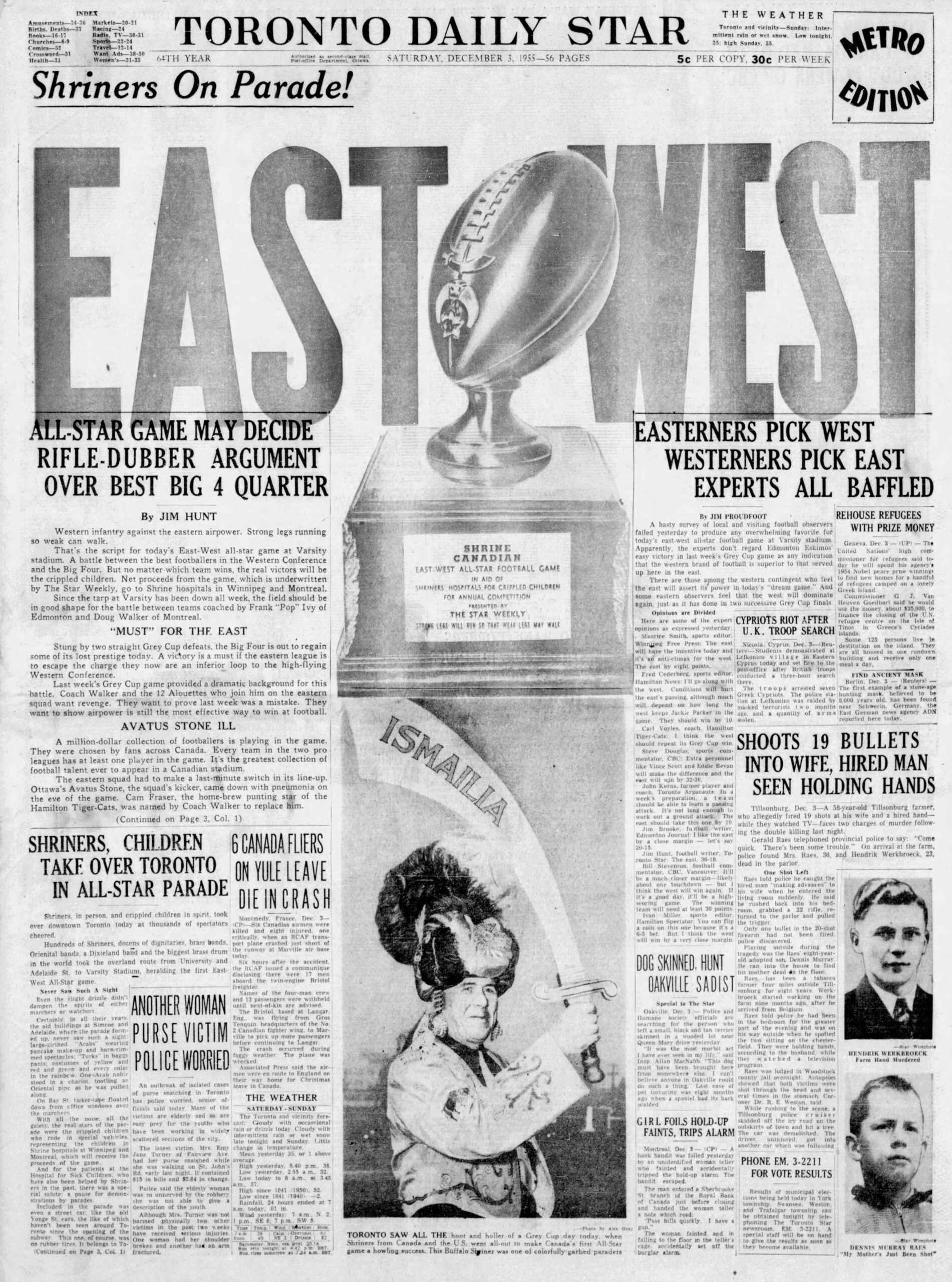
    Front page of the Toronto Star on December 3, 1955 previewing the first-ever East-West game.
    Front page of the Toronto Star on December 3, 1955 previewing the first-ever East-West game.

    There was much anticipation in the lead up to the game. Edmonton had just beaten Montreal handily in the Grey Cup the previous week. It was the second year in a row that the west had prevailed in the national championship. So, bragging rights were up for grabs between the IRFU (aka the Big Four) and WIFU when it came which union was the superior football league in Canada.

    A crowd of over 15,000 braved the rain to watch the top names in Canadian football – chosen by the fans – compete in a defensive battle. Playing in muddy conditions at Varsity, the players put on an exciting performance despite the game ending in a 6-6 tie.
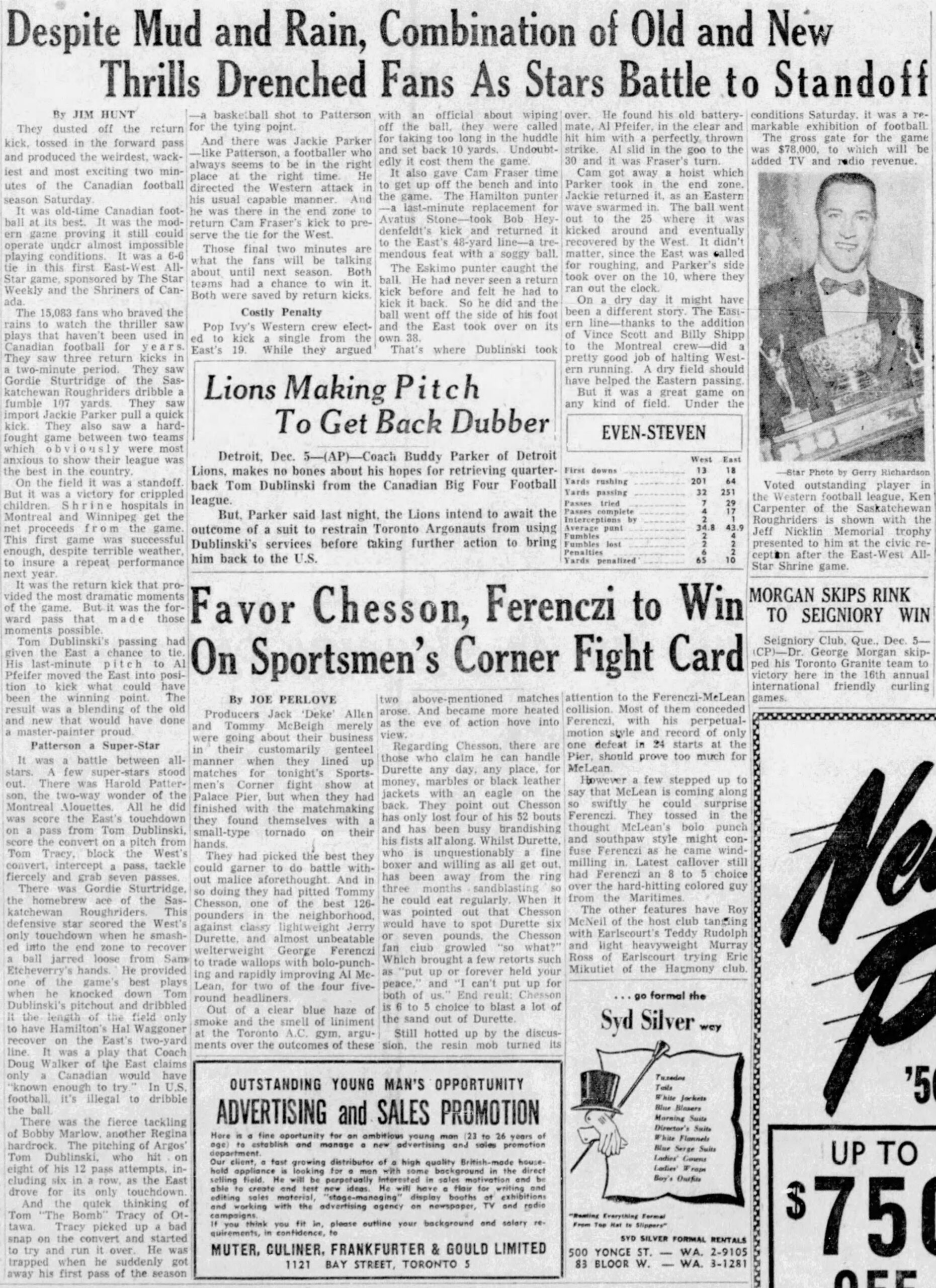
    Jim Hunt's account of the 1955 East-West game in the Toronto Star.
    Jim Hunt’s account of the 1955 East-West game in the Toronto Star (December 5, 1955).

    An account of the game by legendary reporter Jim Hunt in the Toronto Star summed it up perfectly:

    They dusted off the return kick, tossed in the forward pass and produced the weirdest, wackiest and most exciting two minutes of the Canadian football season Saturday.

    It was old-time Canadian football at its best. It was the comeback game proving it still could operate under almost impossible playing conditions. It was a 6-6 tie in this first East-West All-Star game, sponsored by The Star Weekly and the Shriners of Canada.

    The 15,083 fans who braved the rains to watch the thriller saw plays that haven’t been used in Canadian football for years. They saw three return kicks in a two-minute period. They saw Gordie Sturtridge of the Saskatchewan Roughriders dribble a fumble 107 yards. They saw import Jackie Parker play a quick kick.

    They also saw a hard-fought game between two teams which obviously were more anxious to show their league was the best in the country.

    I’m reminded by the commentary for this game that despite horrible weather, awful field conditions, and a seemingly ho-hum 6-6 score, football can still be very exciting during defensive stalemates when there’s a meaningful game to play. You don’t always have to light up the scoreboard to provide entertaining football. By the way, how neat is it read Jim Hunt’s work from early in his lengthy career?
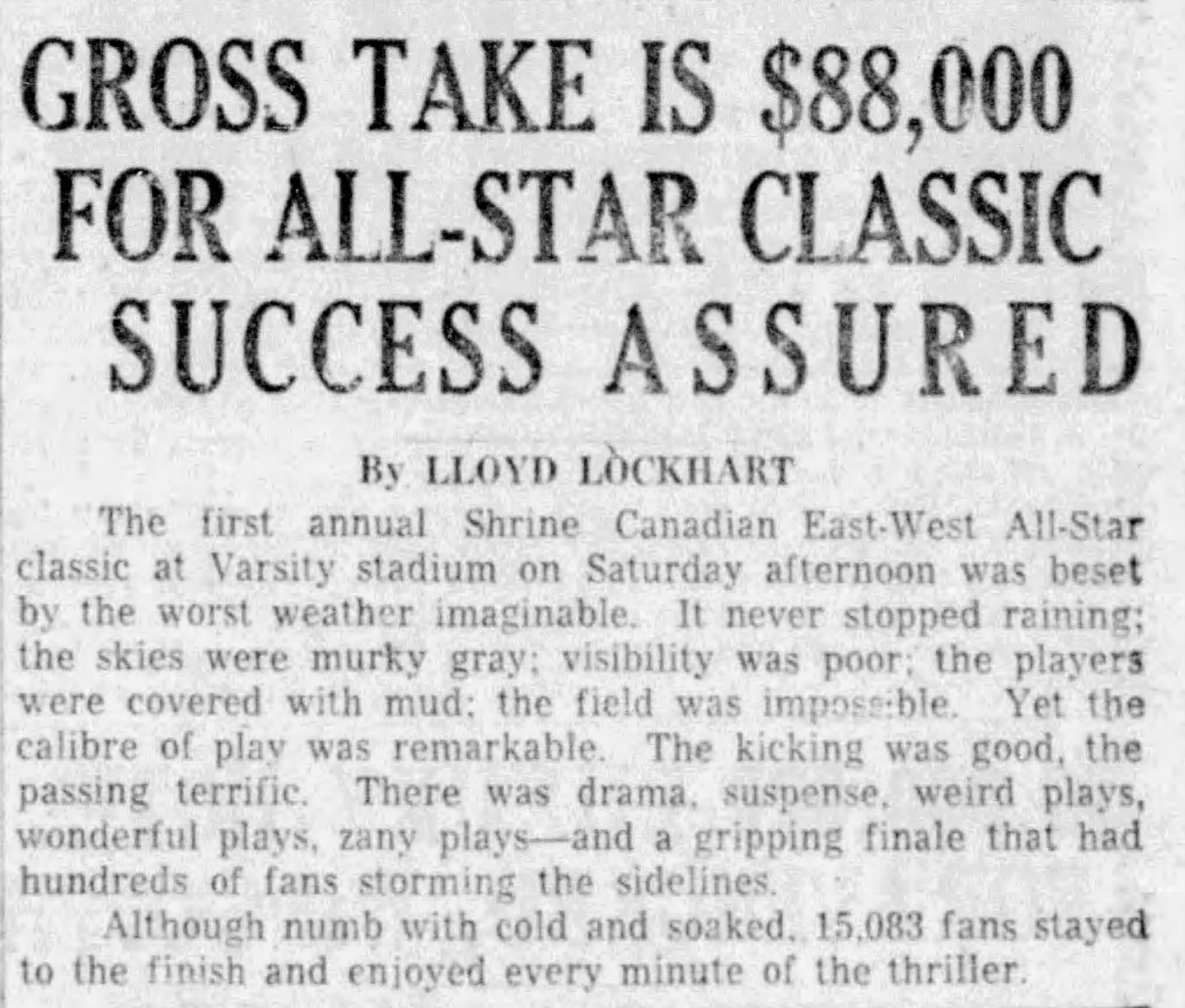
    The inaugural East-West game grossed $88,000. Net proceeds from the game were given to the Shriners’ children’s hospitals in Montreal and Winnipeg. The event was deemed a smashing success and would return the following year.

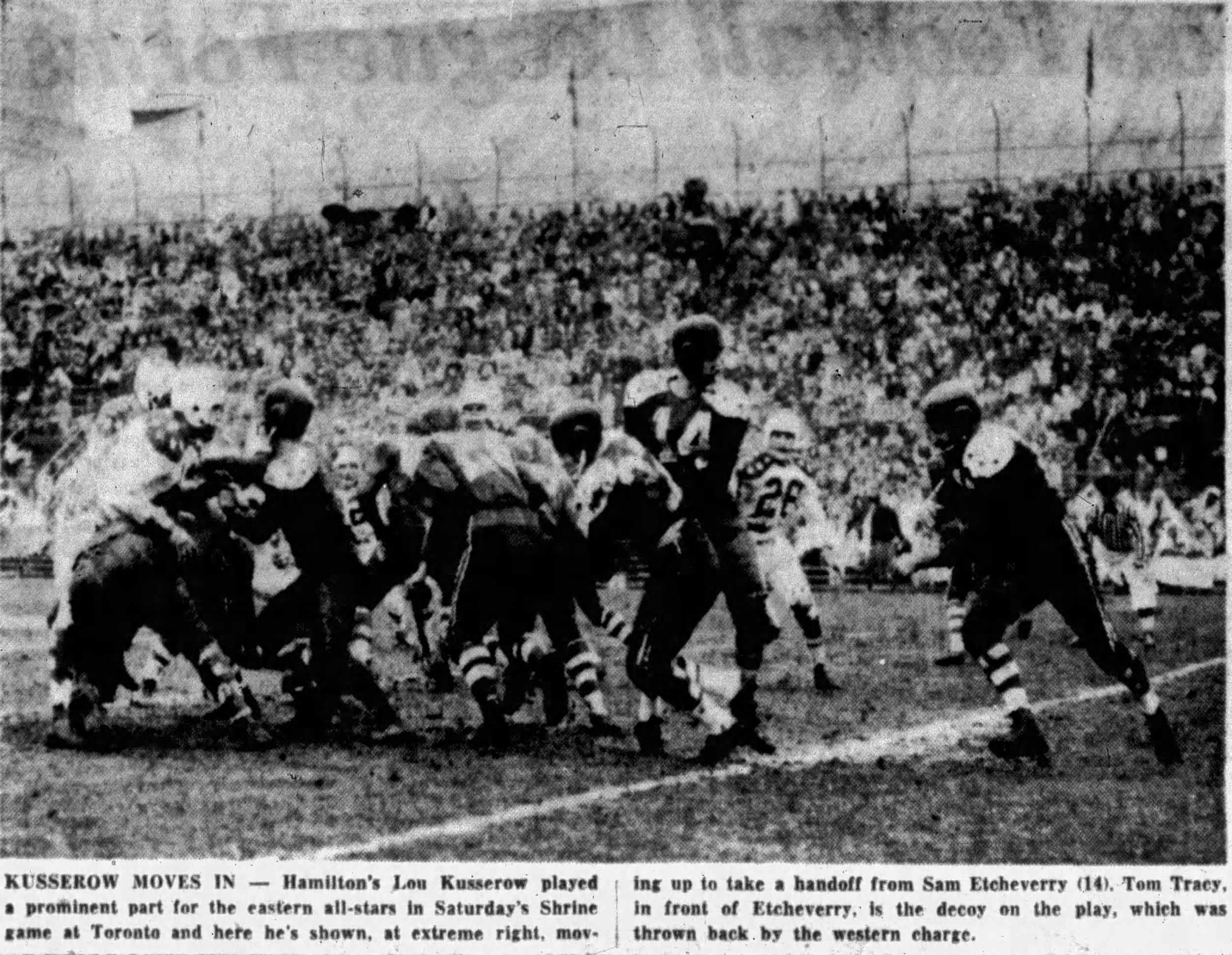
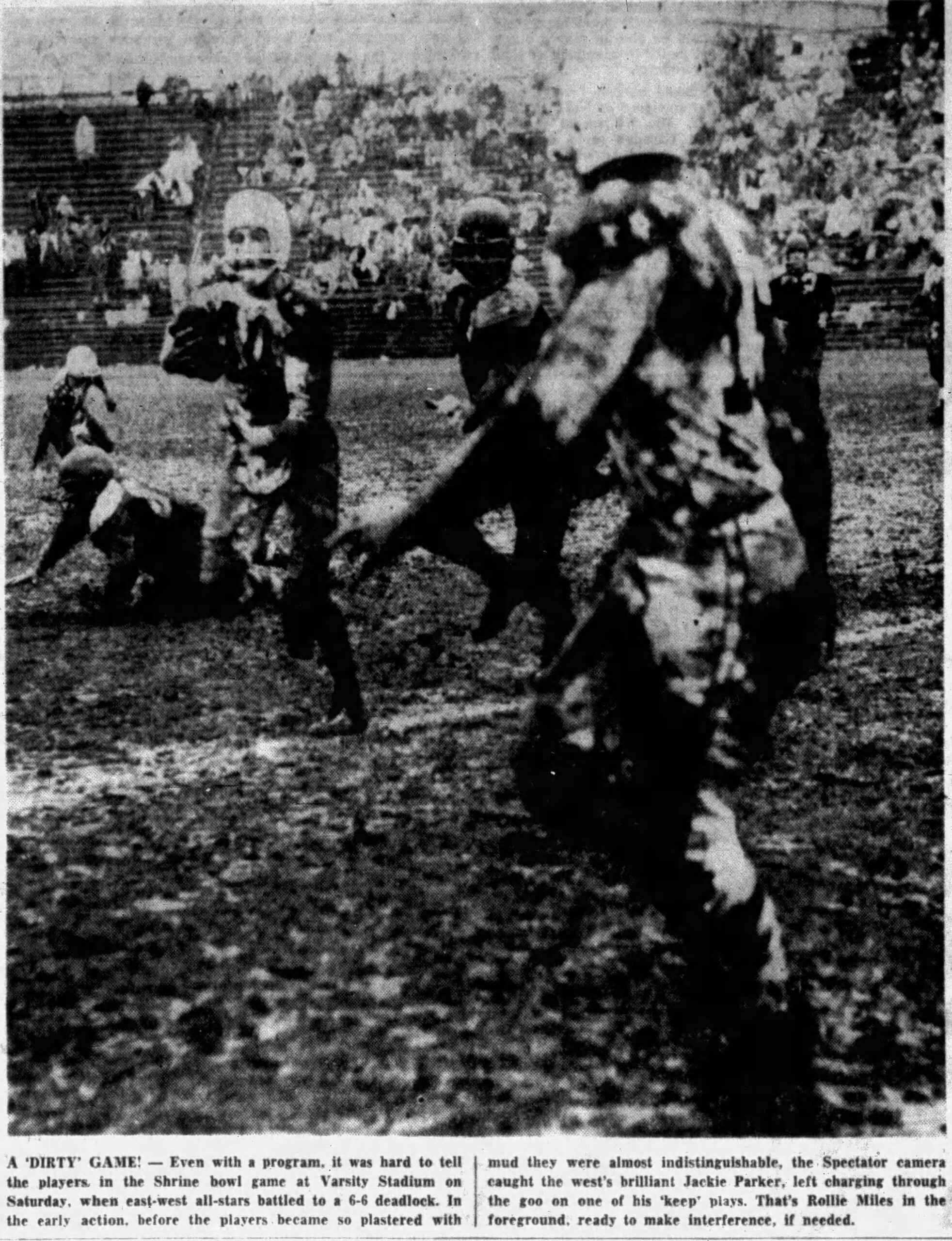
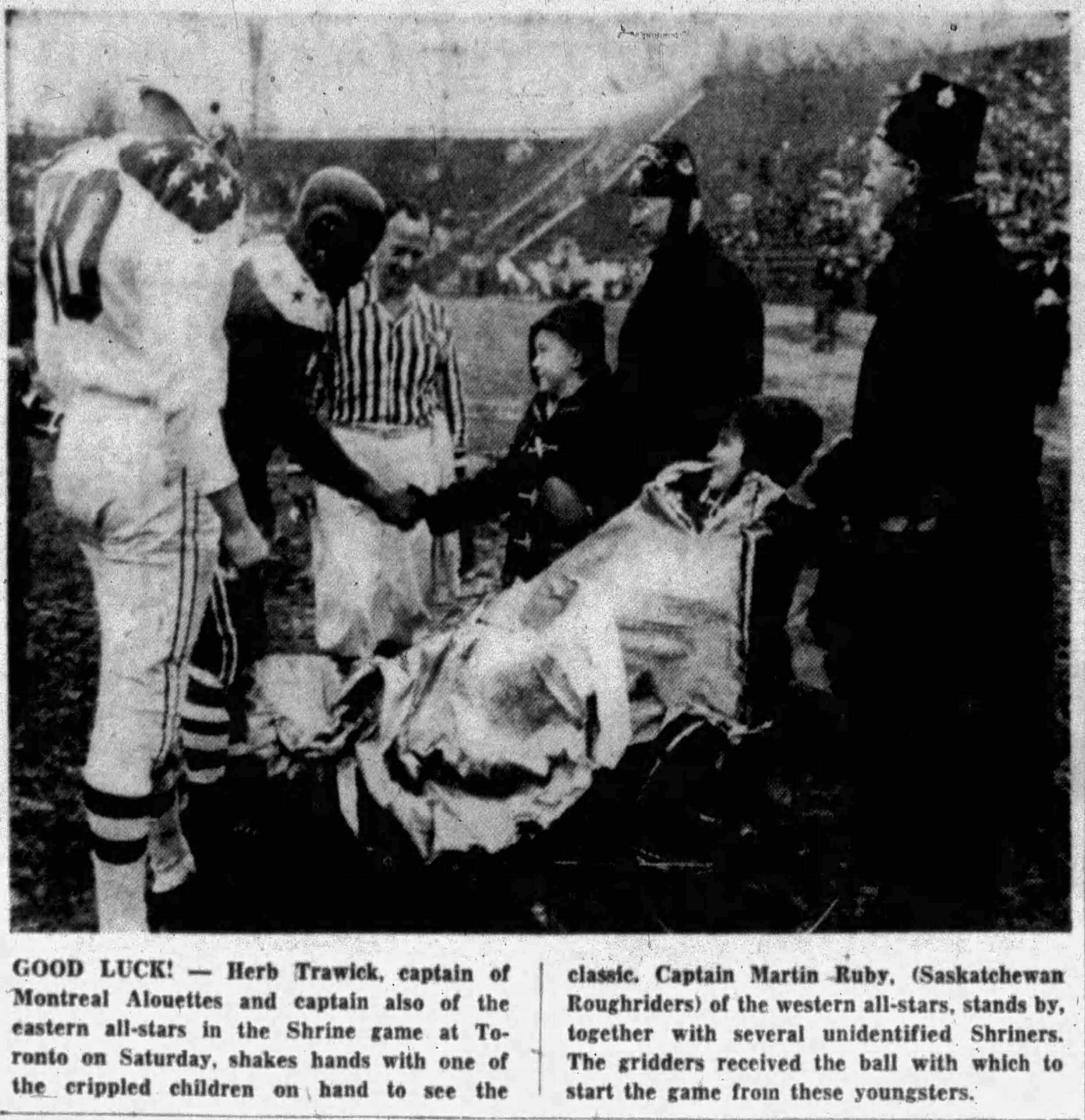
    Some photos of the action, as published in the Toronto Star and Hamilton Spectator:
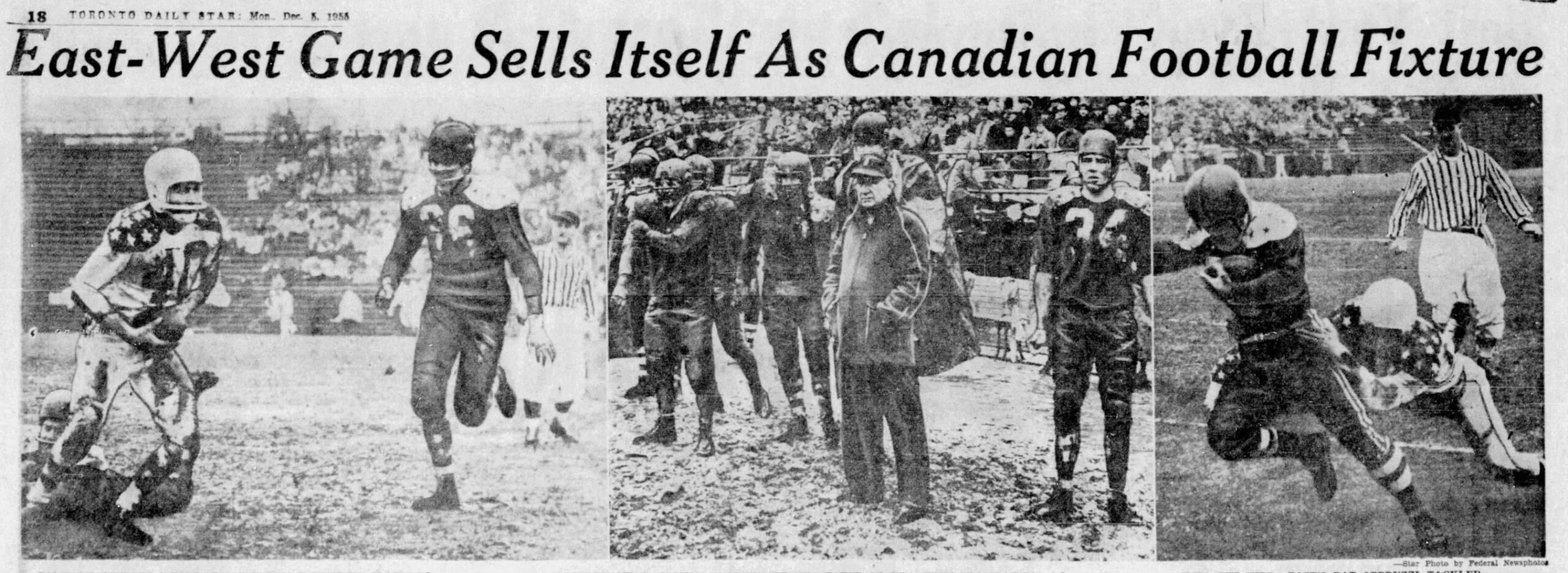
    1955 East-West game action
    1955 East-West game action
    1955 East-West game action

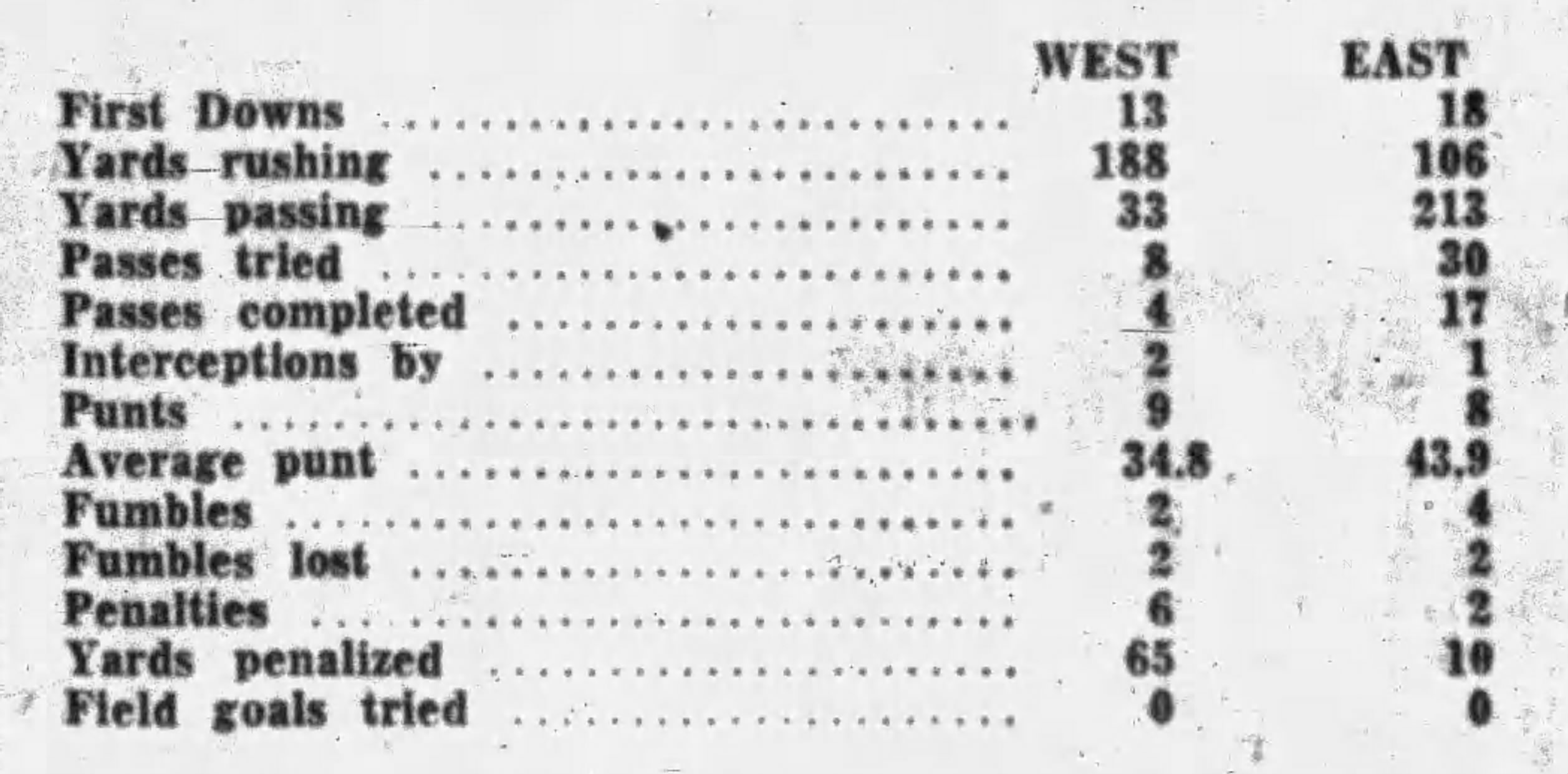
    Final stats:

    1955 East-West Game Stats

    Sources:

    Hamilton Spectator, 5 December 1955
    Toronto Star, 3 December 1955
    Toronto Star, 5 December 1955

    Fediverse Reactions
  • Canada’s First National Commissioner of Football

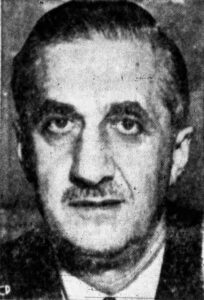
    As the CFL formally introduces Stewart Johnston as its new Commissioner this week, Canadian Football History looks back at the very first CFL Commissioner: Gerald Sydney Halter.

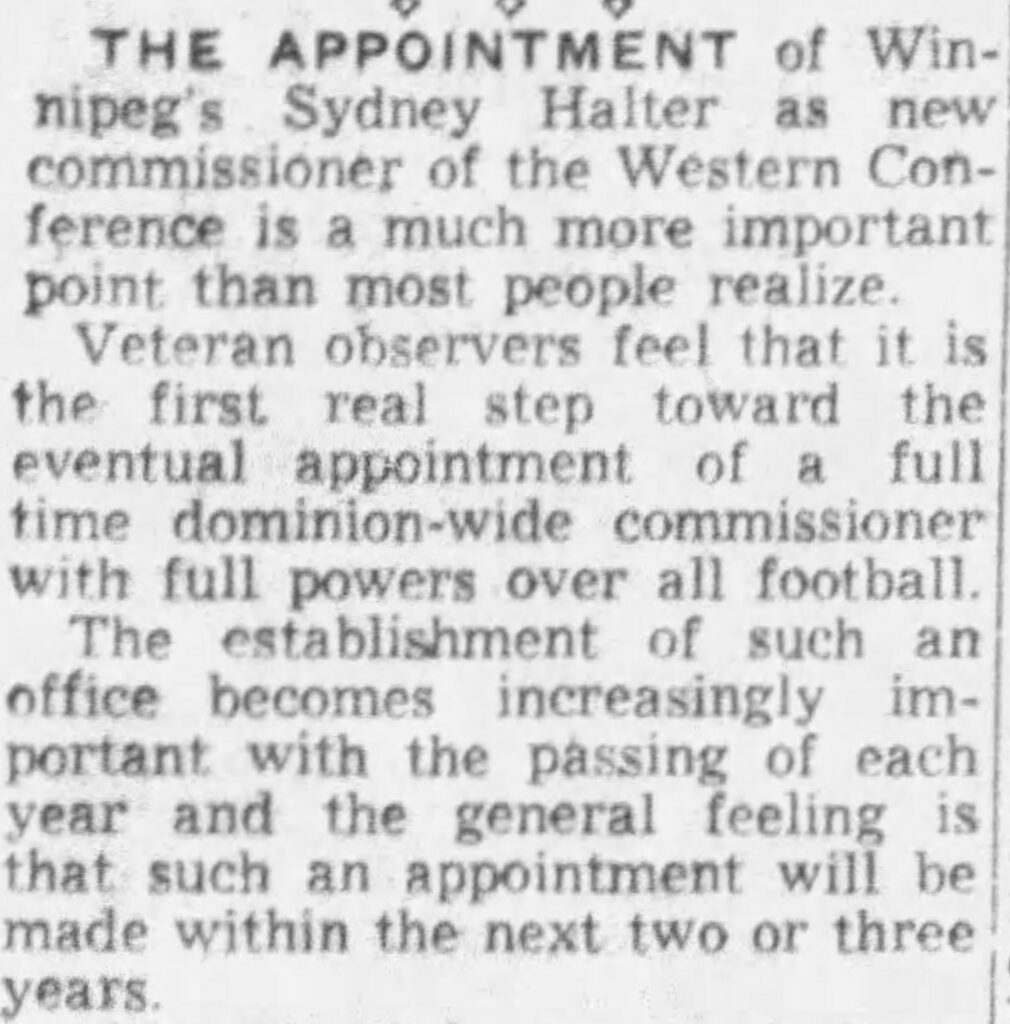
    Sydney Halter was born and raised in Winnipeg, Manitoba. He held various roles, including treasurer and president, in the Winnipeg Blue Bombers organization before being named the Commissioner of the Western Interprovincial Football Union in 1953.

    In 1956, he became the Registrar of the Canadian Football Council (CFC), a newly formed umbrella organization for both the WIFU and the eastern Interprovincial Rugby Football Union (the “Big Four”).

    Well regarded in football circles across the country, Sydney Halter was named “Canada’s first national commissioner of football” when the Canadian Football League was established by the CFC in 1958. By the way, I totally think the CFL should adopt “National Commissioner of Football” as the official job title for its top role.

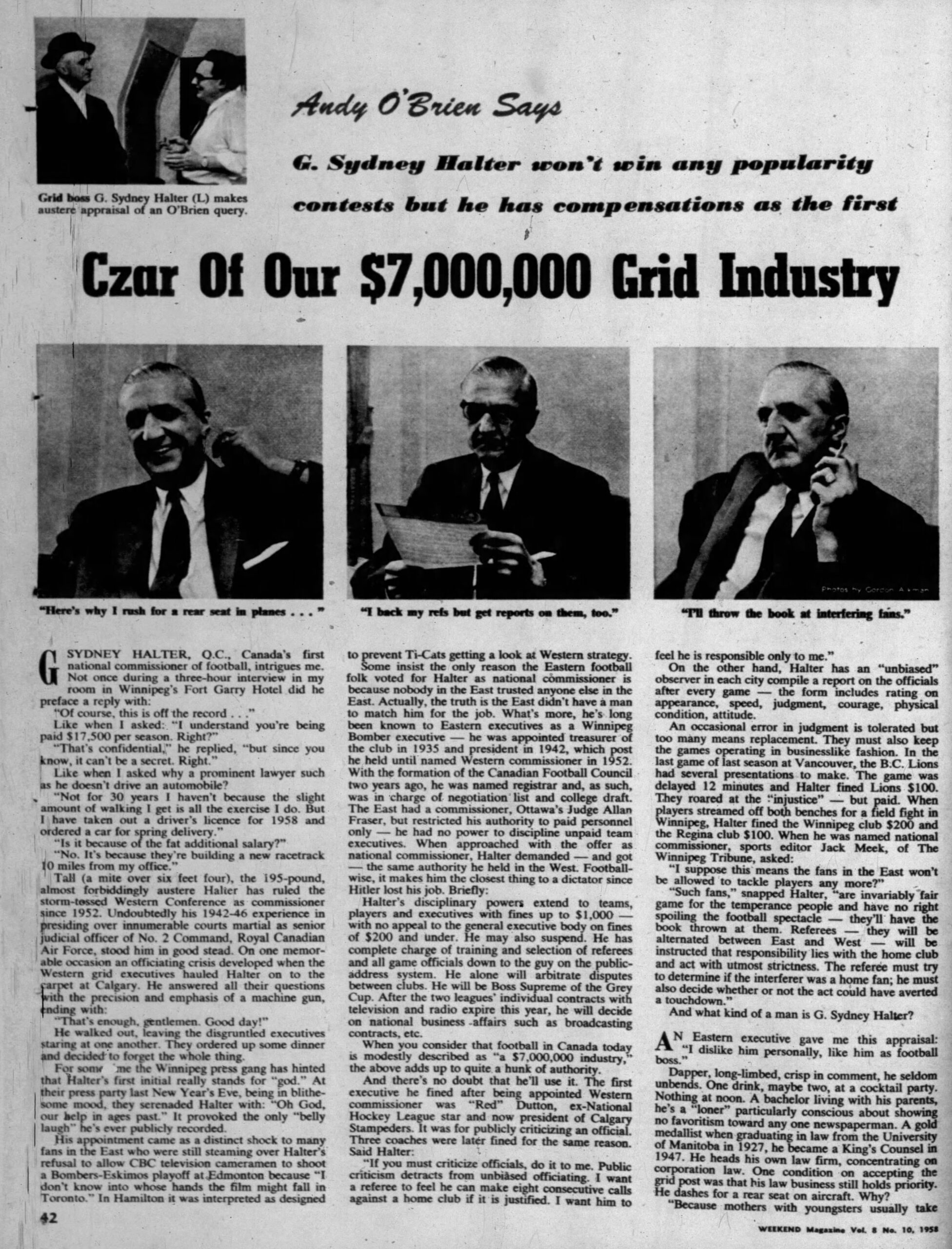
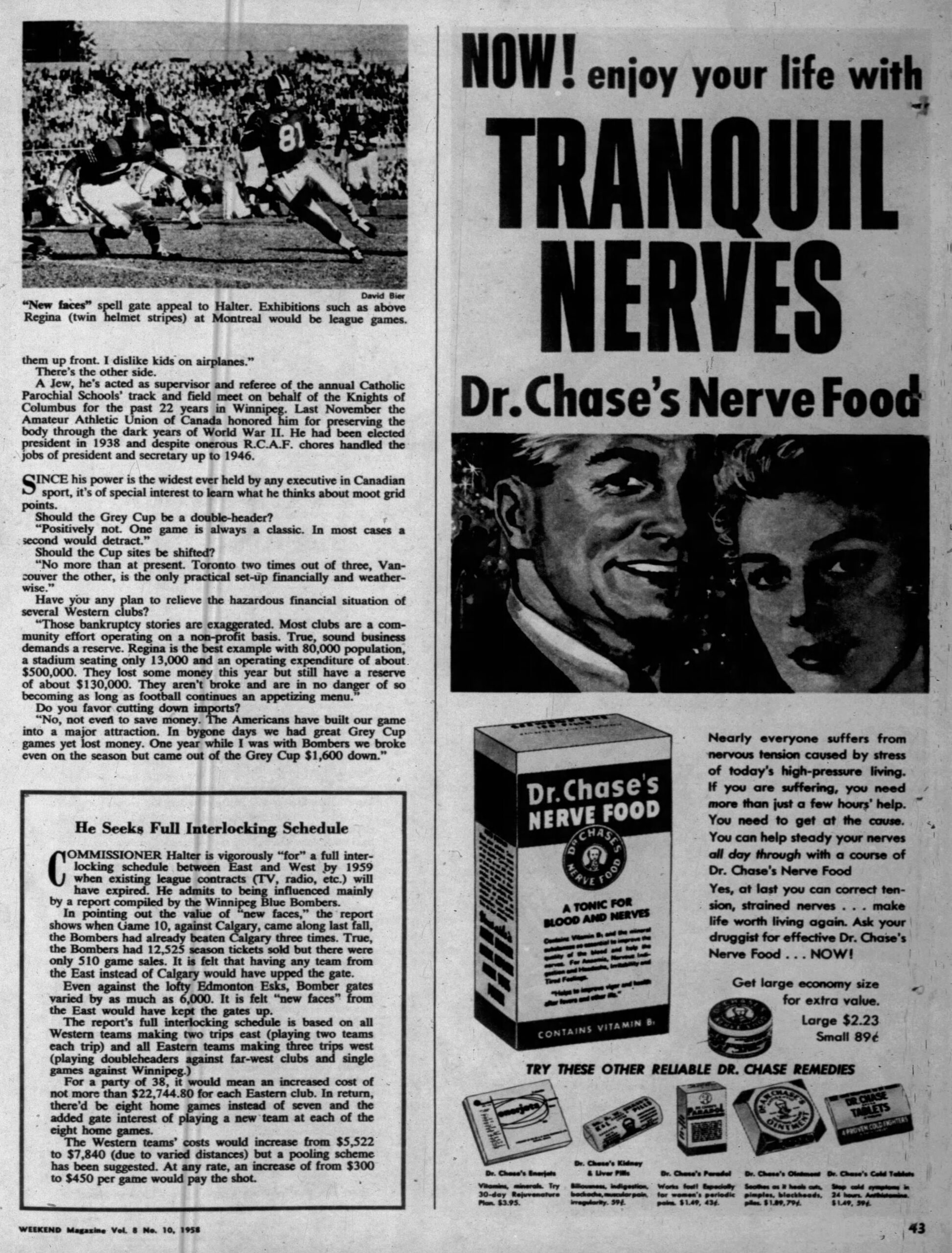
    Described as a chain-smoking bachelor or “loner” by some, Sydney Halter wielded quite a bit of power in his role as Canada’s professional football boss. The article below (click on them to enlarge) is lengthy but well worth the read. It portrays Halter as a straight shooter and touches on how he didn’t hesitate to deliver fines to players and teams – or fans who interfered in the game. Apparently, home fans tackling opposing players from scoring touchdowns was a thing. Yikes.

    O’Brien, Andy. “Czar of Our $7,000,000 Grid Industry.” The Hamilton Spectator, 8 March 1958, p. 90.
    O’Brien, Andy. “Czar of Our $7,000,000 Grid Industry.” The Hamilton Spectator, 8 March 1958, p. 91.

    Sydney Halter served as the CFL’s commissioner until 1966. He was an early advocate for an interlocking schedule between the East and the West. A lawyer by profession, he also served in the Royal Canadian Air Force and held leadership positions in other Canadian sporting organizations outside of football.

    Sydney Halter is a member of the Canadian Football Hall of Fame, inducted in 1966, as “the architect of the modern-day Canadian Football League.” He died in 1990. He was Jewish and was inducted posthumously into the International Jewish Sports Hall of Fame in 2005.

  • Roaring B.C. Lions Surprise Mighty Blue Bombers

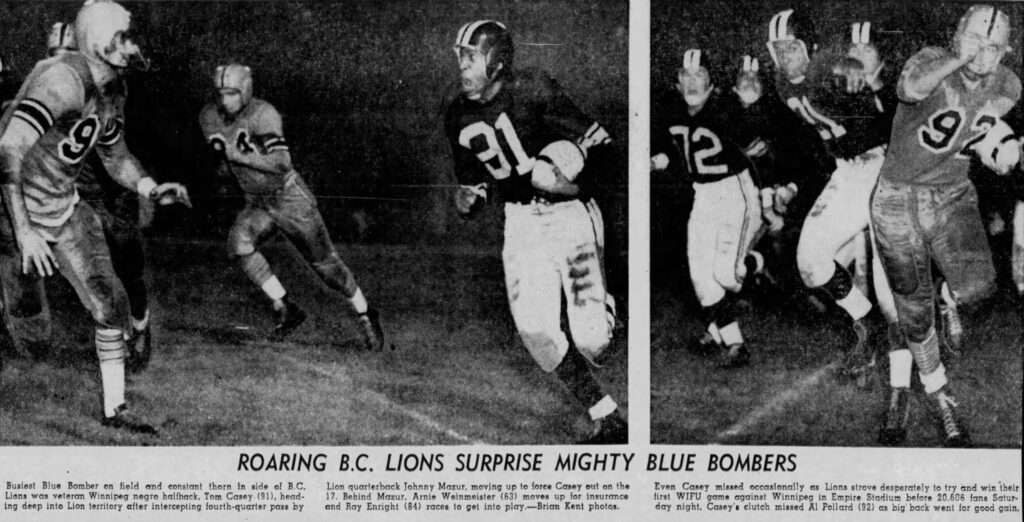
    BC Lions first game action (Vancouver Sun)
    Source: The Vancouver Sun, 30 August 1954, page 14.

    On August 28, 1954, the British Columbia Lions made their debut in the Western Interprovincial Football Union narrowly losing to the Winnipeg Blue Bombers 8-6 at Empire Stadium in Vancouver.

    Winnipeg halfback Tom Casey (#91) was a key player in the Bombers’ victory.

    The game attracted a crowd of 20,606.