Tag: Winnipeg Blue Bombers

  • Winnipeg Leads Opposition to CFL American Expansion

    When the Canadian Football League rolled out American expansion in the early 1990s, support for the idea was far from unanimous. Yes, proponents argued that U.S. expansion was the way forward to grow the league and to help stabilize the struggling Canadian teams. But detractors countered that the CFL simply stood too much to lose in the process.

    Traditional CFL fans – many who had supported their teams for decades – feared the CFL would gradually lose its identity and uniqueness as more American teams came onboard. Canadian players felt threatened that they would ultimately lose their jobs once it became evident that the league’s import ratio could not be enforced in the United States due to American labour law. Add in some sceptical media and tepid team governors and it became quite apparent that this was going to take some serious convincing by Larry Smith, the CFL commissioner at the time, who was tasked with implementing the league’s expansion plan.

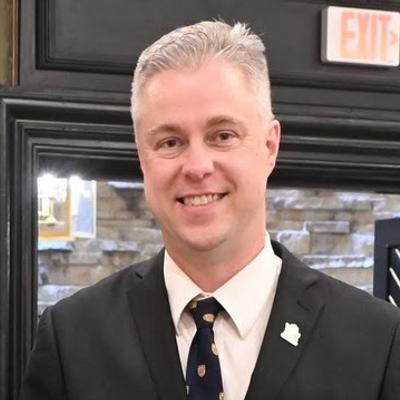
    Perhaps the greatest opposition to CFL expansion to the United States came out of Winnipeg. Looking back, it appears the Manitoba capital was ground zero for opposition to American expansion. I had a great chat with Ed Tait on this subject. Ed was the beat reporter for the Winnipeg Sun covering the Blue Bombers at the time. He recalls how Winnipeg took a bit of heat for being against expansion.
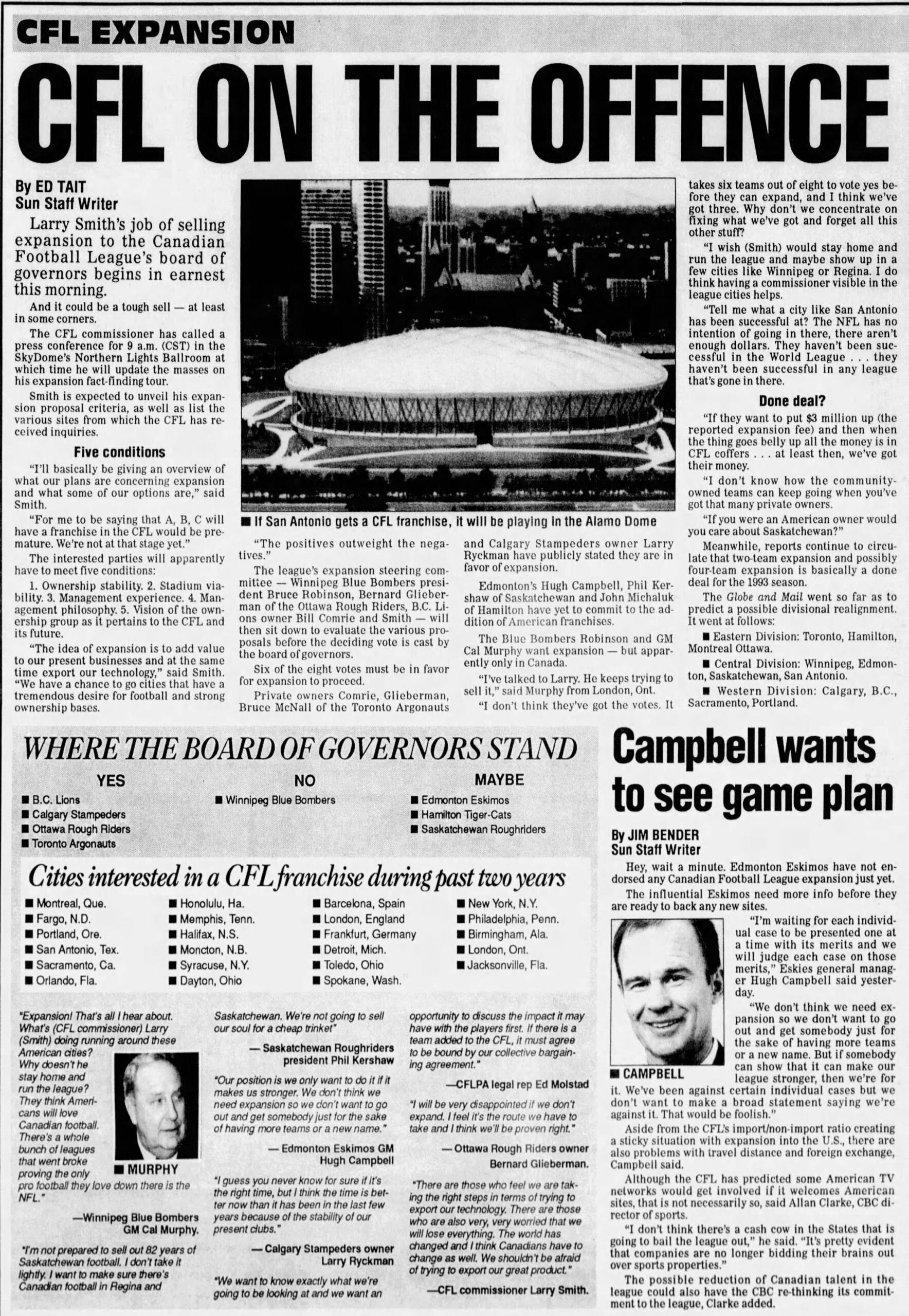
    Ed Tait's piece in the Winnipeg Sun (November 12, 1992) along with other CFL expansion tidbits.
    Ed Tait’s piece in the Winnipeg Sun (November 12, 1992) along with other CFL expansion tidbits.

    “Cal Murphy (Winnipeg GM and head coach) and Bruce Robinson (Blue Bombers president) were against it,” Ed recalls. “Cal Murphy being a Canadian certainly influenced his opposition, for sure.”

    “I remember an article in one of the Toronto newspapers that basically called the Bomber organization a bunch of dinosaurs stuck in the past and unwilling to embrace change.” Winnipeg responded by selling t-shirts with the slogan Dinosaurs play hard rock football.

    Winnipeg’s politicians even got into the debate. Winnipeg South Centre MP Lloyd Axworthy, who would later serve as a Minister of the Crown in Jean Chrétien’s government, introduced a Private Member’s Bill in the House of Commons to block the CFL from expanding to the U.S., raising the ire of Larry Smith.

    Canadian Press article about Winnipeg MP Lloyd Axworthy anti-expansion bill.
    Canadian Press article about Winnipeg MP Lloyd Axworthy anti-expansion bill.

    In the end, though, the CFL’s Board of Governors approved the addition of Sacramento and San Antonio by a vote of 7-1. Yes, Winnipeg was the lone dissenter.


    Ed Tait shared with me some of his memories of covering the Winnipeg Blue Bombers during the CFL USA era. He was in the room at the Coach of the Year dinner in Edmonton in January 1993 when San Antonio backed out just two weeks after being admitted. “We were all there to celebrate,” he recalls “Then we get the news that San Antonio isn’t going to happen. Larry Smith literally ducked out through the kitchen to avoid giving any interviews.” Talk about a rocky start.

    Wild is the word he uses to describe the expansion experience. “They were definitely fun road trips. I kind of marvelled at covering a Bombers game in places like Shreveport, Louisiana and Birmingham, Alabama and Las Vegas,” he said.

    The game in Las Vegas is notorious for drawing such a dismal crowd. Only 2,350 fans came out to Sam Boyd Stadium to watch the Las Vegas Posse host the Blue Bombers. And about a third of them were from Winnipeg who came down for the game. Yikes.

    Read Ed’s article recollecting the game in Las Vegas: https://www.bluebombers.com/2024/10/16/remember-when-blue-bombers-at-las-vegas-october-15-1994/

    Ed shares the commonly held view that the CFL expanded out of desperation and didn’t do its homework on choosing expansion markets. “It made the league a bit of a laughing stock,” he admits. That said, Ed made a habit of collecting various memorabilia of the U.S.-based teams. No doubt, he recognized that the expansion experiment wouldn’t last and that the merchandise would be something unique to hold on to.

    Perhaps my favourite story he shared was his experience in Shreveport. Apparently, Shreveport had a pretty high homicide rate. On the ride to the stadium, when he asked the taxi driver if it was true that most people there carried handguns for protection, the driver nonchalantly raised the console cover to show a loaded .45 handgun. Guess that answered that question.

    Ed told me that the most memorable Grey Cup that he covered as a journalist was the 1994 game in Vancouver between the BC Lions and Baltimore. That was the first time an American team played in the Grey Cup. “The whole us vs. them made this Grey Cup very special,” he says. And just last year at the 2025 Grey Cup in Winnipeg, several fans from Baltimore were there proudly waving their Stallions flags, representatives from a short-lived and bygone era.

    Some thirty plus years later, there are no American teams in the CFL. Sure, the topic of U.S. expansion comes up now and then. I guess we’ll have to wait and see if it ever gains any momentum again. But for now, I think it’s safe to say that the lone dissenters, the so-called dinosaurs in Winnipeg were right all along.


    Special shoutout to Ed Tait, who is now the Senior Writer/Reporter for the Winnipeg Blue Bombers, for taking the time to share his thoughts and memories with me. Thanks Ed.


    Sources:
    The Winnipeg Sun, 12 November 1992
    The Ottawa Citizen, 29 November 1992

    Fediverse Reactions
  • Five Canadian Football Players Lost in 1956 Plane Crash Part II

    The 1956 plane crash that claimed the lives of five Canadian football players garnered widespread newspaper coverage across Canada and parts of the United States.

    Melvin Becket, Mario DeMarco, Gordon Sturtridge, and Ray Syrnyk of the Saskatchewan Roughriders and Calvin Jones of the Winnipeg Blue Bombers were aboard Trans-Canada Air Lines Flight 810 when it crashed into a remote area of British Columbia.

    Here is a sampling of news articles about the tragedy:

    Regina Leader-Post front page, December 10, 1956
    Front page of the Regina Leader-Post on December 10, 1956.
    Regina Leader-Post article about Mario DeMarco
    Heart-breaking article in the Regina Leader-Post (December 10, 1956) expressing hope that Mario DeMarco and Melvin Becket would somehow survive the disaster.
    Iowa City Press-Citizen front page, December 10, 1956
    Front page of the Iowa City Press-Citizen (December 10, 1956) with a focus on Calvin Jones, who was a standout college player at the University of Iowa before joining the Winnipeg Blue Bombers.
    Saskatoon Star-Phoenix front page, December 10, 1956
    Front page of the Saskatoon Star-Phoenix on December 10, 1956.
    Fediverse Reactions
  • Five Canadian Football Players Lost in 1956 Plane Crash

    On Sunday, December 9, 1956, tragedy struck Canadian football when five professional players lost their lives in one of the country’s worst aviation disasters.

    Trans-Canada Air Lines Flight 810 left Vancouver that evening bound for Calgary with 62 passengers and crew onboard. Among the passengers were four members of the Saskatchewan Roughriders (Melvin Becket, Mario DeMarco, Gordon Sturtridge, and Ray Syrnyk) and Calvin Jones of the Winnipeg Blue Bombers. They were returning from Vancouver, where the 1956 Canadian Football Council all-star game was played the previous day.

    About an hour after takeoff, the plane crashed into Mount Slesse, near Chilliwack, BC. All 62 people aboard the aircraft died. The crash site is in a remote area of British Columbia, which made recovery efforts virtually impossible. The remains of both the plane and the victims remain at the site to this day.

    Here is a closer look at the five players who were lost in the disaster:

    Melvin Becket was a native of Chicago, Illinois. He was drafted by the NFL’s Green Bay Packers but opted to play for the Saskatchewan Roughriders. His wife was expecting their child just after Christmas.

    Mario DeMarco was an American from New Jersey. He and Melvin Becket were not only teammates; they were also business partners of a local gas station in Regina. The DeMarco–Becket Memorial Trophy is awarded to the Most Outstanding Offensive Lineman in the CFL’s West Division.

    Calvin Jones was an African-American from Ohio who came to Canada to play professional football with the Winnipeg Blue Bombers after a standout college career at the University of Iowa. He missed an earlier flight out of Vancouver so was instead put on the ill-fated TCA Flight 810.

    Gordon Sturtridge was a native of Winnipeg, where he started his professional football career. He was a three-time western all-star and played four seasons with Saskatchewan. His wife Mildred was also aboard the flight. They left behind three young children.

    Ray Syrnyk was a native of Saskatoon and played on the 1953 Saskatoon Hilltops junior championship team. He was the youngest (22) of the five players lost.

    Find A Grave Memorial for Trans-Canada Airlines Flight 810 Victims

    Sources:
    The Province, 10 December 1956
    The Regina Leader-Post, 10 December 1956
    The Saskatoon Star-Phoenix, 10 December 1956

  • CFL Media Guides in the 1960s

    For eons, the Canadian Football League published Media Guides or Fact Books for its teams. These little handbooks were meant to familiarize local journalists with the players and coaching staff of the team they were covering. They included biographies, statistics, records, and team histories.

    Team media guides were also a great little souvenir for the savvy football fan. I have several in my own collection I like to peruse every now and then.

    The CFL still produces them at least in electronic form. At least for some teams. I’m not sure if the league still offers print copies, though. It looks like they’ve met the same fate as game day programs and printed tickets, which is unfortunate.

    Anyway, I thought what better way to spend the dog days of summer than by taking a look at some of these CFL media guides from the 1960s (or the late 1950s in a couple of cases). It was an exciting decade for the CFL and Canadian football.

    Here are some photos of the media guides (front and back covers) for each CFL team from that era:

    The above photos are courtesy of the good folks at the Canadian Football Research Society.

    Fediverse Reactions
  • The CFL Scores in Saint John

    The Canadian Football League has long pined for a presence in Atlantic Canada. In fact, Halifax has been granted not one but two conditional expansion franchises, the emphasis on “conditional” as neither attempt materialized. When Moncton opened its new stadium in 2010 there was some chatter about the Hub City being a home for a future CFL team. While no expansion team has been forthcoming, Moncton has hosted three regular season CFL games. And of course, there have been regular season games played in Halifax and Acadia University in Wolfville, Nova Scotia, as well.

    “CFL Tickets Go On Sale May 1.” Saint John Times-Globe, 23 April 1986, p. 29.

    But the CFL actually made its debut in the Maritimes back 1986 when Saint John, New Brunswick hosted an exhibition game between the Montreal Alouettes and Winnipeg Blue Bombers. The game, played at the then newly constructed Canada Games Stadium, drew a crowd of over 11,000 fans who saw the Bombers down the Als 35-10.

    “10,000 Assured for CFL Game.” Saint John Telegraph-Journal and Evening Times-Globe, 6 June 1986, p. 31.

    It appears the game was designed to take the CFL on the road and expose the product to a new market rather than to test the waters for a prospective expansion site. In fact, CFL Commissioner Doug Mitchell seemed to go out his way to temper any expansion expectations. Still, New Brunswickers embraced the CFL and the players enjoyed the Atlantic hospitality.

    Munford, Bruce. “Thousands Flock to See Bombers Blast Montreal.” Saint John Evening Times-Globe, 9 June 1986, p. 15.

    The Bombers were quarterbacked by veteran Tom Clements, who had his way with the Montreal defence. A scary moment occurred early in the game when Montreal’s Nick Arakgi suffered a broken vertebrae when he was hit after reaching up high for an overthrown pass by Montreal quarterback Joe Barnes. He was taken to the hospital and ended up missing the entire 1986 CFL season.

    Saint John Mayor Elsie Wayne was ecstatic about having the CFL in her city. She presented Winnipeg head coach Cal Murphy with a trophy called the Saint John CFL Cup after the game.

    A Labatt’s ad sponsoring the CFL game in Saint John. (Saint John Telegraph-Journal, 6 June 1986, p. 71.)
    An ad promoting the CFL game in Saint John. (Saint John Telegraph-Journal, 6 June 1986, p. 72.)

    The CFL’s success in Saint John in 1986 prompted the league to return the following year for another exhibition game. This time, Montreal played the Hamilton Tiger-Cats. The Ti-Cats won 14-13 in what turned out to be the last game for the Montreal Alouettes who folded a couple weeks later.


    Kelly Ryback was the original “Buzz”, the mascot of the Winnipeg Blue Bombers. Here are his personal reflections of the event.

    The ’86 trip was a career and life highlight!

    I had never been to an ocean or feasted on lobster. I was on the advance team in Saint John Wednesday through Sunday.

    We stayed at the Hilton on the harbour, ate lobster, mussels, and frog legs several times. We were hosted by Labatt’s with summer student valets. One became a friend for life, still 39 years later.

    Meeting Mayor Elsie Wayne in her office was a hoot and she later hosted a fine reception where we were all presented with City of Saint John ties.

    The crowd of 12K+ was fantastic and it was a bright, sunny day.

    An absolutely incredible event.

    A souvenir t-shirt from the 1986 CFL game in Saint John and a City of Saint John tie.
    Photo provided by Kelly Ryback.