Category: Advertisements

  • Getting Ready for the Grey Cup’s TV Debut

    It’s September 1952 and a new technology – black and white television – is taking the country and much of the world by storm. The Canadian Broadcasting Corporation (CBC) entered the TV business with two flagship stations: CBFT in Montreal and CBLT in Toronto.

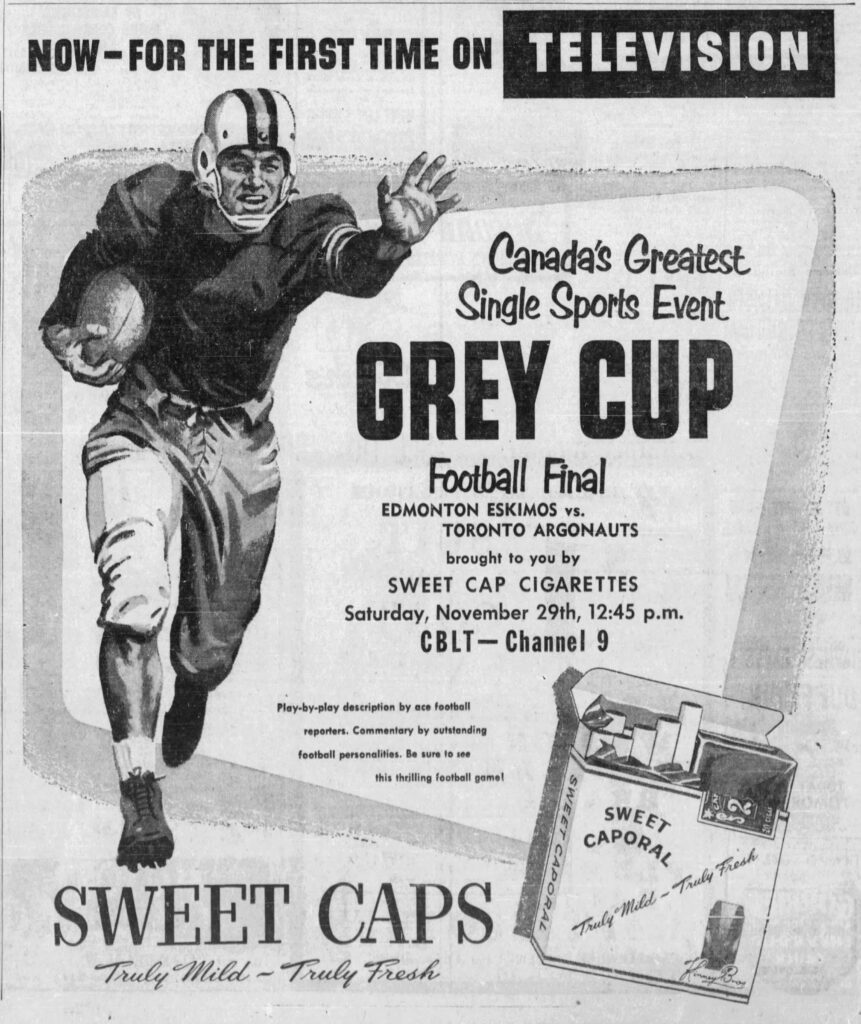
    The decision was soon made to broadcast the upcoming Grey Cup game on CBLT. The Canadian Rugby Union championship was scheduled for Saturday November 29th at Varsity Stadium in Toronto.

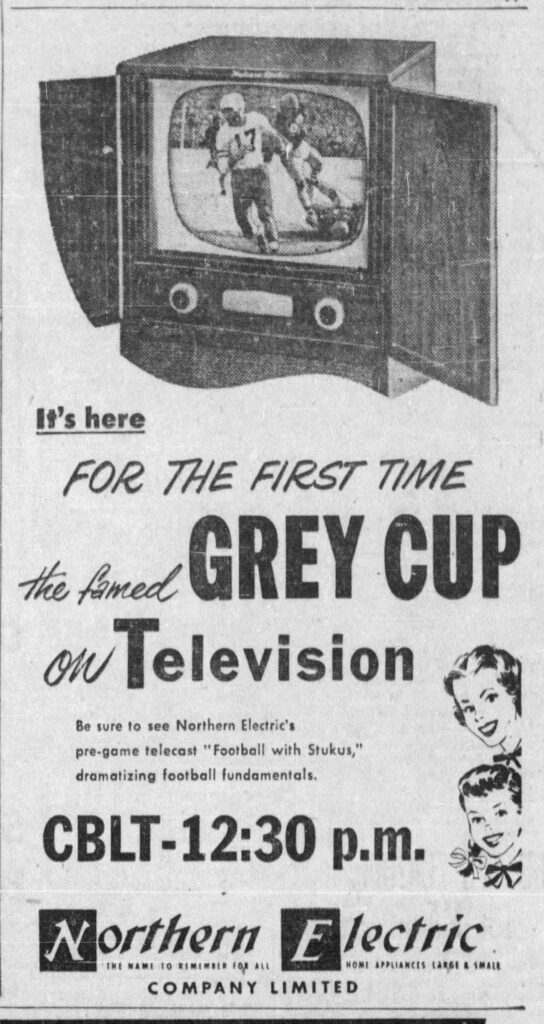
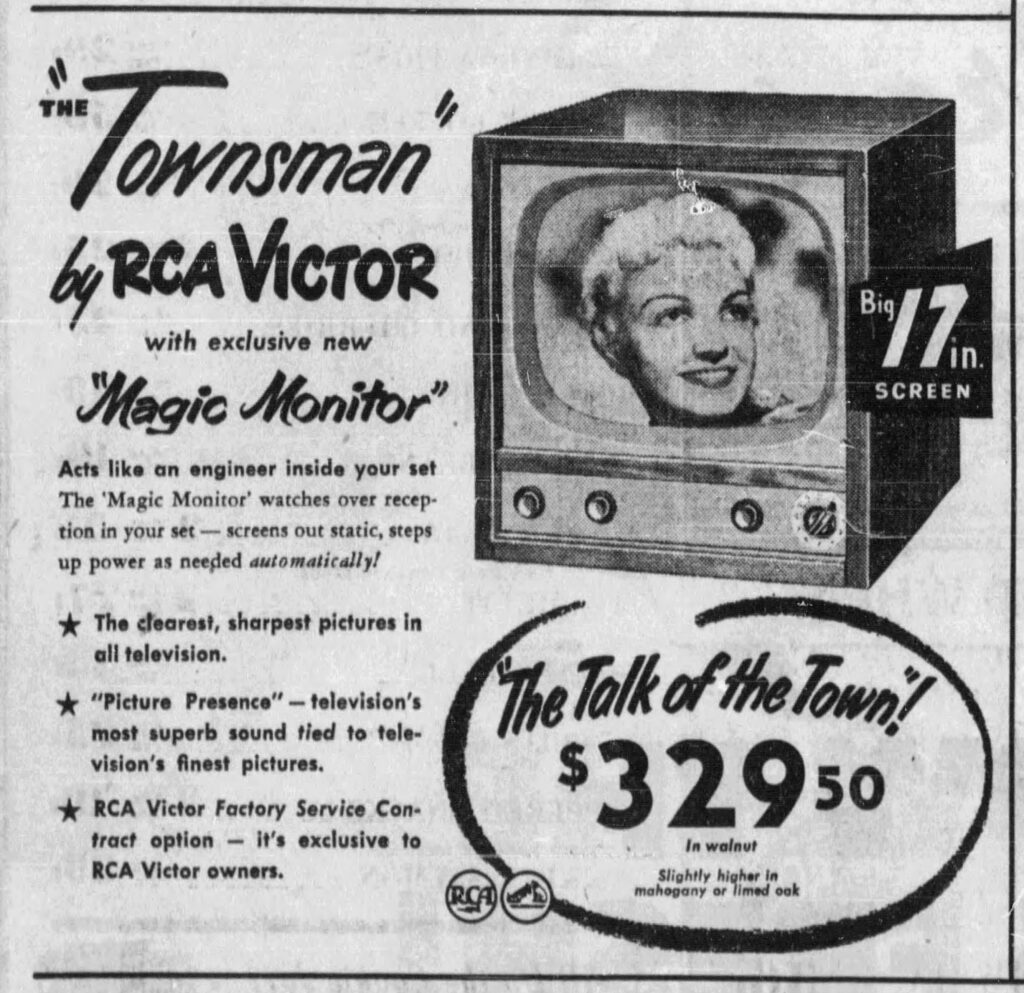
    The novelty factor of the new technology coupled with the popularity of the hometown Toronto Argonauts, who were playing in the championship, helped drive sales for television sets in Toronto. Several ads selling TVs appeared in local newspapers. These didn’t come cheap, but vendors were more than happy to set up affordable payment plans for excited football fans.

    While the Grey Cup game itself was the first Canadian football game ever televised, broadcast crews did a practice run a few days before in the playoff game between the Argonauts and the Sarnia Imperials of the Ontario Rugby Football Union. In those days, the ORFU still challenged for the Grey Cup. The Toronto-Sarnia Grey Cup semi-final game at Varsity Stadium was used as the dress rehearsal for the big game. The 1952 Grey Cup commentators Norm Marshall and Larry O’Brien were actually chosen after an audition for the roles was held during the Sarnia game.

    Notes about the TV practice run done during the Grey Cup semi-final between Toronto and Sarnia (Toronto Star, 27 November 1952)

    Pubs in and around Toronto with television sets were packed on the day of the game. Meanwhile, in nearby Hamilton, Westinghouse set up several TVs so that employees and friends could watch the game. The broadcast even included a short pre-game show hosted by Annis Stukus.

    In the end, the Argonauts defeated Edmonton by a score of 21-11 in front not only record crowd at Varsity Stadium but also tens of thousands of television viewers in the Toronto area. A new era for the Grey Cup and for Canadian television was here.


    Sources:

    Patskou, Paul. “The First Televised Grey Cup Game.” Canadian Football Research Society. Accessed October 28, 2025. https://www.canadianfootballresearch.ca/the-first-televised-grey-cup-game/.

    The Toronto Star, 27 November 1952

  • Portland Hosts Fast Break CFL Football, Precursor to CFL USA Expansion

    In 1992, the Canadian Football League was looking to grow. Larry Smith was appointed the CFL’s new commissioner with a mandate to expand the CFL. Of course, Montreal and Halifax were high on Smith’s list of potential sites. But so, too, were several cities south of the border. One of these cities was Portland, Oregon.

    Located in the northwestern United States, Portland was a mid-sized city with a suitable stadium and a credible ownership group with the needed capital to both pay for and operate an expansion franchise. It was close enough to the border so that something “Canadian” didn’t sound too foreign. Heck, it was almost as if it could be a natural rival for the BC Lions. Paul Allen, the owner of the Portland Trail Blazers basketball team, was the man hoping to bring the CFL to Oregon.

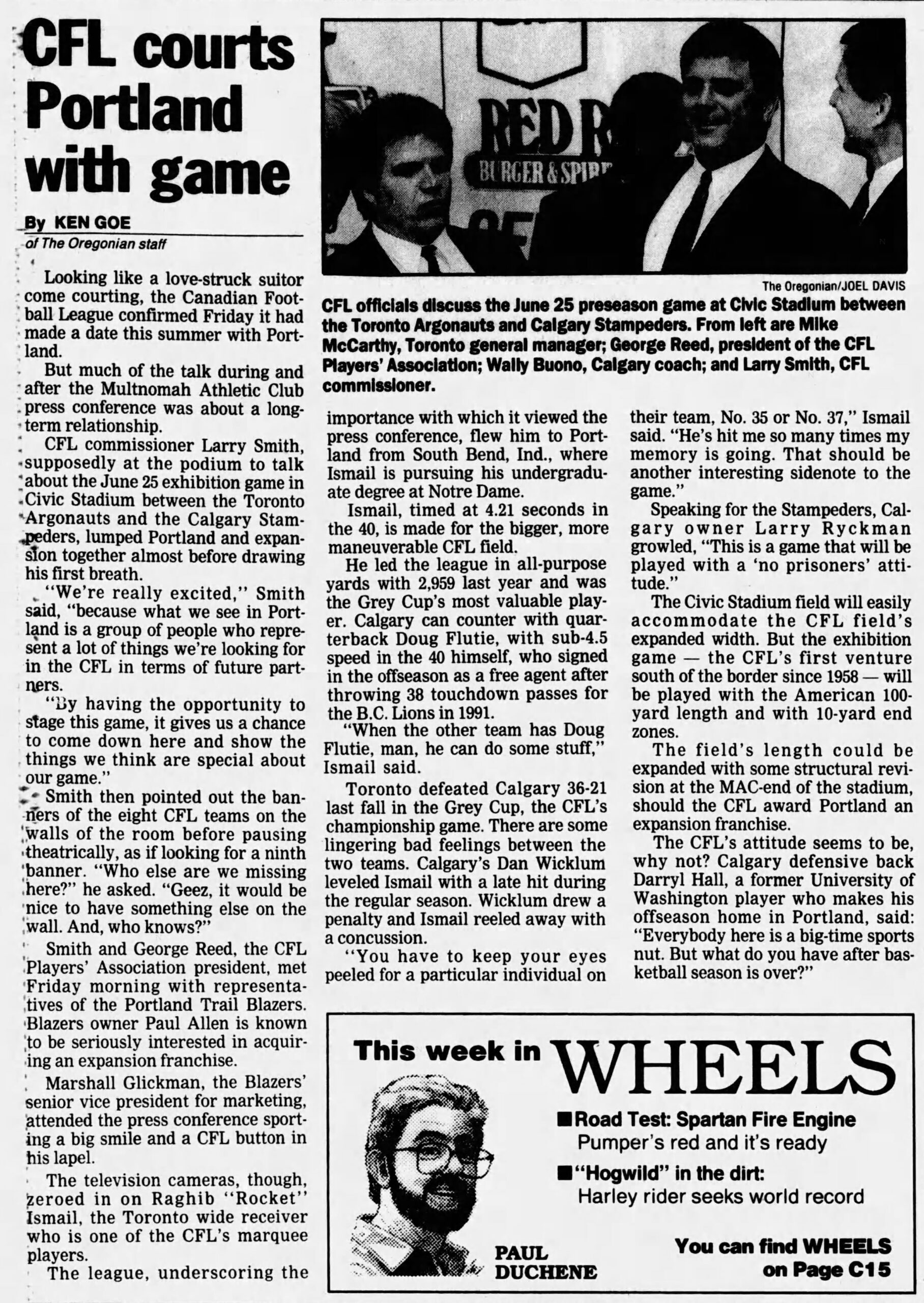
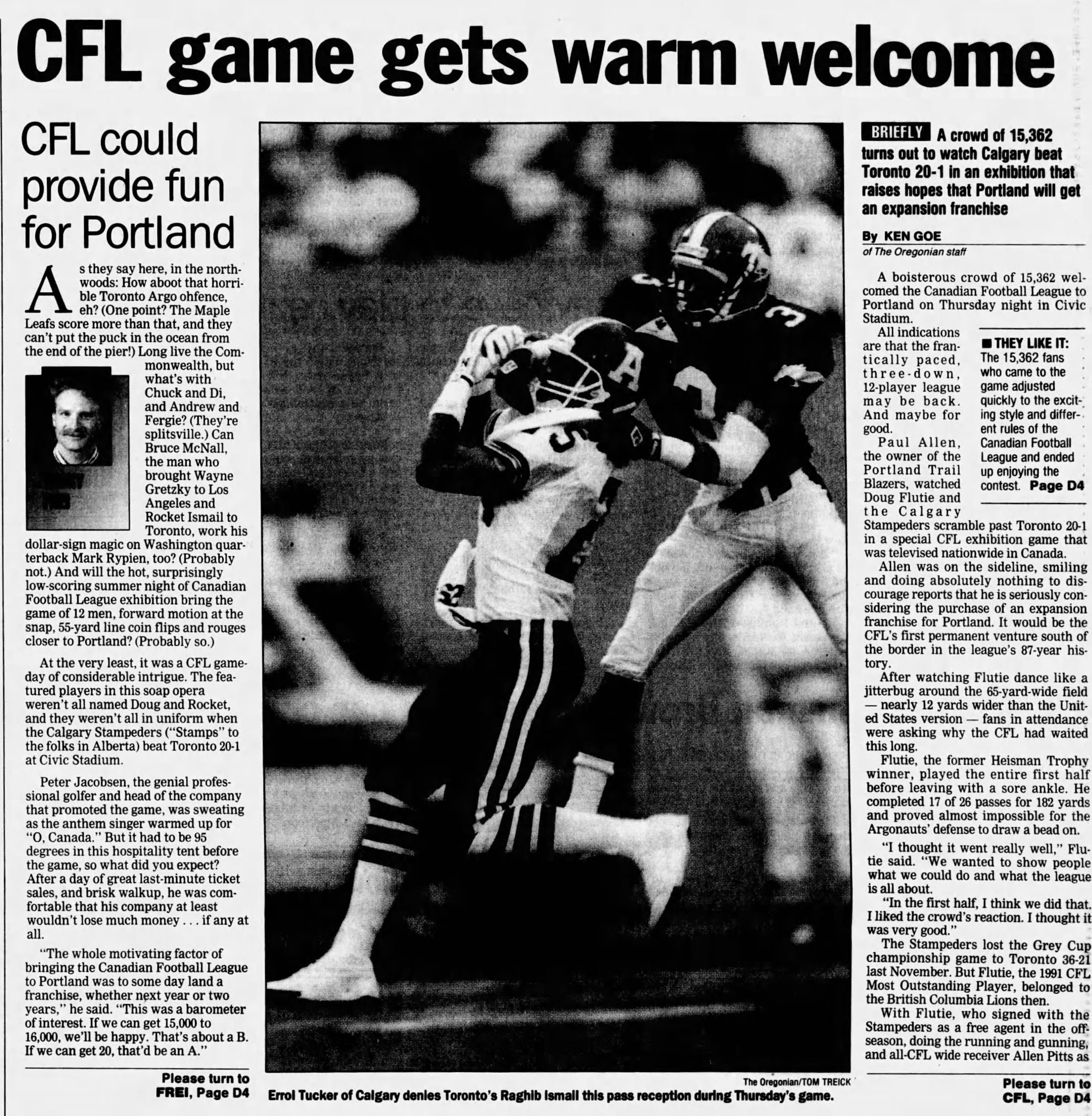
    CFL Portland game article in the Oregonian newspaper (1992)

    To test the Portland market, the CFL played an exhibition game on Thursday, June 25, 1992 at Civic Stadium. The game was a rematch of the 1991 Grey Cup between the Toronto Argonauts and the Calgary Stampeders. The Argos had Raghib “the Rocket” Ismail as their marquee player. Calgary had the recently acquired future Hall of Famer Doug Flutie as their new quarterback. The stage was set for a great exhibition of Canadian football for the American fans featuring the CFL’s two biggest stars.

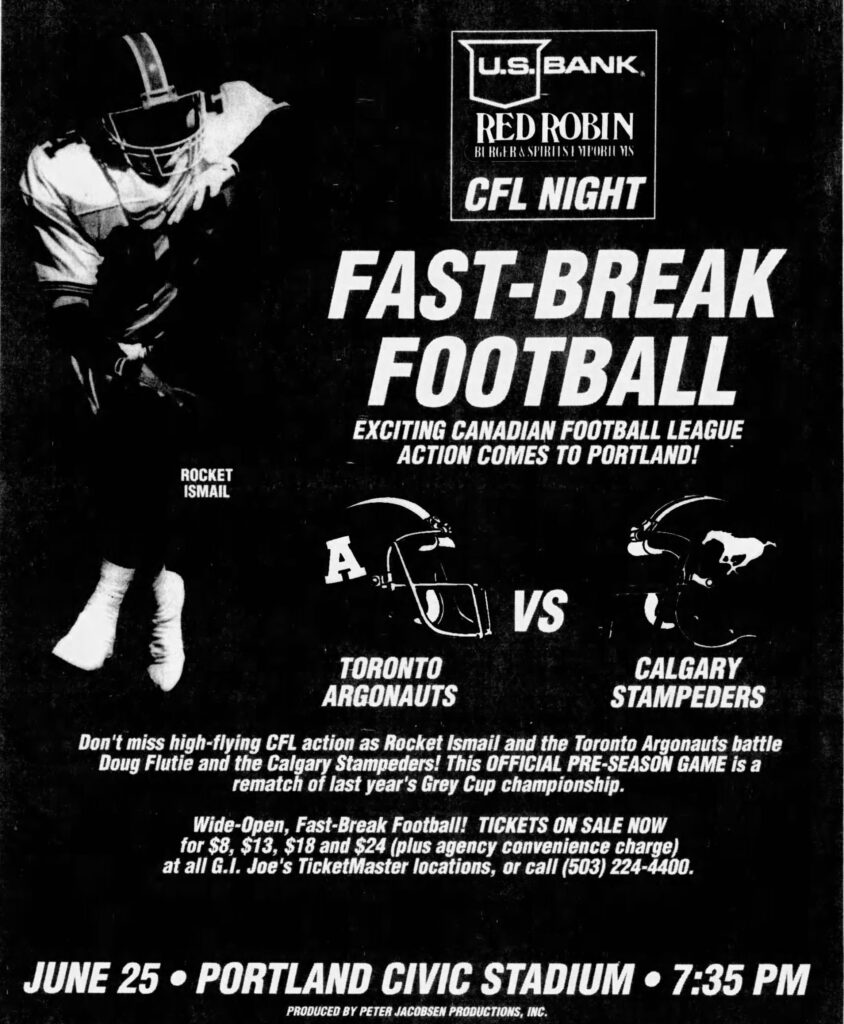
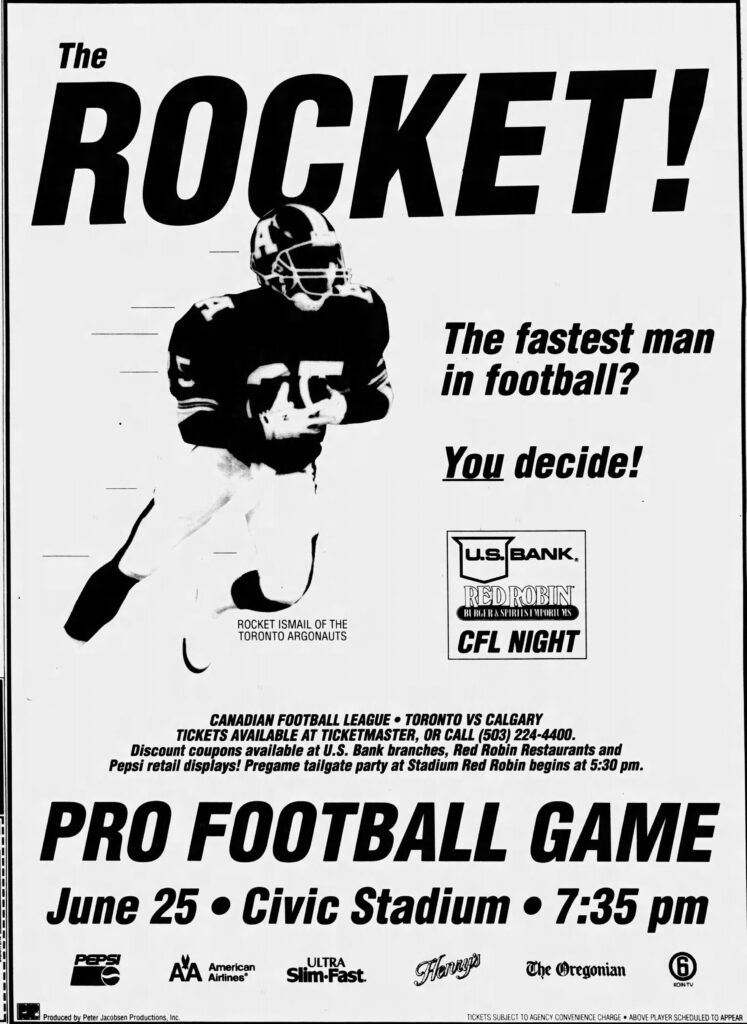
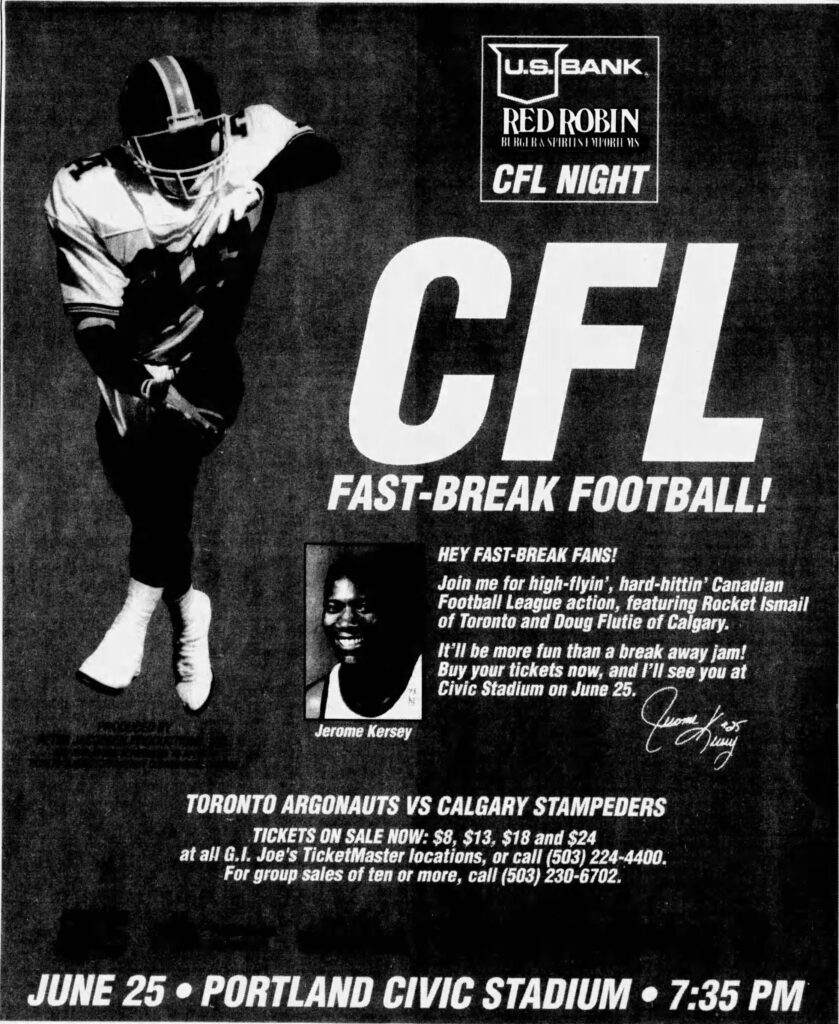
    In the lead up to the exhibition game, the Portland media seemed quite eager to welcome the CFL to town. Ads ran in the Oregonian newspaper promoting “fast-break,” “high flying” and “wide open” CFL football. Unsurprisingly, the Rocket was heavily promoted. Even the Trail Blazers’ Jerome Kersey was featured in advertising for the game.

    A decent crowd of 15,362 fans turned out on a hot Thursday night to watch the game. All in all, reviews were positive despite a rather lacklustre game. Calgary won 20-1. Yes, Americans got to see a Canadian rouge scored. In the end, though, no CFL expansion team came to Portland. Instead, Sacramento was awarded the CFL’s first U.S.-based expansion team. After a few years the CFL’s foray into the United States was over. Despite lots of talk and speculation, the CFL-in-Portland story was limited to a single exhibition game only.

    CFL gets warm welcome in Portland article in the Oregonian newspaper (1992)

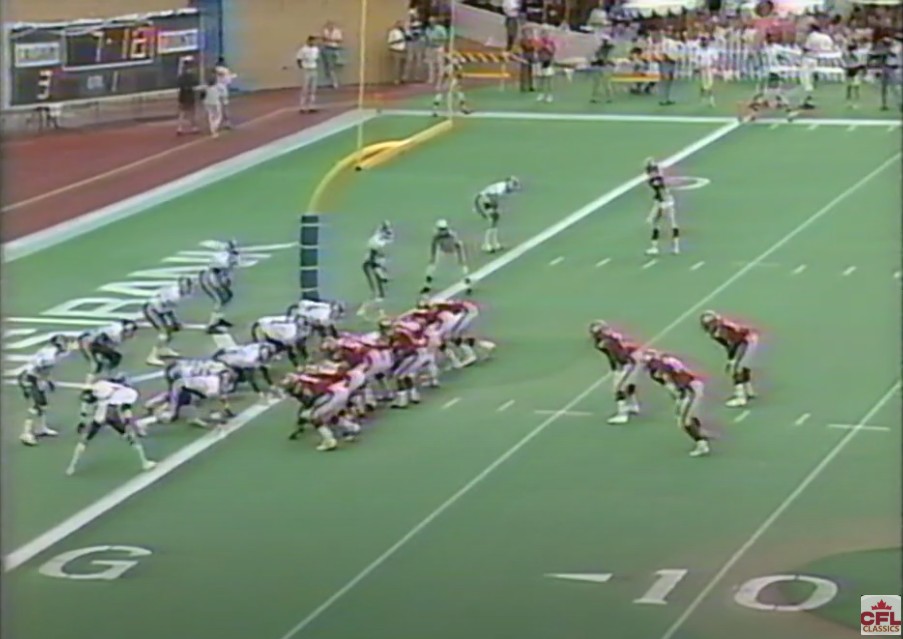
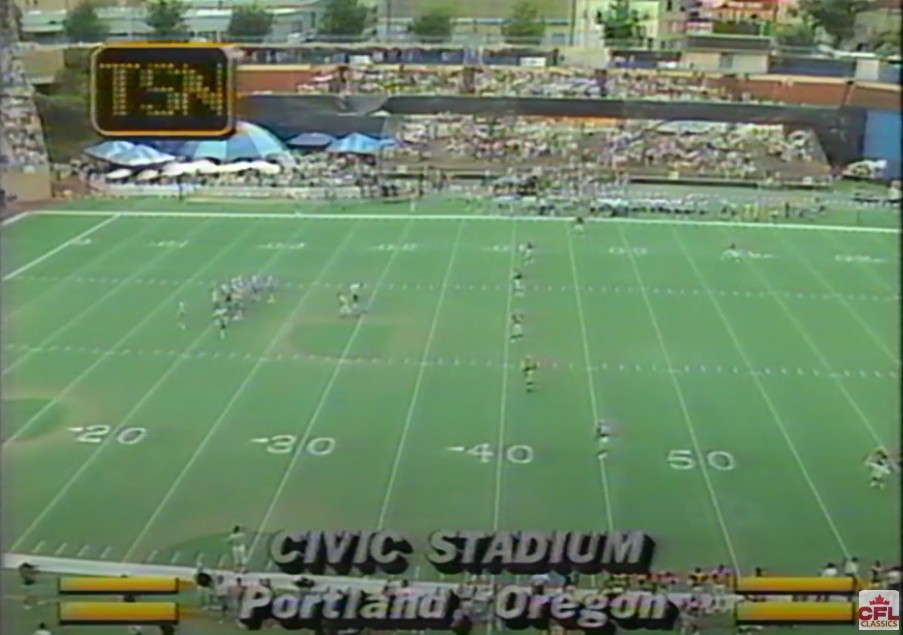
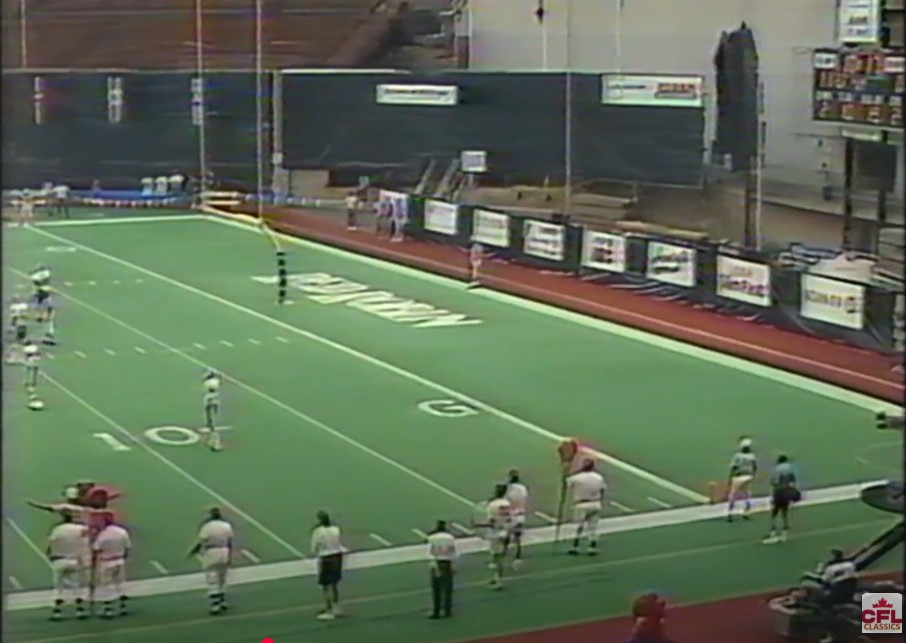
    100 yard long fields are included in the Johnston Rules announced by CFL Commissioner Stewart Johnston recently. The 1992 exhibition game in Portland was the last time the CFL played on a field that was 100 yards in length. The standard CFL field didn’t fit at Portland Civic Stadium without heavy modifications, so the game was played on an American length football field that included ten-yard end zones. Have a look at the screen shots below to get a taste of what Canadian football on 100 yards will (sort of) look like in the future.


    You can watch the Toronto-Calgary exhibition game in Portland on the CFL Classics YouTube channel. The game was televised nationally on TSN.


    Sources:
    The Oregonian, 2 May 1992
    The Oregonian, 26 June 1992

    Fediverse Reactions
  • Calgary Companies Celebrate the Opening of McMahon Stadium

    Last week’s post was about the construction of Calgary’s McMahon Stadium in just 103 days. The stadium replaced Mewata Stadium as the new home of the Calgary Stampeders.

    The first game played at McMahon Stadium featured the Stampeders hosting the Winnipeg Blue Bombers on August 15, 1960. On the day of the game, many Calgary-based companies took out ads in the Calgary Albertan and Calgary Herald newspapers to celebrate the opening of the new stadium. A lot of these firms were directly involved in the stadium’s construction.

    Below is an assortment of the advertisements. Do you see any companies you recognize?

    McMahon Stadium Ad 1960
  • The Blue Bombers of Western Football

    The Winnipeg Blue Bombers. Boxing legend Joe Louis. Labatt Breweries. And the Toronto Blue Jays. Believe it or not there’s an interesting connection between these four entities spanning several decades.

    The Winnipeg Football Club was established in 1930. They were originally called the Winnipeg Rugby Football Club but dropped the “Rugby” from the team’s name not long after being formed. The team was unofficially known simply as the Winnipegs or the ‘Pegs for short. In the early days, the club wore green and white uniforms before quickly adopting blue and gold as their team colours. This colour choice plays an important part of the story as you will see.

    In 1935, Winnipeg travelled east to Hamilton and beat the hometown Tigers 18-12 in the Grey Cup. The victory gave the Winnipegs the distinction of becoming the first western team to win the Grey Cup championship. Enthusiastic crowds welcomed home the Winnipegs, and businesses lined up to congratulate the new champions of “Canadian rugby.”

    Hudson's Bay Company advertisement congratulating the Winnipegs on their 1935 Grey Cup victory
    Hudson’s Bay Company advertisement congratulating the Winnipegs on their 1935 Grey Cup victory (source: The Winnipeg Tribune, 10 December 1935, page 17)

    Around the same time, an African American by the name of Joe Louis was taking the professional boxing world by storm. He was given the racialized nickname “The Brown Bomber” by American media. The story goes that a local Winnipeg journalist named Vince Leah, catching wind of the “Brown Bomber” nickname, referred to the Winnipegs as the “Blue Bombers of Western Football.”

    The name stuck, and the football club became known as the Winnipeg Blue Bombers ever since.

    Winnipegs All Set to Open Campaign (1936)
    Media started referring to the Winnipegs as the “Blue Bombers” in 1936. (source: The Winnipeg Tribune, 5 September 1936, page 21.)
    Reference to the "Blue Bombers" as the name of Winnipeg's football team
    The Super Bombers (source: The Winnipeg Tribune, 31 October 1936, page 29.)

    In the 1950s, Labatt Breweries introduced a new brand of beer in the Manitoba market. With its colourful blue labelling, Winnipeg football fans referred to the beer as Labatt “Blue.” Labatt eventually adopted the name officially and became a sponsor of the Blue Bombers and the CFL.


    Fast forward a couple decades later. Toronto was awarded an expansion franchise in Major League Baseball. Labatt Breweries had a significant ownership stake in the new team and wanted to leverage its Labatt Blue brand. Toronto’s other two sports teams – the Argonauts and the Maple Leafs – both had blue as a team colour. The writing was on the wall. Toronto’s new sport team was also going to be blue. So, the Toronto Blue Jays were born.


    Further reading:

    Football in Winnipeg (Manitoba Museum)

    Labatt Blue origins (Labatt website)


    This is the fifth of a series of posts that will explore the stories behind the names of the existing Canadian Football League teams. See the previous post on the Saskatchewan Roughriders.

  • Remembering the Radically Canadian Marketing Campaign

    In 1996, the Canadian Football League was faced with a dilemma. Having just ended a three-year run of having teams based in the United States, the CFL was retreating north and returning with an all-Canadian lineup. The Baltimore Stallions, the defending Grey Cup champions, relocated to Montreal to become the reborn Alouettes. How could the CFL create an opportunity out of its failed American expansion experiment?

    Go radical. That’s how. As the season was about to kick off, the CFL launched a national “Radically Canadian” marketing campaign that was both patriotic and quite edgy. While “Radically Canadian” instilled a sense of Canadian swagger that was rather rare, the campaign also included slogans such as “We Play By Our Rules”, “It’s Called a Rouge, Get the Point?”, “One Tough Mother”, and the famous “Our Balls Are Bigger.”

    1996 CFL Schedule with the Radically Canadian Logo
    The 1996 CFL schedule featuring the Radically Canadian logo
    (source: Canadian Football Research Society)

    The Radically Canadian logo appeared on the league’s website, publications, and promotional materials. Fans could purchase t-shirts, hats, and sweatshirts from the online “Rad Shop.” There was even a Radically Canadian dance CD produced. You can find these items for sale secondhand on a number of online sites.

    Of course, the campaign wasn’t without controversy. Some found the “Our Balls Are Bigger” and “One Tough Mother” references too risqué.  Some teams didn’t carry merchandise with the slogans for fear of offending customers. And, “Radically Canadian” didn’t translate well into French, causing fears its use could potentially stoke English-French tensions that were running high in the mid 1990s.

    Source: Montreal Gazette, 13 July 1996, page 63 (newspapers.com)

    But, in the end “Radically Canadian” represented a serious effort and investment by an old league looking to reinvigorate itself and broaden its appeal to a younger Canadian fanbase it would need to cultivate for the future. As a marketer and fan, this author gives the campaign a thumbs up. It’s been almost thirty years since the CFL introduced this marketing campaign. Given the current environment, one has to wonder if now just might be a good time to dust off the old “Our Balls Are Bigger” merchandise and once again be “Radically Canadian.”