In 1996, the Canadian Football League was faced with a dilemma. Having just ended a three-year run of having teams based in the United States, the CFL was retreating north and returning with an all-Canadian lineup. The Baltimore Stallions, the defending Grey Cup champions, relocated to Montreal to become the reborn Alouettes. How could the CFL create an opportunity out of its failed American expansion experiment?
Go radical. That’s how. As the season was about to kick off, the CFL launched a national “Radically Canadian” marketing campaign that was both patriotic and quite edgy. While “Radically Canadian” instilled a sense of Canadian swagger that was rather rare, the campaign also included slogans such as “We Play By Our Rules”, “It’s Called a Rouge, Get the Point?”, “One Tough Mother”, and the famous “Our Balls Are Bigger.”
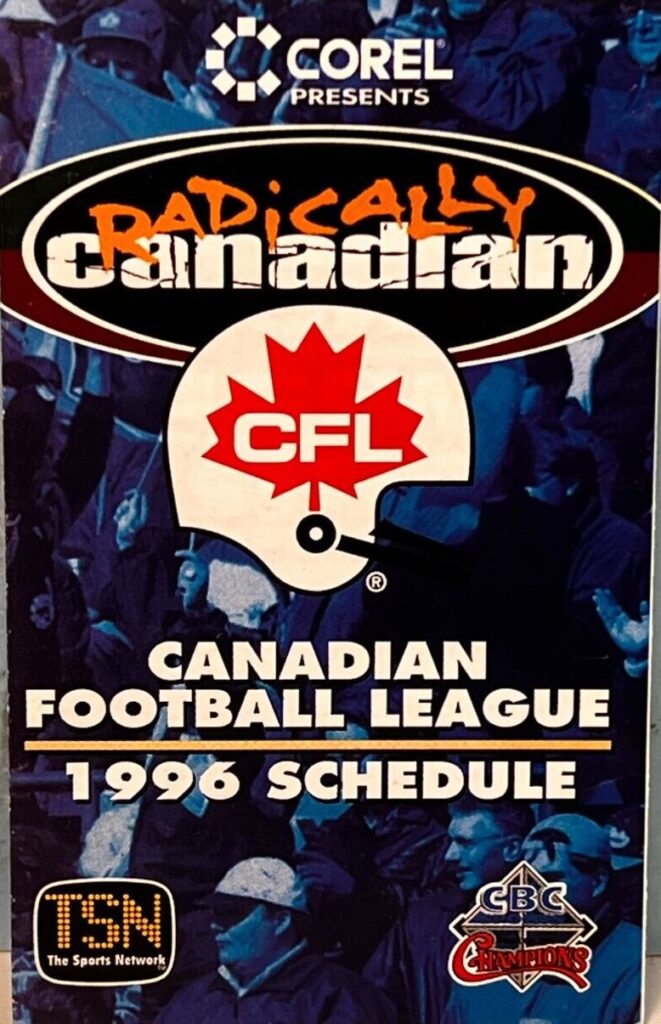
(source: Canadian Football Research Society)
The Radically Canadian logo appeared on the league’s website, publications, and promotional materials. Fans could purchase t-shirts, hats, and sweatshirts from the online “Rad Shop.” There was even a Radically Canadian dance CD produced. You can find these items for sale secondhand on a number of online sites.

Of course, the campaign wasn’t without controversy. Some found the “Our Balls Are Bigger” and “One Tough Mother” references too risqué. Some teams didn’t carry merchandise with the slogans for fear of offending customers. And, “Radically Canadian” didn’t translate well into French, causing fears its use could potentially stoke English-French tensions that were running high in the mid 1990s.
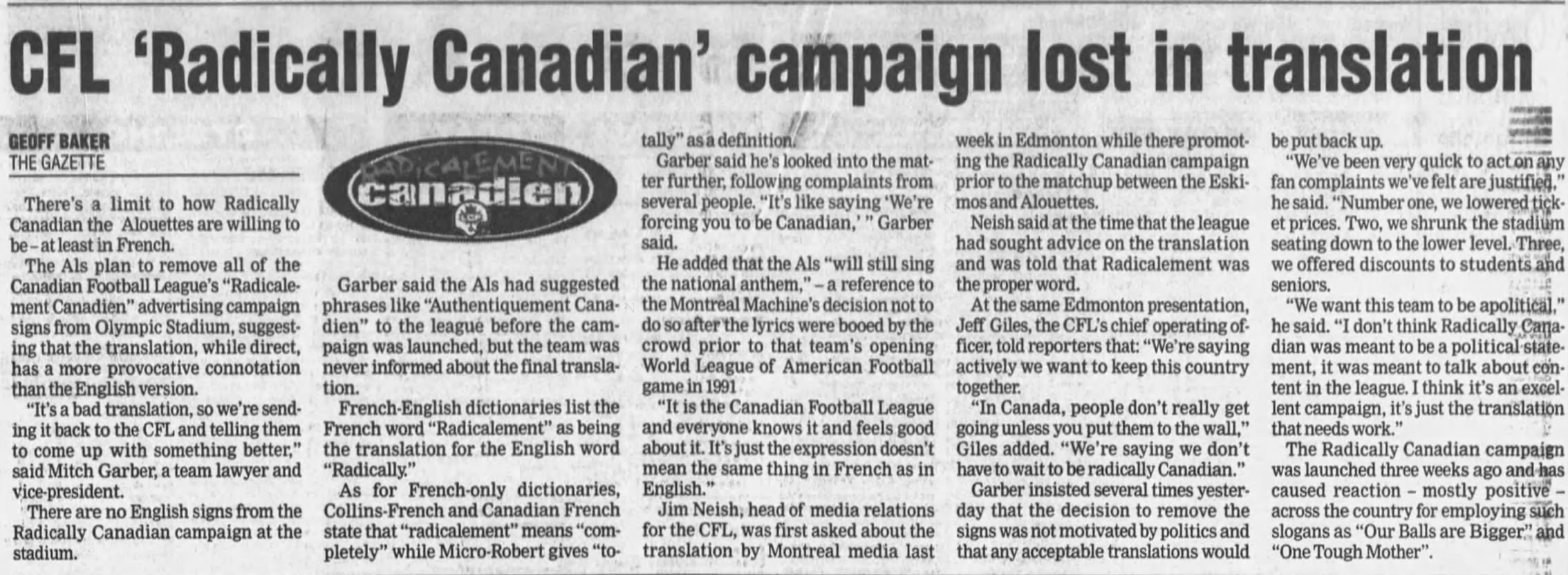
But, in the end “Radically Canadian” represented a serious effort and investment by an old league looking to reinvigorate itself and broaden its appeal to a younger Canadian fanbase it would need to cultivate for the future. As a marketer and fan, this author gives the campaign a thumbs up. It’s been almost thirty years since the CFL introduced this marketing campaign. Given the current environment, one has to wonder if now just might be a good time to dust off the old “Our Balls Are Bigger” merchandise and once again be “Radically Canadian.”