Category: University Football

  • Canadian Football’s Quirky Playoffs, Part IV: Three Leagues Compete for the New Grey Cup in 1909

    This is the fourth article examining some of Canadian football’s rather interesting playoff formats used over the years. Be sure to check out parts I, II, and III.

    1909 was a special year in Canadian football. That’s the year when Earl Grey, who was serving as the Governor General of Canada, donated a trophy to be awarded to Canada’s amateur rugby football champion. Of course, this trophy as well as the championship game itself would become known as the Grey Cup.
    Only teams affiliated with the Canadian Rugby Union were eligible to compete for the new Grey Cup championship. So that meant no western clubs could challenge for the trophy.

    Canadian football at the time was still an amateur affair, with senior football being the top level of play (above intermediate and junior). It was initially (mis)understood that the Grey Cup would be given to the winner of the Interprovincial Rugby Football Union (which was formed two years earlier) and Intercollegiate union game. But the CRU ruled a third league – the Ontario Rugby Football Union – was also a senior union and had the right to compete for the Grey Cup, as well.

    The Montreal Gazette published the final standings for 1909 in all three senior leagues of the Canadian Rugby Union:
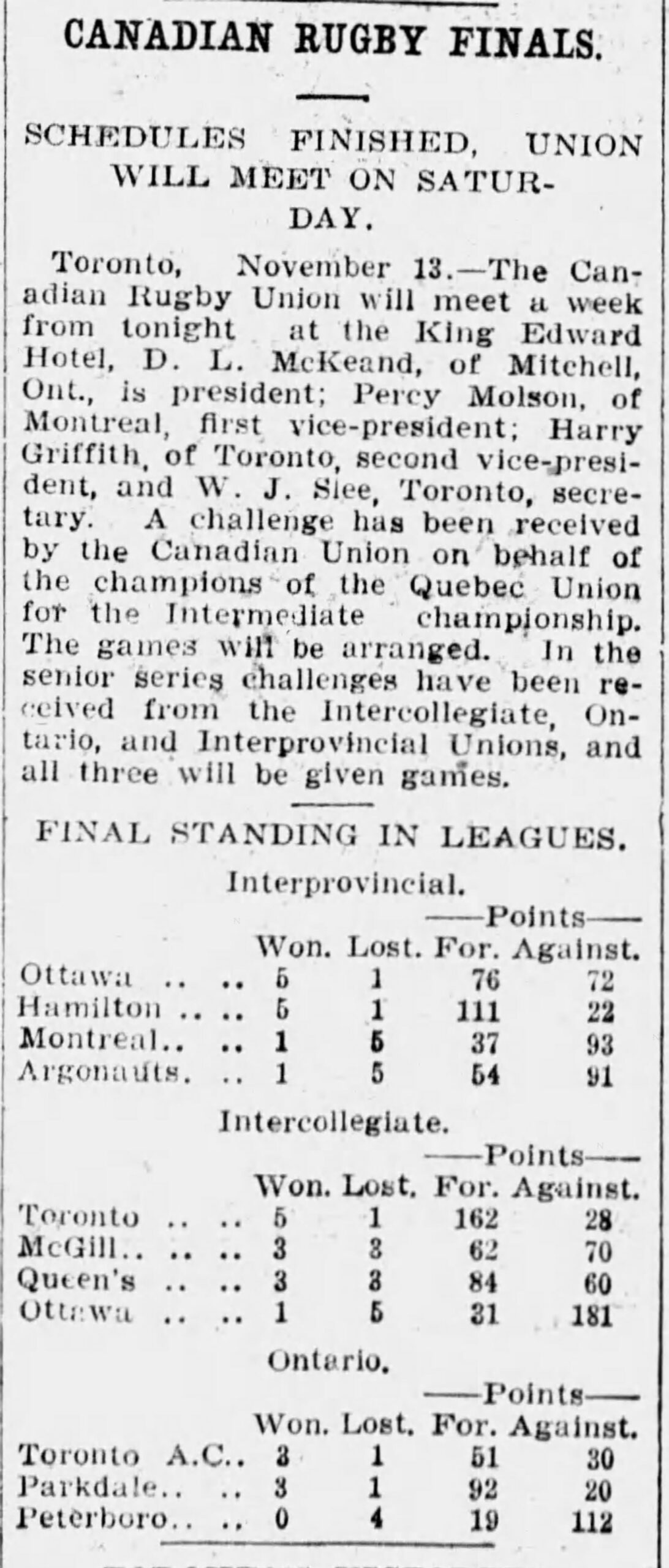
    Canadian Rugby Union standings and playoffs in 1909 (Montreal Gazette)
    Montreal Gazette, 15 November 1909

    The Canadian Rugby Union had previously established a rotational playoff system where the champion of each union would alternately receive a bye to and host the Dominion championship. Since the new Grey Cup was now the Dominion championship, the CRU simply extended this arrangement. For 1909, it was the ORFU’s year to host; so, the winner of the ORFU final would host the first-ever Grey Cup.
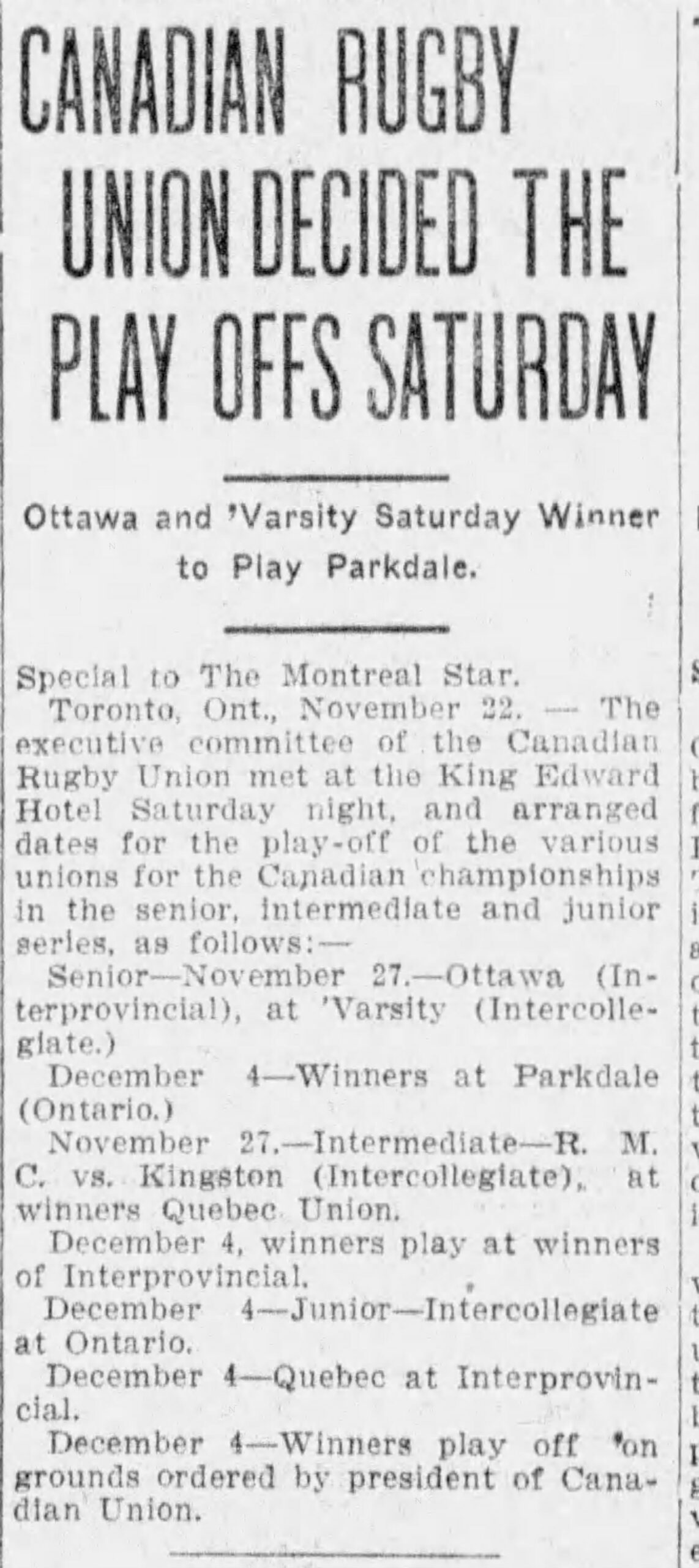
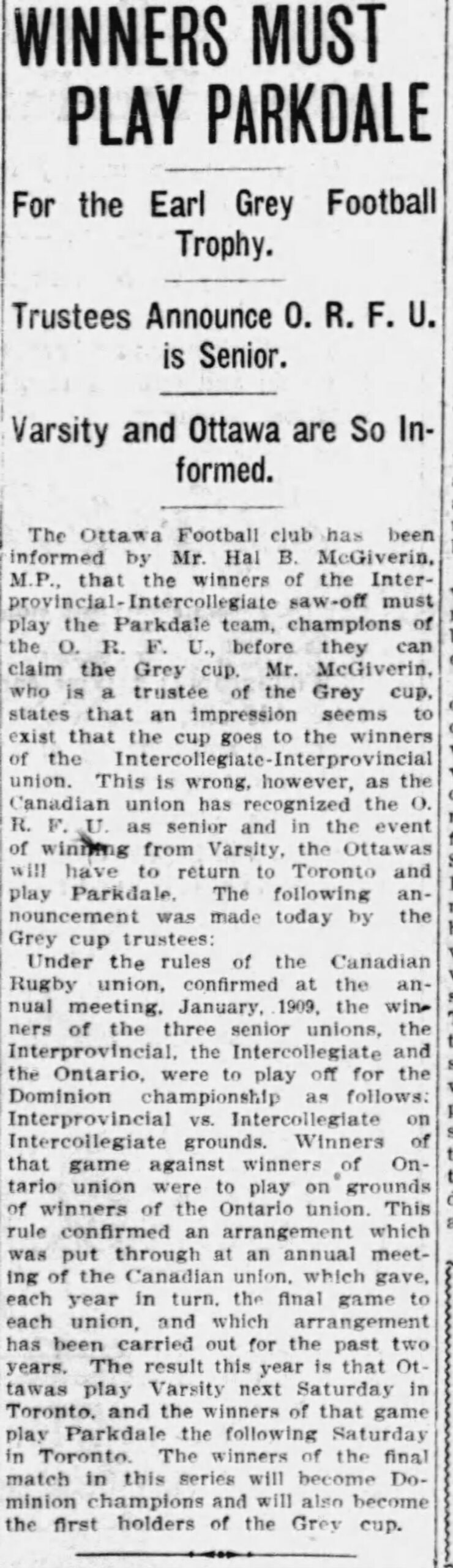
    Canadian Rugby Union Decided the Play Offs Saturday (Montreal Star)
    Montreal Star, 22 November 1909
    Winners Must Play Parkdale (Ottawa Citizen)
    Ottawa Citizen, 25 November 1909

    On November 20th, Toronto Parkdale won the ORFU championship with an 8-3 win over the Toronto Amateur Athletic Club, securing their berth in the Grey Cup. On the same day, the Ottawa Rough Riders defeated the Hamilton Tigers 14-8 to win the IRFU championship.

    Below is some excellent coverage in the Toronto Star of the IRFU and ORFU playoffs.
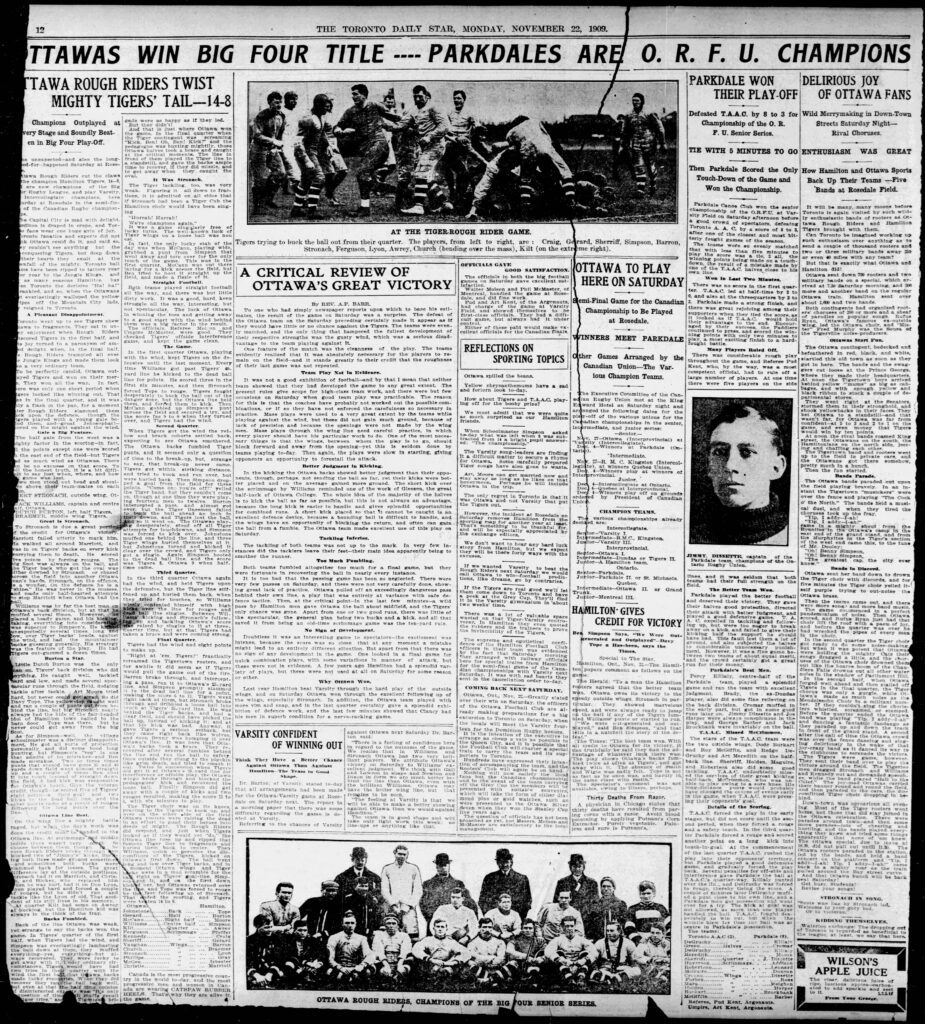
    ORFU, IRFU playoff coverage (Toronto Star)
    Toronto Star, 22 November 1909

    On November 27th, the Rough Riders travelled to Toronto to play the University of Toronto in the Interprovincial-Intercollegiate final. Varsity won handily by a score of 31 to 7, setting up a Varsity vs. Parkdale all-Toronto final for the Grey Cup.
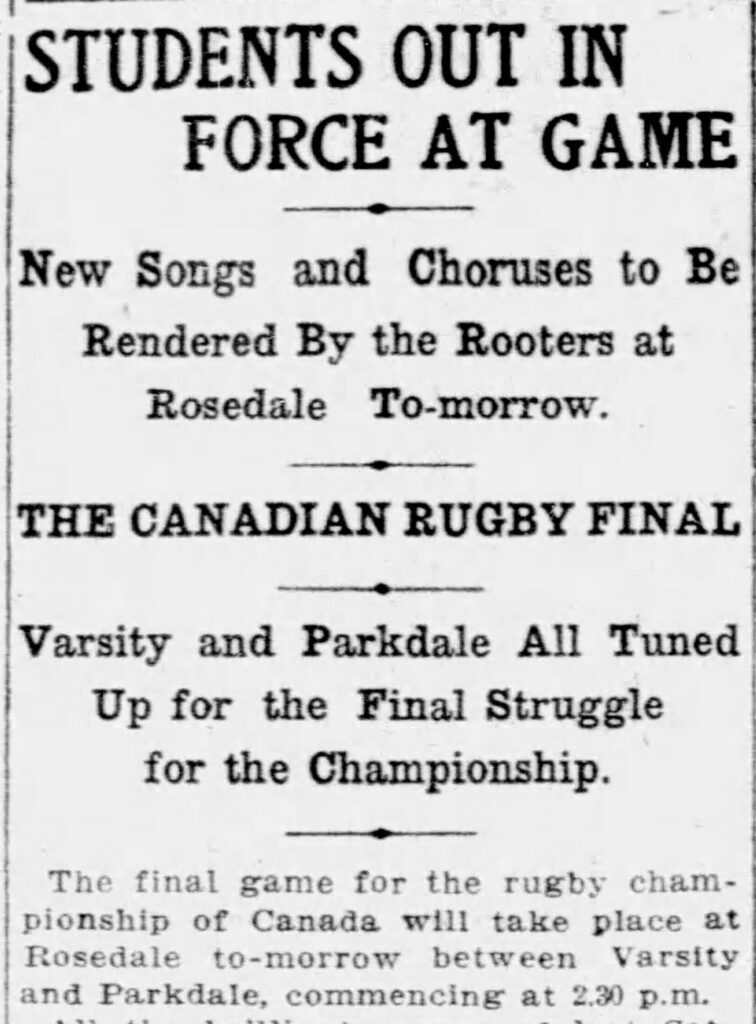
    Varsity to play Parkdale in first Grey Cup (Toronto Star)
    Toronto Star, 3 December 1909

    The historic matchup took place on December 4th at Toronto’s Rosedale Field. In the end, the University of Toronto came out on top, defeated Parkdale 26-6 to become the first Grey Cup champions.


    Sources:
    Montreal Gazette, 15 November 1909
    Montreal Star, 22 November 1909
    Ottawa Citizen, 25 November 1909
    Toronto Star, 22 November 1909
    Toronto Star, 6 December 1909

    Fediverse Reactions
  • The Vanier Cup Becomes Canada’s University Football Championship

    Universities in Canada have played football since…well…since football has been played in Canada. Teams from the University of Toronto, McGill University, and Queen’s University played what would become Canadian football long before the CFL and professional football ever took hold. In fact, university teams even competed for the Grey Cup in the early years.

    In the modern era of Canadian football but before 1965, universities across Canada would compete for regional championships such as the Yates Cup in Ontario. There was no national football championship for university or collegiate football. That changed in 1965.

    In 1965, a new national university football championship was established called the Canadian College Bowl. It’s important to remember that up until the 1960s the terms “university” and “college” were often used interchangeably. There were no community or vocational colleges (post-secondary non-degree awarding institutions) like what we have today. So, it was common to refer to university football as college football.

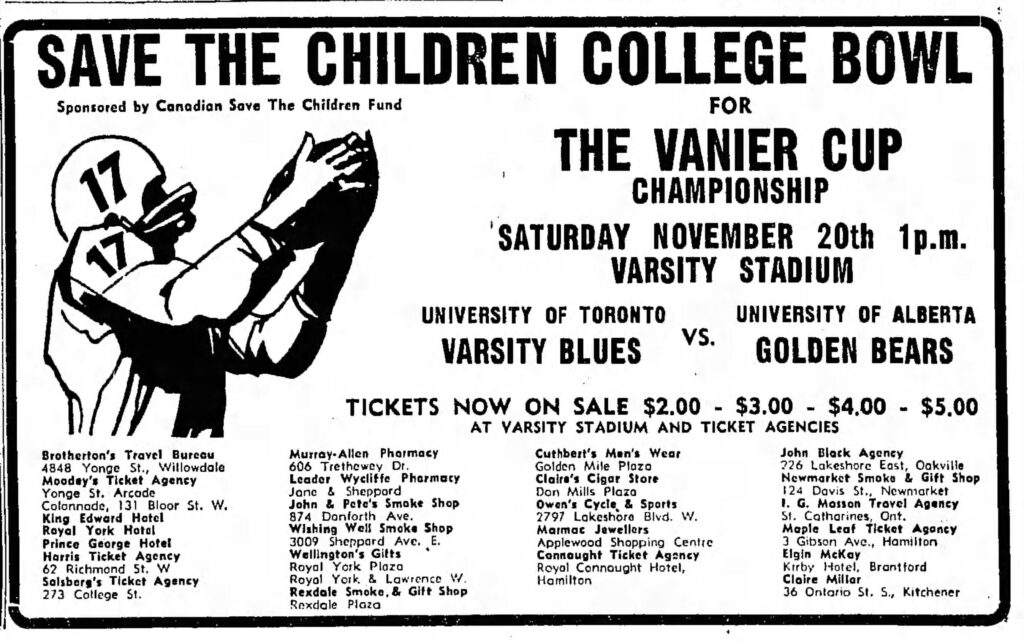
    The initial Canadian College Bowl was sponsored by the Save the Children Fund. In fact, the initial college bowl was partly set up to help raise money for the charity. A team of panellists selected the two teams – the University of Toronto Varsity Blues and the University of Alberta Golden Bears – that would compete for the first “national championship.” It wasn’t until 1967 that a national playoff system was held to determine the Canadian College Bowl contestants.

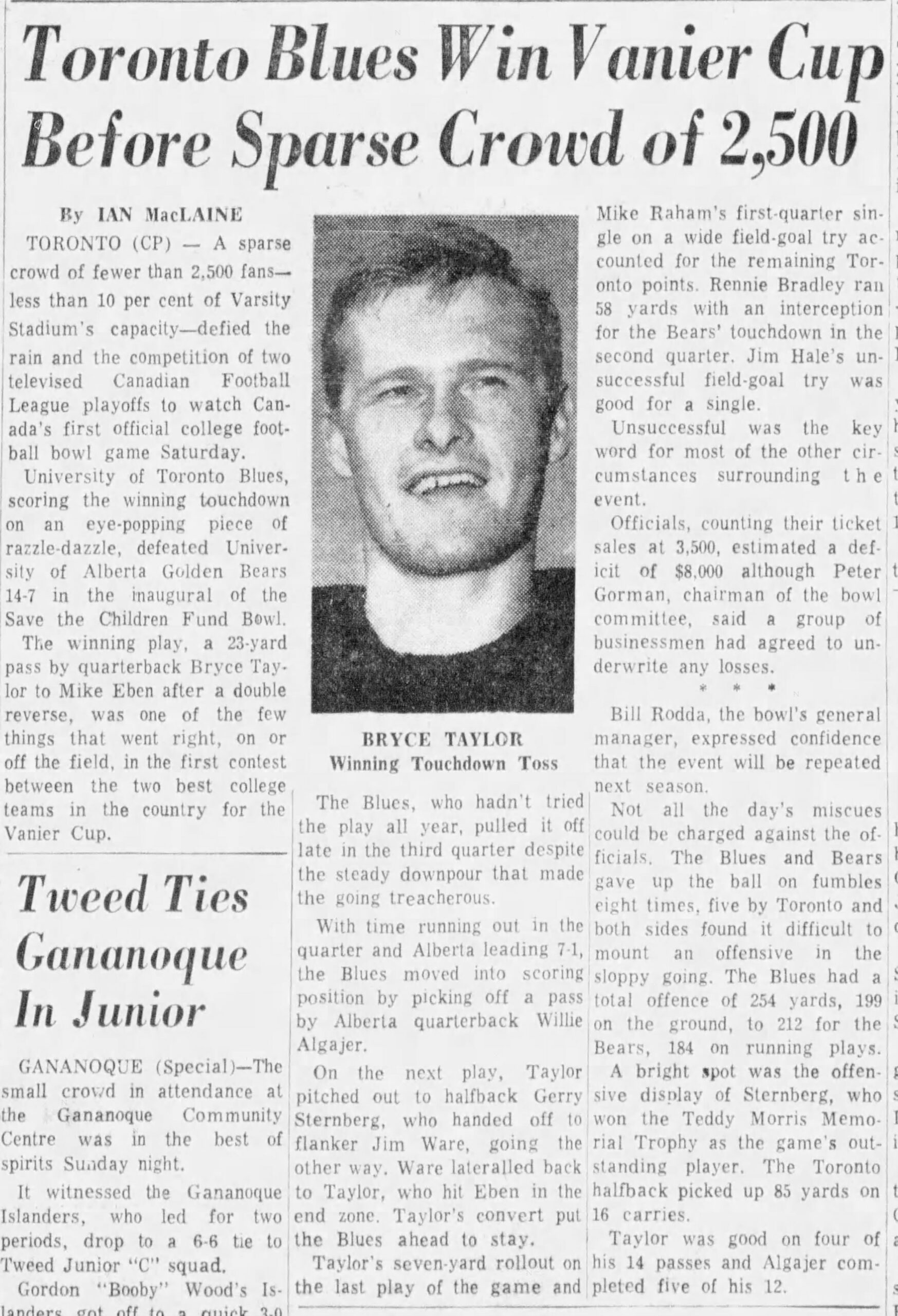
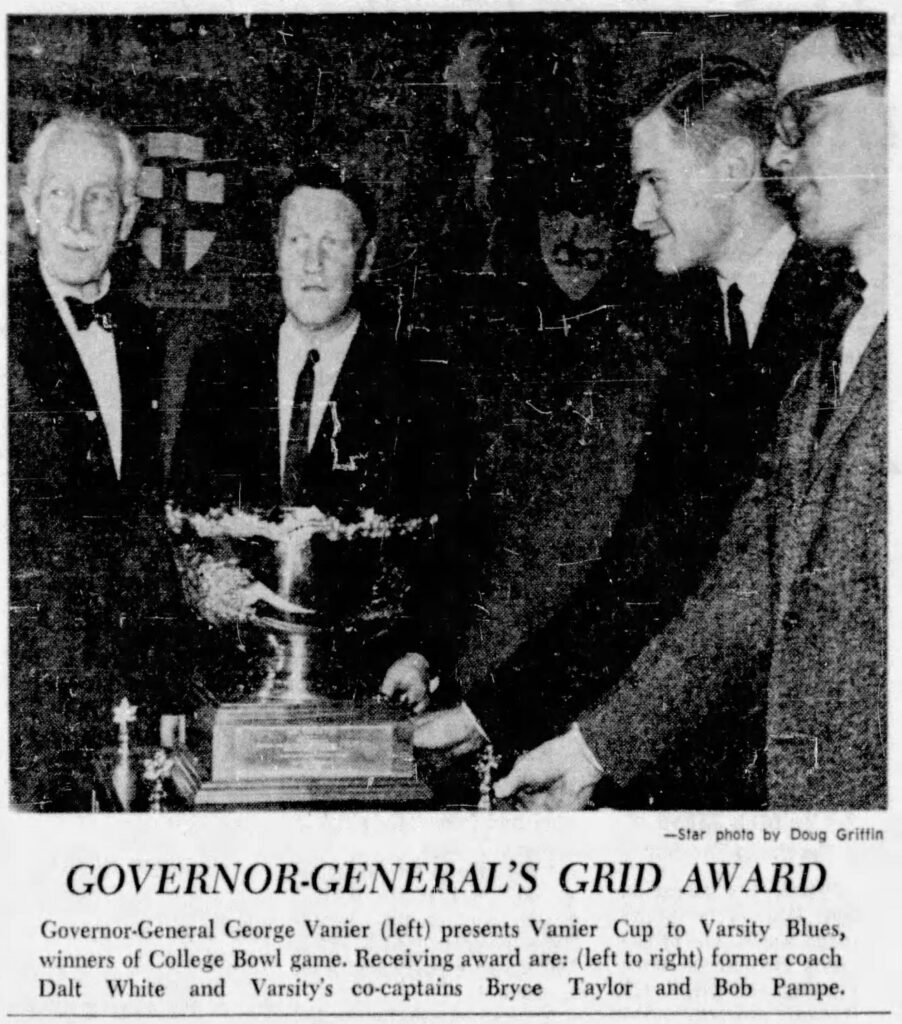
    Toronto Blues Win Vanier Cup 1965 CP Article
    Coverage of the first Canadian College Bowl in the Toronto Star

    On November 20, 1965, the Varsity Blues defeated the Golden Bears by a score of 14-7 in dismal conditions at Toronto’s Varsity Stadium. Less than 2500 fans braved the rain to come out to watch the inaugural championship. Not only did the weather keep the fans away, but the game was also largely overshadowed by the CFL playoffs that were being played and televised on the same day.

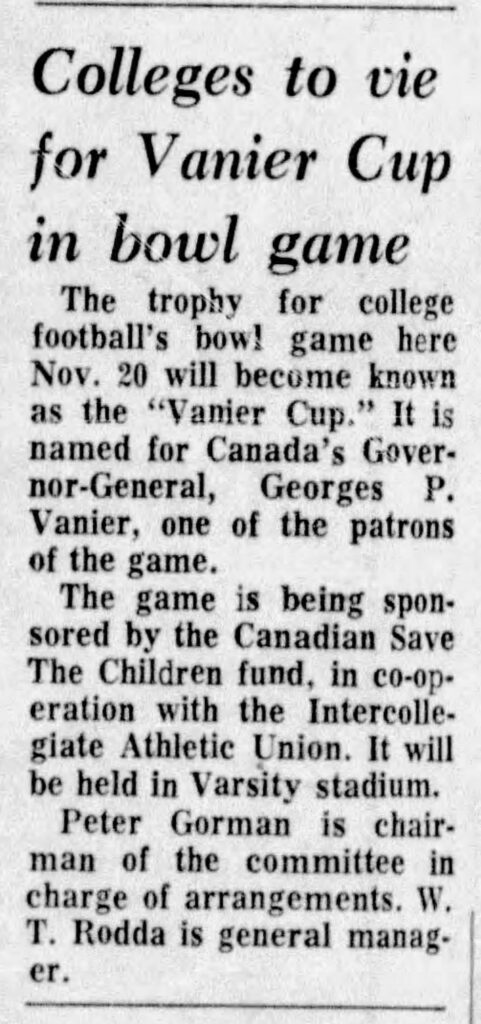
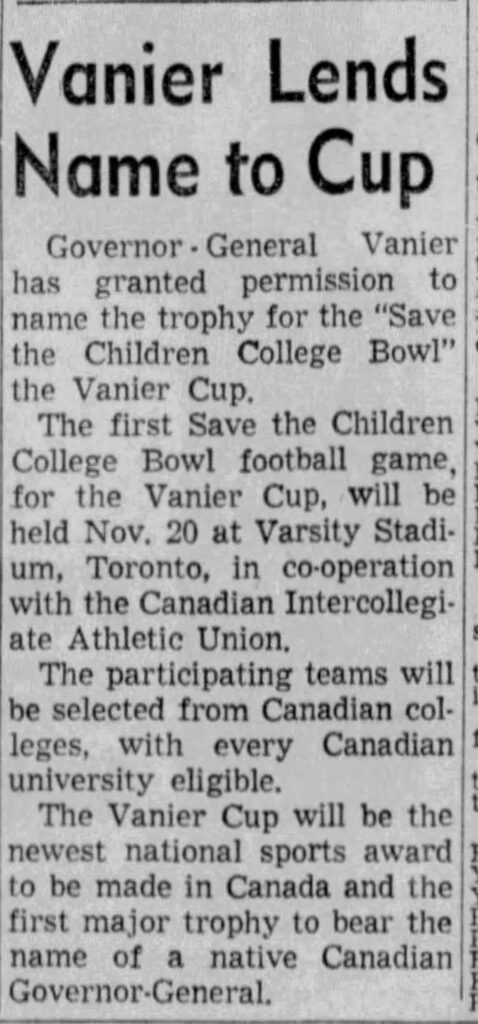
    Governor General Georges Vanier, an avid sports fan, lent his name to a trophy to be awarded to the winner of the Canadian College Bowl. Thus, the Vanier Cup was born. His Excellency himself presented the new trophy to the U of T at a banquet the following year.

    The Canadian College Bowl began to gain some traction in the years that followed. Like the pros, university teams now had a national championship to play for. Finally, in 1982, the name of the game was formally changed from the Canadian College Bowl to the Vanier Cup.

    Sources:
    Globe and Mail (17 November 1965)
    Kingston Whig Standard (22 November 1965)
    Toronto Star (2 September 1965)
    Toronto Star (16 March 1966)
    Vancouver Sun (2 September 1965)

    Fediverse Reactions
  • Varsity Wins the Almost Forgotten Grey Cup

    In 1909, Governor General Earl Grey donated a trophy to be awarded to the amateur rugby football champions of Canada. The University of Toronto won the inaugural championship with a 26-6 win over Toronto Parkdale. Various teams in Toronto and Hamilton competed in the early Grey Cup contests before the game was put on hold after 1915 due to the First World War.

    The Grey Cup was then virtually forgotten. The trophy itself was locked away hidden in a storage vault. War has a way of resetting priorities, you see. After football resumed in Canada in 1919, there were growing organizational issues amongst some teams and disagreements amongst the rugby unions, climaxing in a decision by McGill University and Montreal to refuse to contest the Canadian Rugby Union playoffs. Alas, there was no Grey Cup in 1919, either.

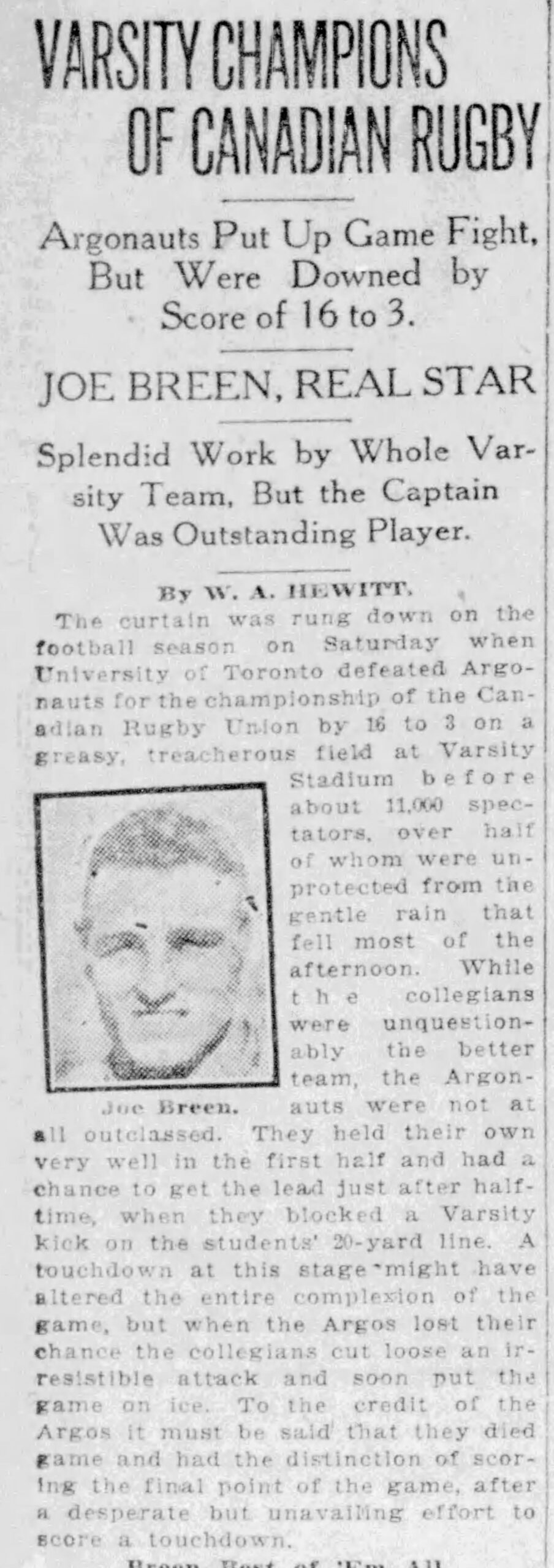
    Coverage of the 1920 Grey Cup in the Toronto Star on December 6, 1920.
    Coverage of the 1920 Grey Cup in the Toronto Star on December 6, 1920.

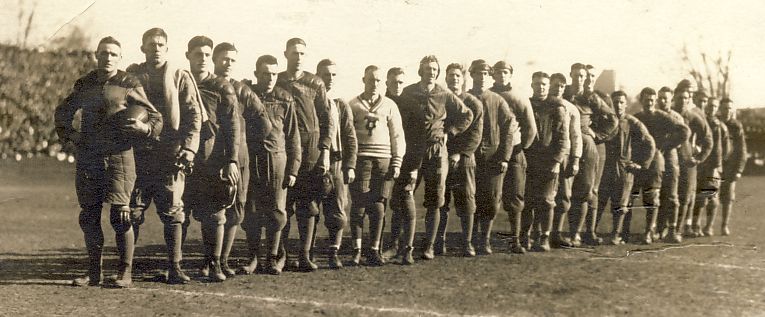
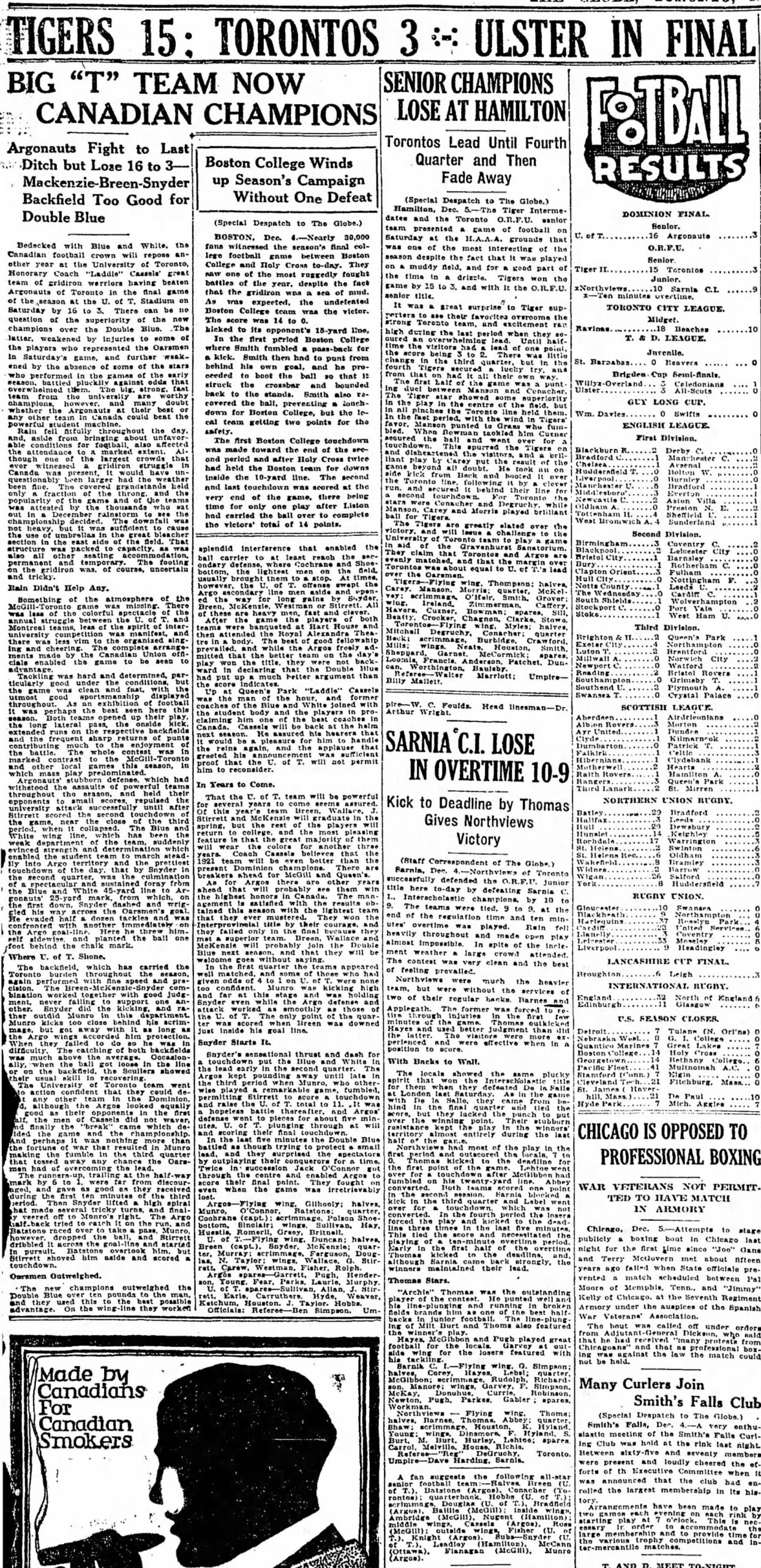
    But in 1920, the Grey Cup made its triumphant return. And a couple of familiar teams were back in the mix to win the big game. On Saturday, December 4, 1920, the University of Toronto played the Toronto Argonauts in the 8th edition of the Grey Cup. Played in less-than-ideal conditions (rain and mud!) at Toronto’s Varsity Stadium, Varsity’s Joe Breen was the star of the day, according to the Toronto Star, leading his team to a 16-3 victory over the Argonauts.

    Coverage of the 1920 Grey Cup in the Globe and Mail on December 6, 1920.
    Coverage of the 1920 Grey Cup in the Globe and Mail on December 6, 1920.

    This would be the University of Toronto’s fourth and final Grey Cup championship. At the time, Varsity was considered by many to be the best football team in the country. Their championship win cemented this sentiment.

    Despite being relegated to a dark memory hole just a few years prior, the Grey Cup was back. And perhaps that’s what mattered most.


    Sources:

    https://web.archive.org/web/20130820024400/http://cfl.ca/page/his_greycup_recap1920

    The Toronto Star, 6 December 1920

    The Globe and Mail, 6 December 1920

  • The First Canadian Football Drafts

    It’s Draft Day in the Canadian Football League. Today is the day when the CFL’s nine teams divvy up the incoming top Canadian players. It’s done in an orderly fashion through a number of rounds to allow for competitive fairness and to encourage parity.

    In the early days of Canadian football, players tended to be locally based so there was really no need for a draft. Even as the game became more professional, teams selected players based on territorial rights.

    In 1952, the Interprovincial Rugby Football Union (IRFU) aka the Big Four experimented with a draft. The draft allowed the four teams (Hamilton, Toronto, Ottawa, and Montreal) to name players who would then be off limits to the other clubs unless an agreement could be reached between the teams.

    In 1953, the Big Four draft became more formalized. The draft was limited to forty Canadian players from five universities: McGill, Queen’s, the University of Toronto, McMaster, and the University of Western Ontario.

    The Montreal Alouettes selected Doug McNichol, a defensive lineman, from the University of Western Ontario in the first pick overall.

    It wasn’t until 1956 that a Canada-wide draft was held.