Tag: 1950s in Canadian Football

  • New Canadian Football League Kicks Off in Winnipeg, No Interlocking Schedule Just Yet

    On August 14, 1958, the Canadian Football League played its first-ever game with the Winnipeg Blue Bombers hosting the Edmonton Eskimos at Winnipeg Stadium. The new CFL was founded earlier in the year when the Canadian Football Council withdrew from the Canadian Rugby Union to become a completely separate entity, renaming itself the “Canadian Football League” in the process.
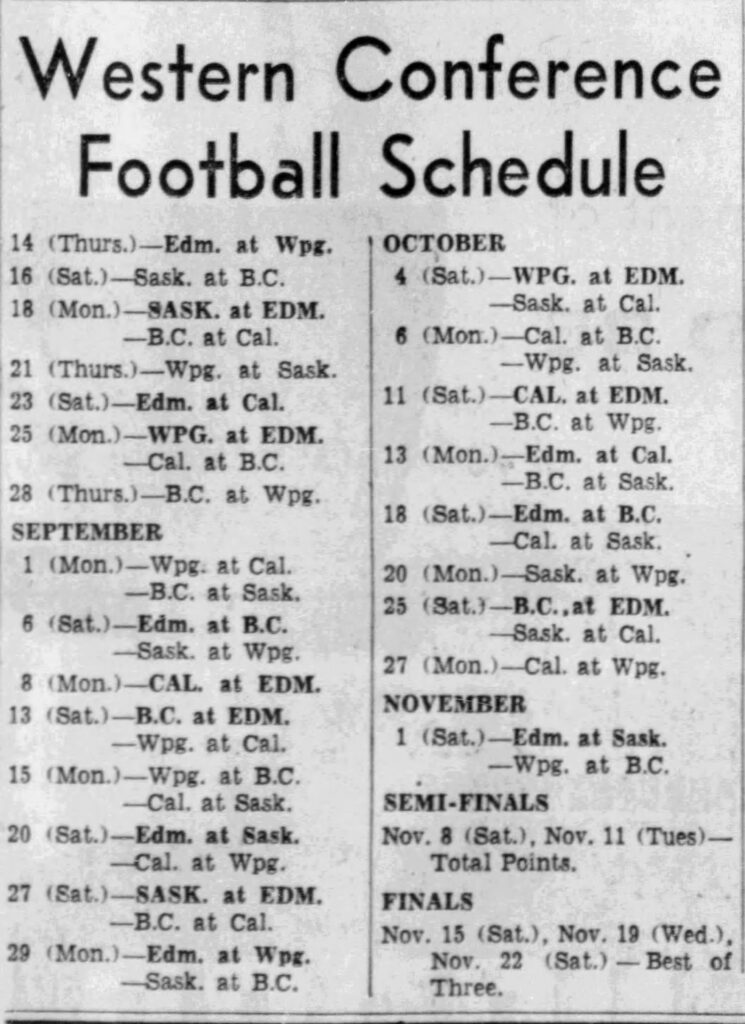
    The 1958 WIFU schedule (Edmonton Journal, 14 August 1958).
    The 1958 WIFU schedule (Edmonton Journal, 14 August 1958).

    One thing that stands out to me is the general lack of branding around the “CFL” moniker in the news coverage. Most news articles of the day stick to the established Western Interprovincial Football Union (WIFU) and Interprovincial Rugby Football Union (IRFU)/Big Four branding when covering the new league.
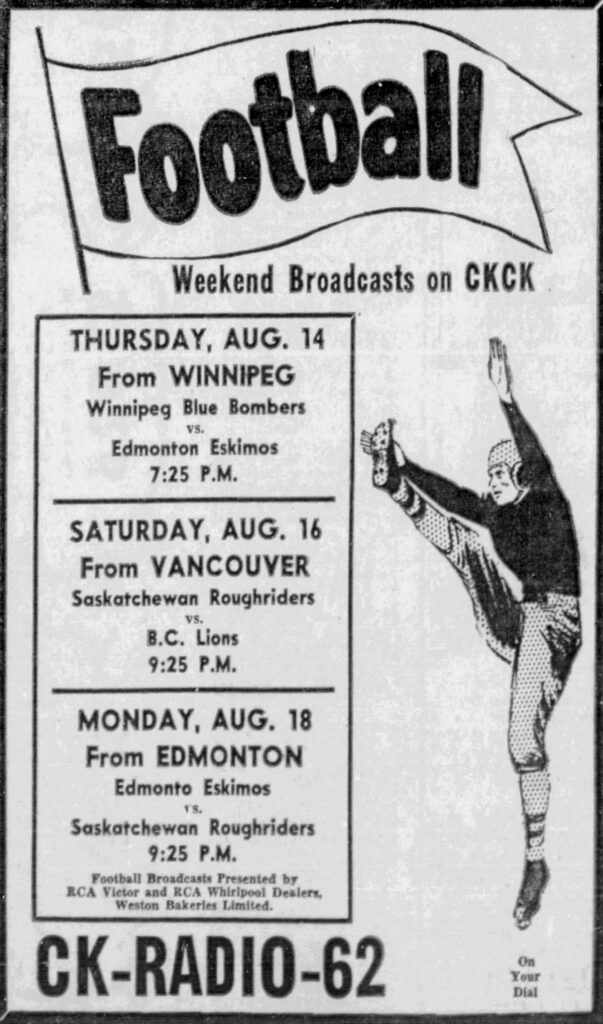
    Advertisement for radio broadcasts of the first CFL games (Regina Leader-Post, 14 August 1958).
    Advertisement for radio broadcasts of the first CFL games (Regina Leader-Post, 14 August 1958).

    For all intents and purposes, the CFL was a new league in name only. The Big Four and the WIFU were still their own entities under CFL umbrella, and they maintained a high degree of independence still. While the rules of the game were uniform, the western clubs played 16 regular season games (four games against each opponent in the division) while the eastern clubs played 14 games. When it came to the playoffs, the western final was a best two out of three series while the eastern final was a two-game total point series.
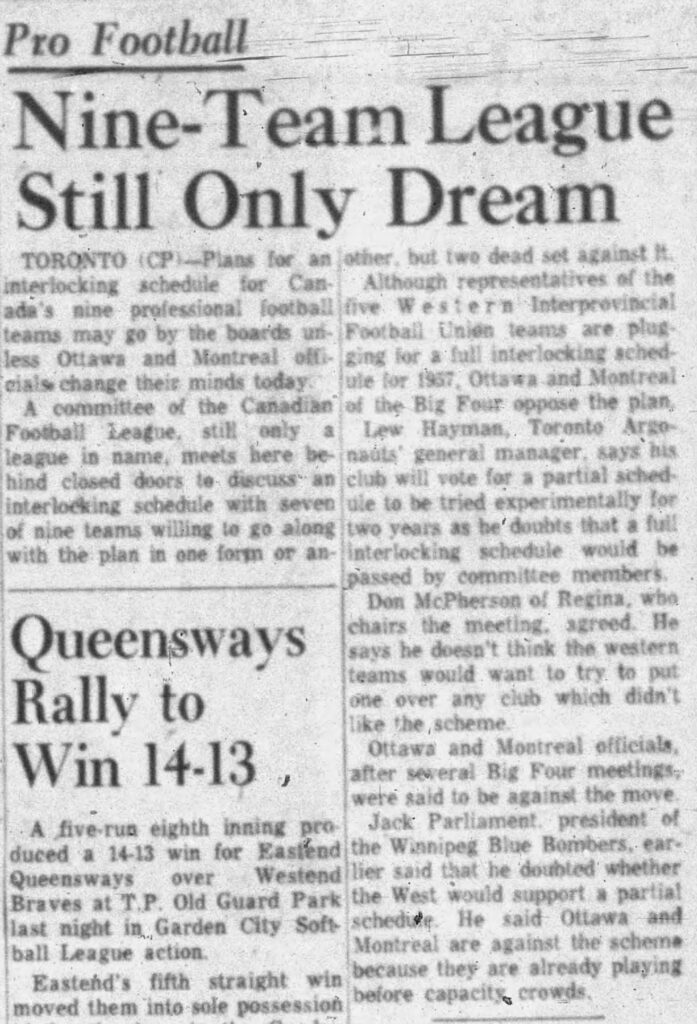
    Canadian Press article about lack of interlocking schedule for the new CFL. (St. Catharines Standard, 8 August 1958).
    Canadian Press article about lack of interlocking schedule for the new CFL. (St. Catharines Standard, 8 August 1958).

    I also find it a bit humorous that from the onset of the CFL’s conception, the teams were at odds over adopting an interlocking schedule. It appears Montreal and Ottawa both initially opposed the implementation of an interlocking schedule. I guess self-interest and lack of big picture vision have always been built into the CFL’s DNA. It wasn’t until 1961 that the CFL finally adopted a partial interlocking schedule. Until then, the only time the east played the west was in the Grey Cup.
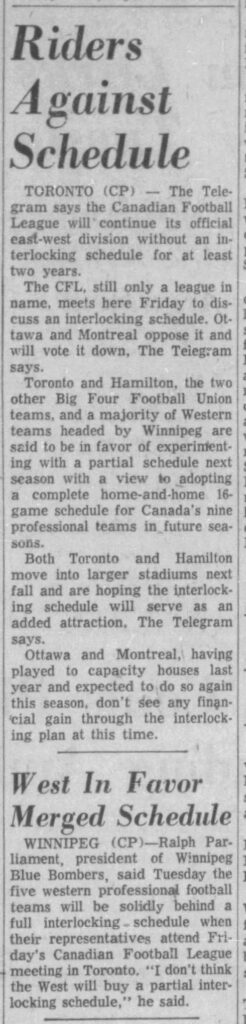
    Article about the Ottawa Rough Riders and Montreal being opposed to an interlocking schedule in 1958 (Ottawa Citizen, 6 August 1958)
    Article about the Ottawa Rough Riders and Montreal being opposed to an interlocking schedule in 1958 (Ottawa Citizen, 6 August 1958).

    Now, back to that historic CFL debut in Winnipeg. The Bombers and Edmonton were seen as two powerhouses in the WIFU. In a rematch of the previous year’s western final, a crowd of 18,206 watched Winnipeg rush for 364 yards to overpower their rival. Here’s how the Edmonton Journal reported the game:
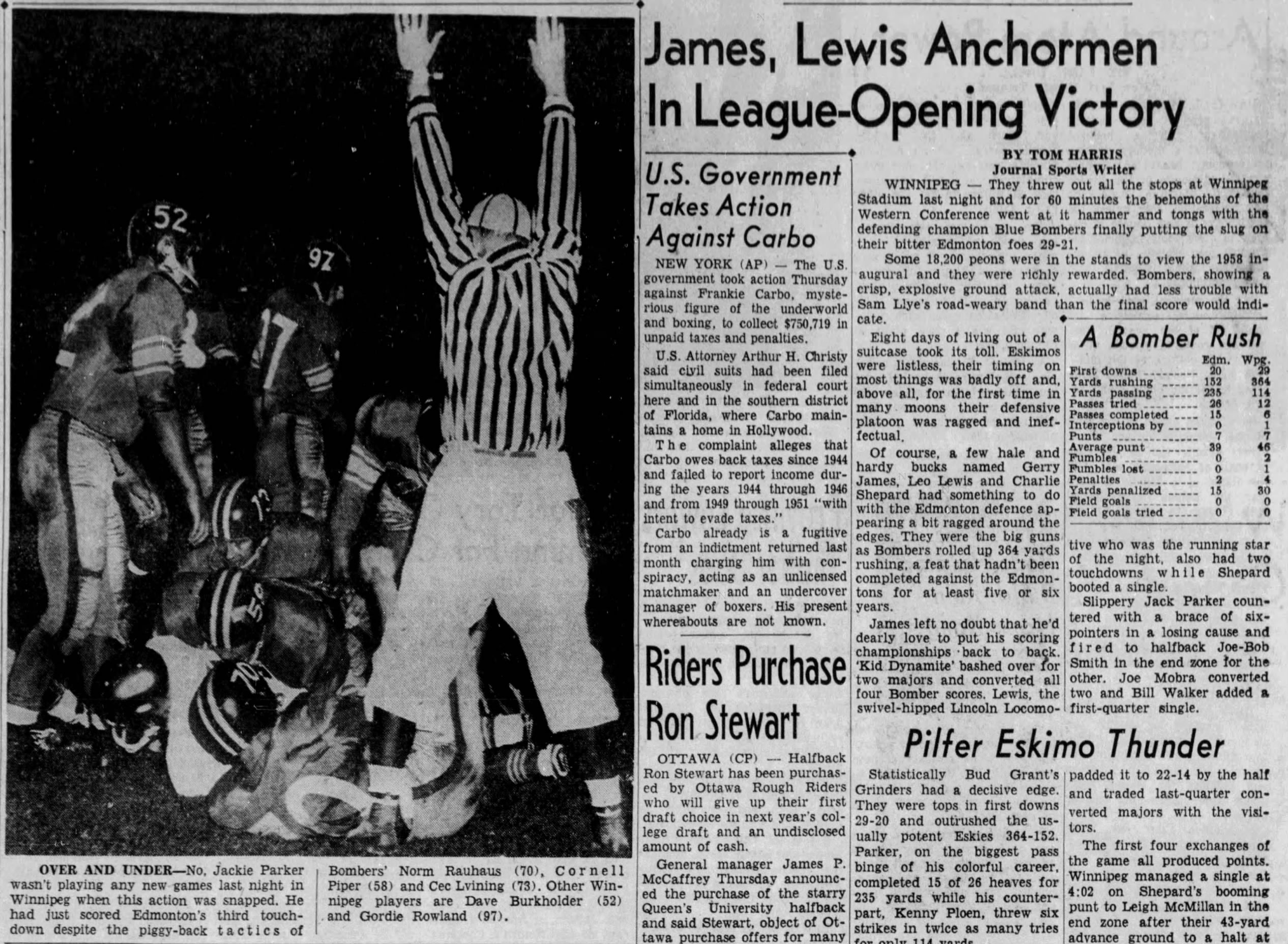
    Account of the first CFL game (Edmonton Journal, 15 August 1958)
    Account of the first CFL game (Edmonton Journal, 15 August 1958)

    Final score. Winnipeg 29 Edmonton 21.


    Sources:
    Edmonton Journal, 14 August 1958
    Edmonton Journal, 15 August 1958
    Ottawa Citizen, 6 August 1958
    Regina Leader-Post, 14 August 1958
    Regina Leader-Post, 15 August 1958
    St. Catharines Standard, 8 August 1958

    Fediverse Reactions
  • 1955 East-West Game a Success

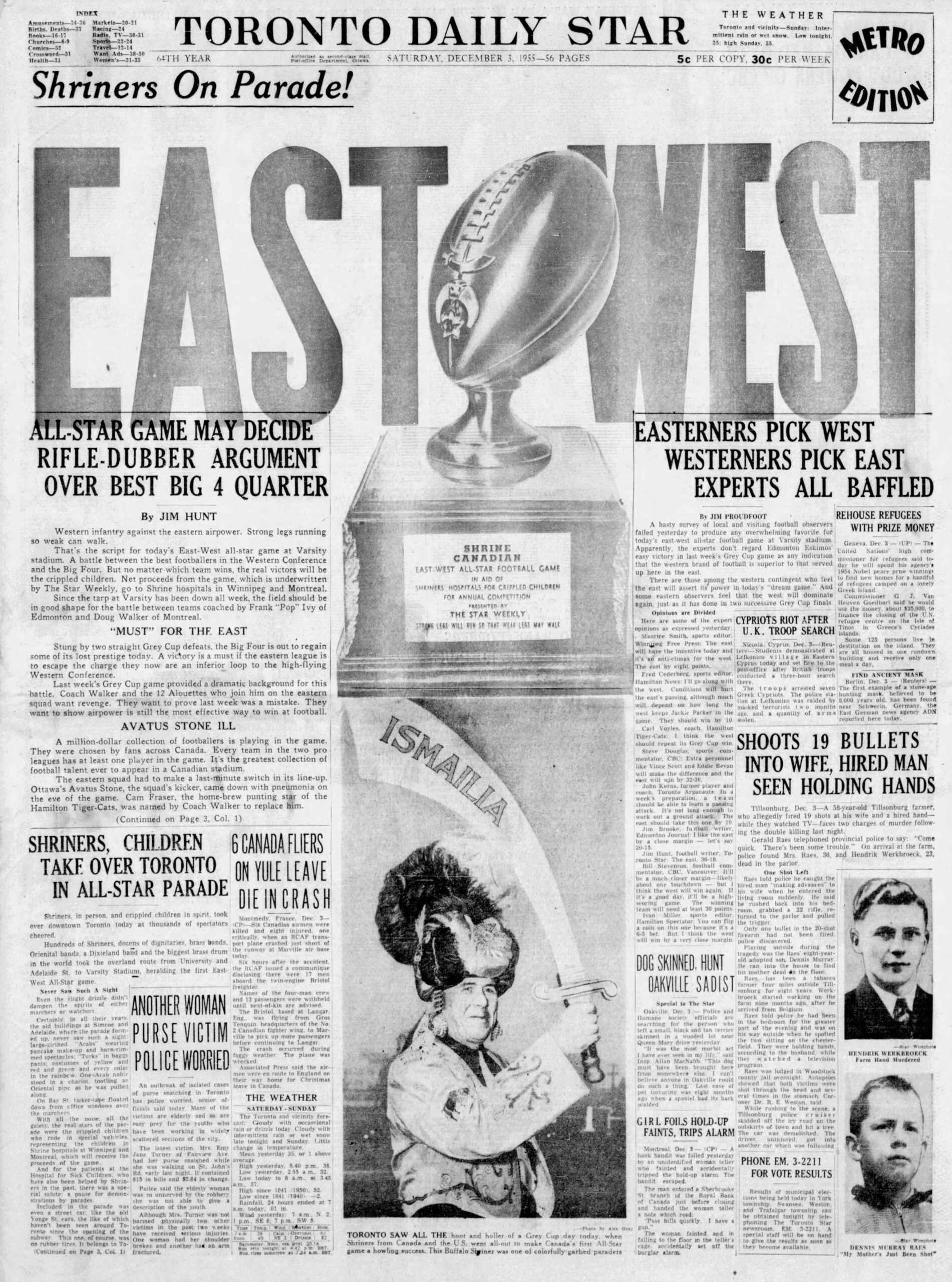
    In the 1950s, the Shriners organization sponsored an East-West all-star game featuring the best players of Canadian football. The game was played the week after the Grey Cup between all-stars from the Interprovincial Rugby Football Union (IRFU) and the Western Interprovincial Football Union (WIFU). The first such game was played on December 3, 1955, at Varsity Stadium in Toronto.

    Front page of the Toronto Star on December 3, 1955 previewing the first-ever East-West game.
    Front page of the Toronto Star on December 3, 1955 previewing the first-ever East-West game.

    There was much anticipation in the lead up to the game. Edmonton had just beaten Montreal handily in the Grey Cup the previous week. It was the second year in a row that the west had prevailed in the national championship. So, bragging rights were up for grabs between the IRFU (aka the Big Four) and WIFU when it came which union was the superior football league in Canada.

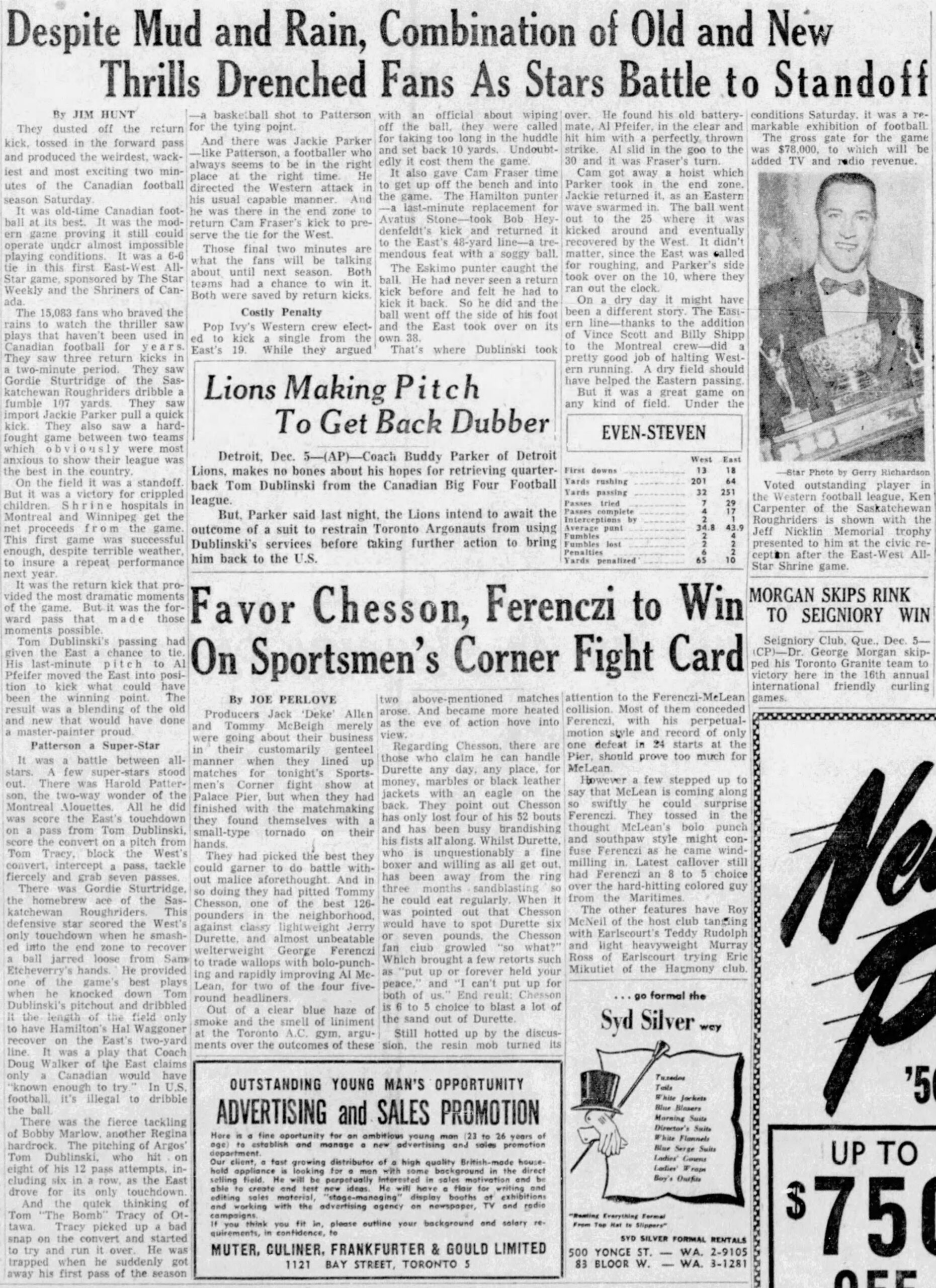
    A crowd of over 15,000 braved the rain to watch the top names in Canadian football – chosen by the fans – compete in a defensive battle. Playing in muddy conditions at Varsity, the players put on an exciting performance despite the game ending in a 6-6 tie.

    Jim Hunt's account of the 1955 East-West game in the Toronto Star.
    Jim Hunt’s account of the 1955 East-West game in the Toronto Star (December 5, 1955).

    An account of the game by legendary reporter Jim Hunt in the Toronto Star summed it up perfectly:

    They dusted off the return kick, tossed in the forward pass and produced the weirdest, wackiest and most exciting two minutes of the Canadian football season Saturday.

    It was old-time Canadian football at its best. It was the comeback game proving it still could operate under almost impossible playing conditions. It was a 6-6 tie in this first East-West All-Star game, sponsored by The Star Weekly and the Shriners of Canada.

    The 15,083 fans who braved the rains to watch the thriller saw plays that haven’t been used in Canadian football for years. They saw three return kicks in a two-minute period. They saw Gordie Sturtridge of the Saskatchewan Roughriders dribble a fumble 107 yards. They saw import Jackie Parker play a quick kick.

    They also saw a hard-fought game between two teams which obviously were more anxious to show their league was the best in the country.

    I’m reminded by the commentary for this game that despite horrible weather, awful field conditions, and a seemingly ho-hum 6-6 score, football can still be very exciting during defensive stalemates when there’s a meaningful game to play. You don’t always have to light up the scoreboard to provide entertaining football. By the way, how neat is it read Jim Hunt’s work from early in his lengthy career?

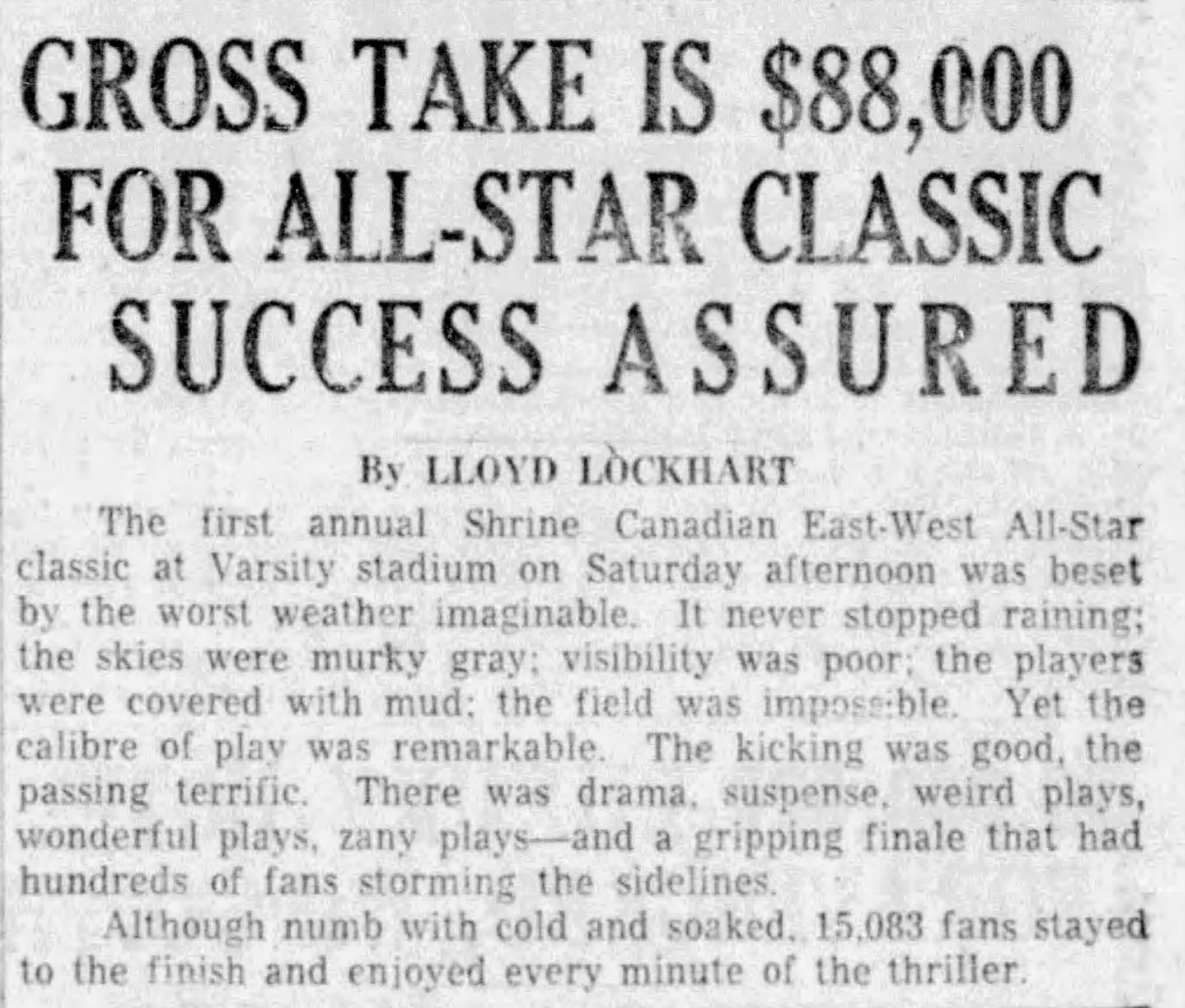
    The inaugural East-West game grossed $88,000. Net proceeds from the game were given to the Shriners’ children’s hospitals in Montreal and Winnipeg. The event was deemed a smashing success and would return the following year.

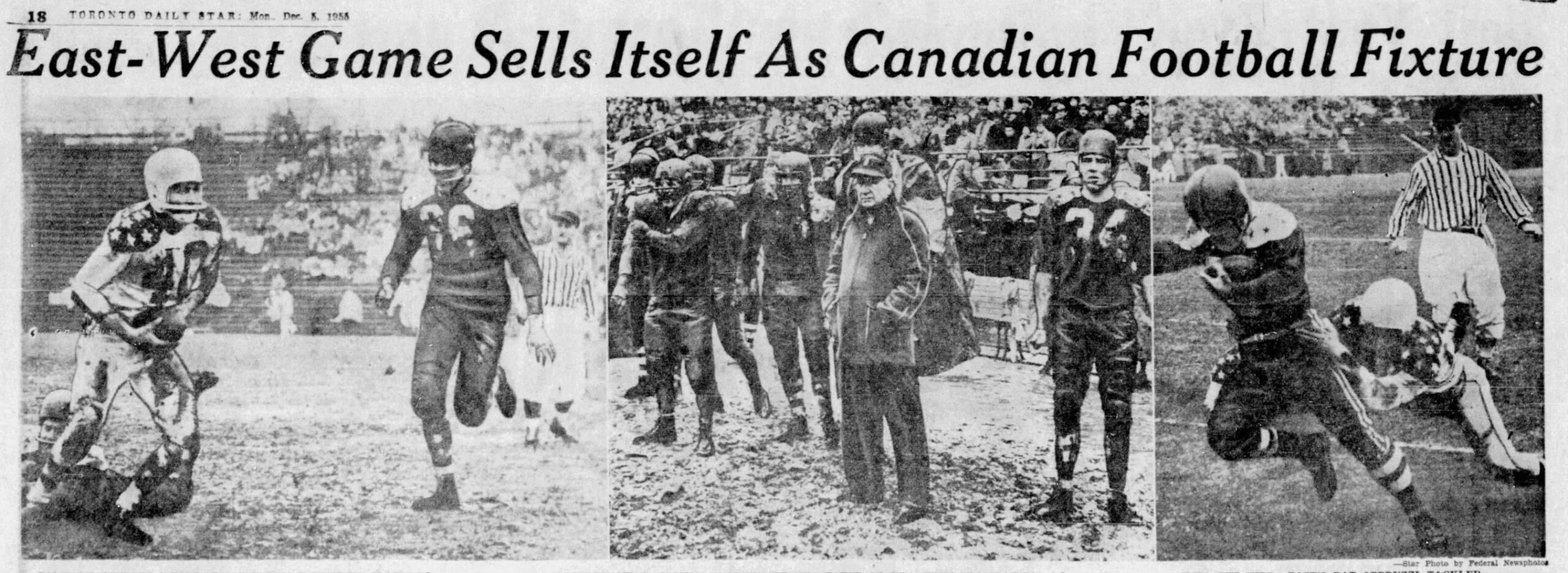
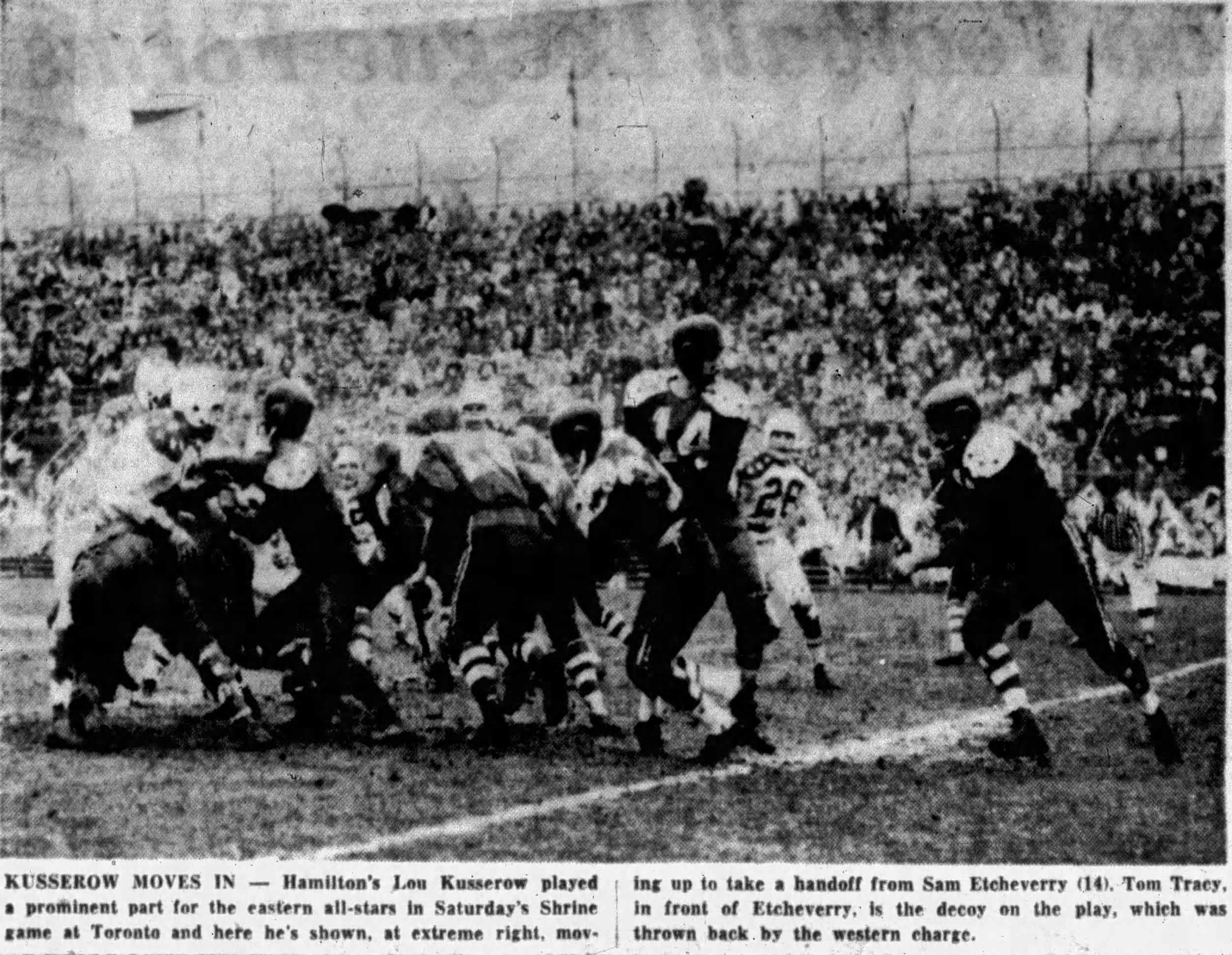
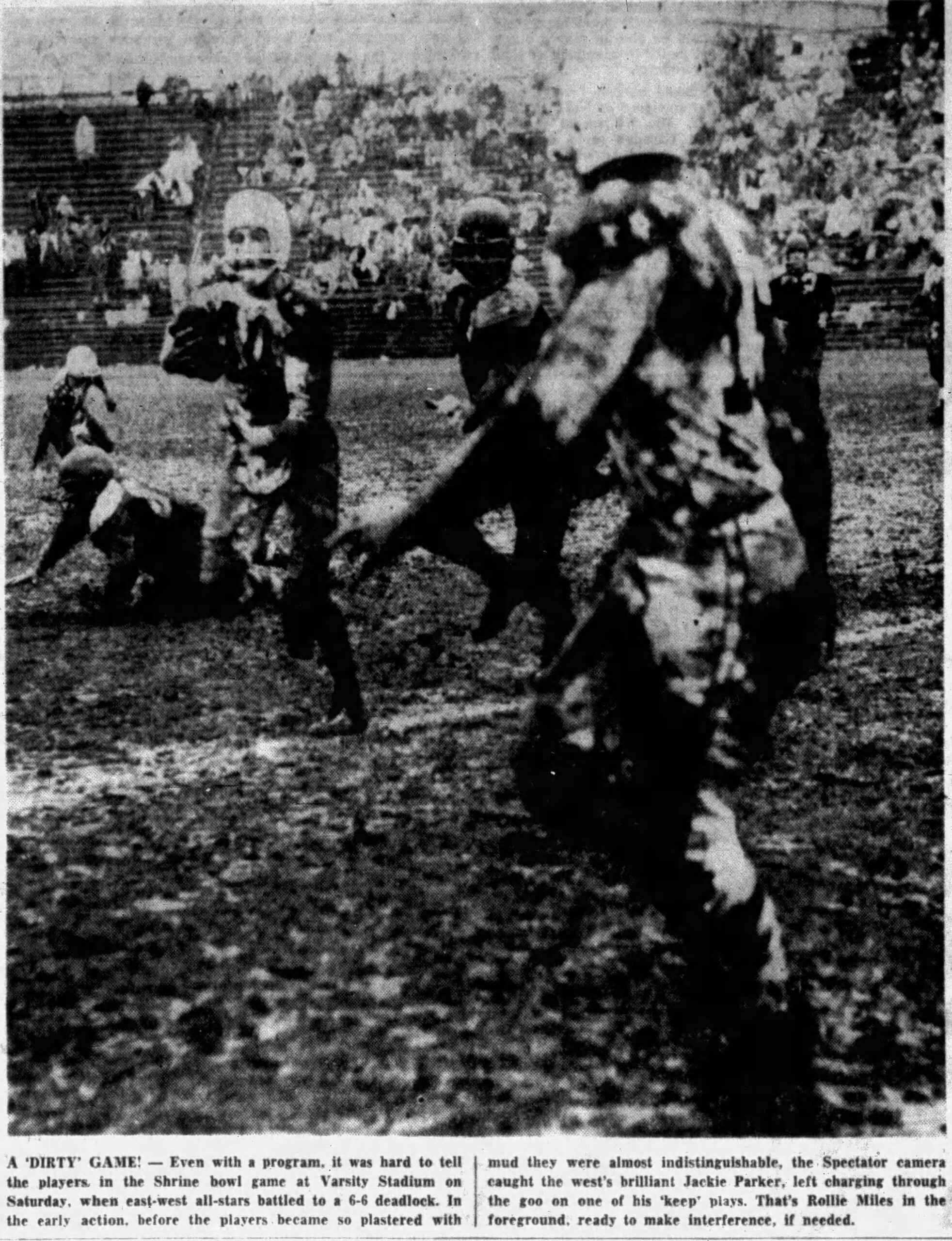
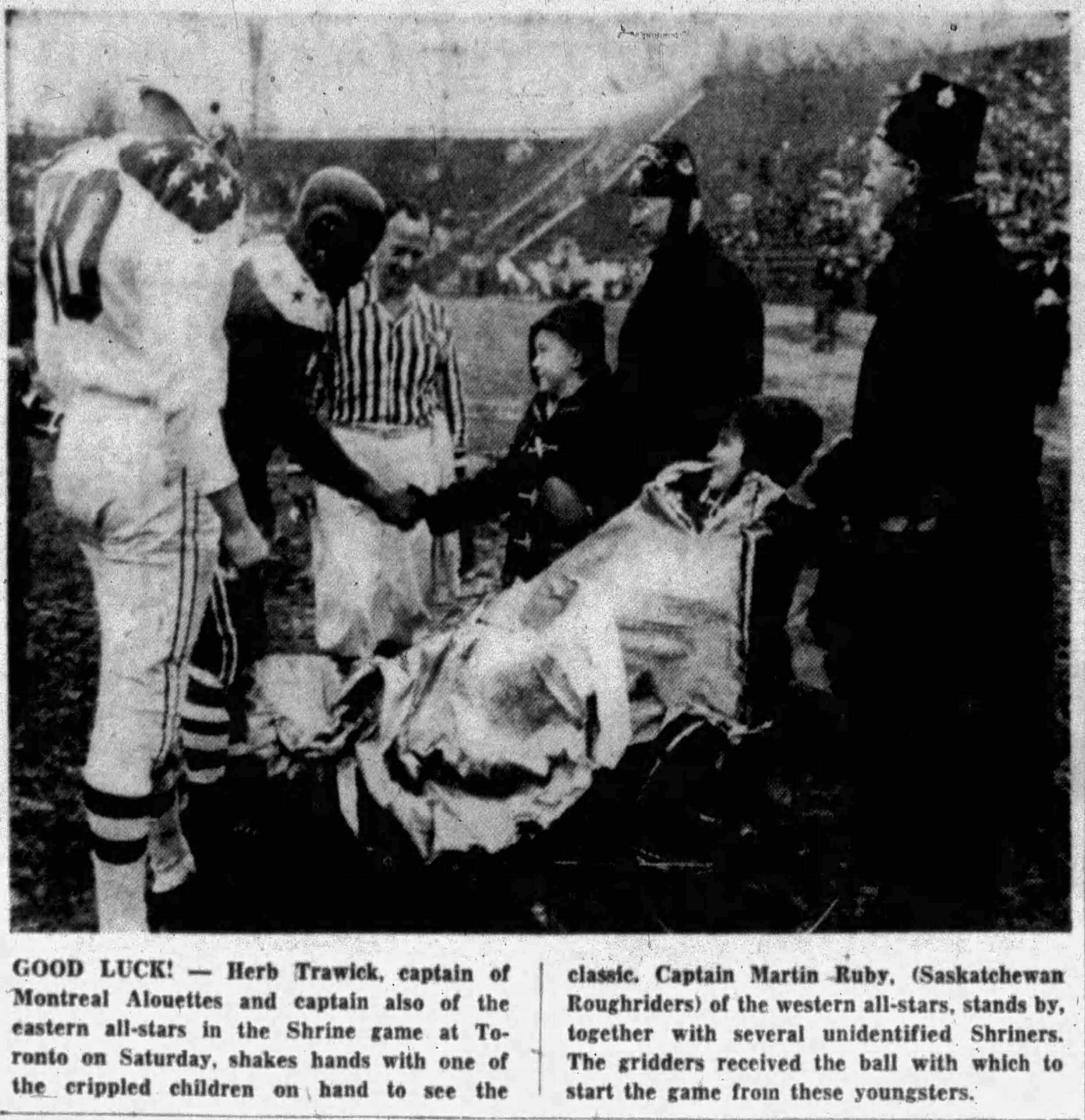
    Some photos of the action, as published in the Toronto Star and Hamilton Spectator:

    1955 East-West game action
    1955 East-West game action
    1955 East-West game action

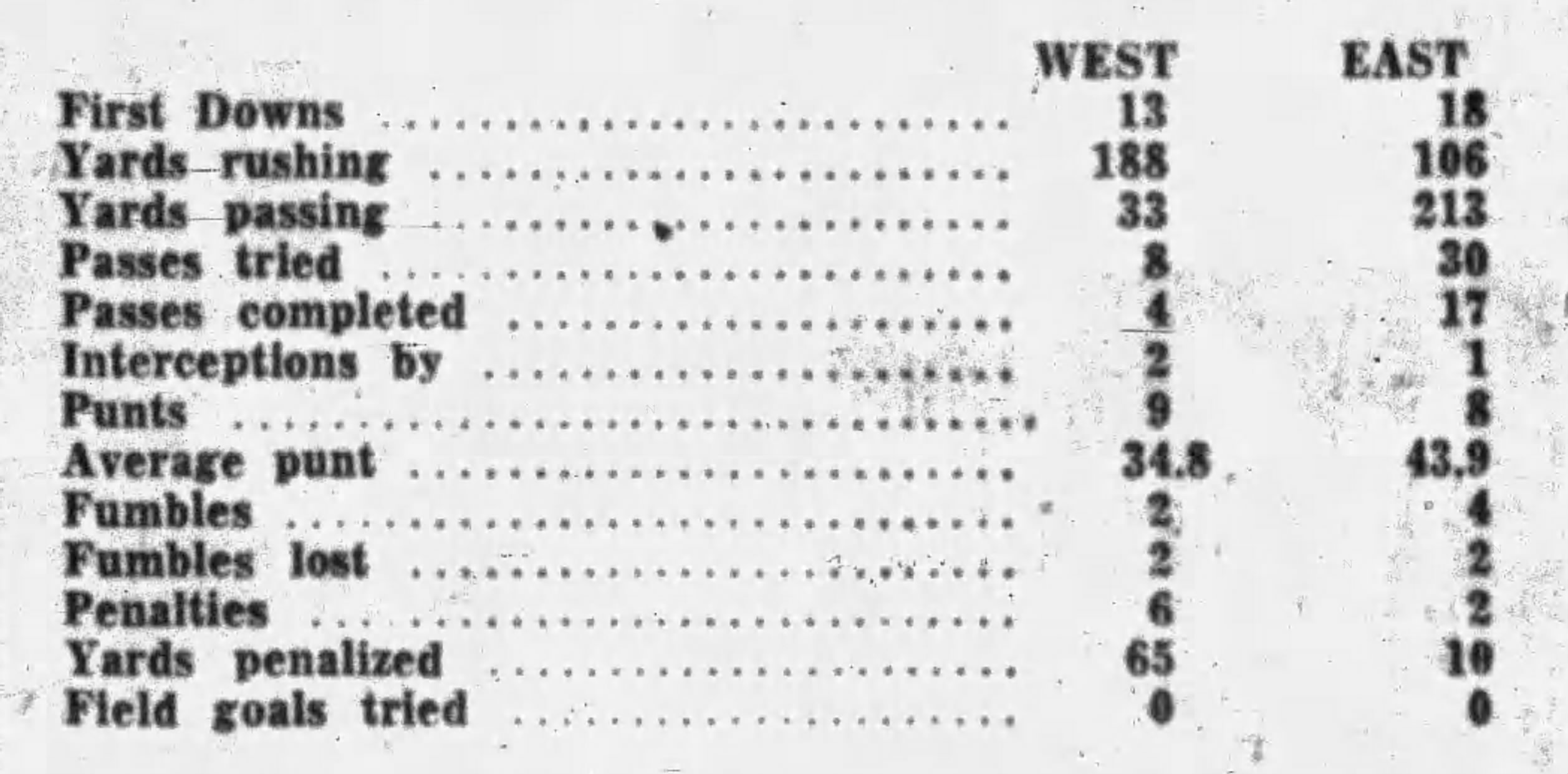
    Final stats:

    1955 East-West Game Stats

    Sources:

    Hamilton Spectator, 5 December 1955
    Toronto Star, 3 December 1955
    Toronto Star, 5 December 1955

    Fediverse Reactions
  • Getting Ready for the Grey Cup’s TV Debut

    It’s September 1952 and a new technology – black and white television – is taking the country and much of the world by storm. The Canadian Broadcasting Corporation (CBC) entered the TV business with two flagship stations: CBFT in Montreal and CBLT in Toronto.

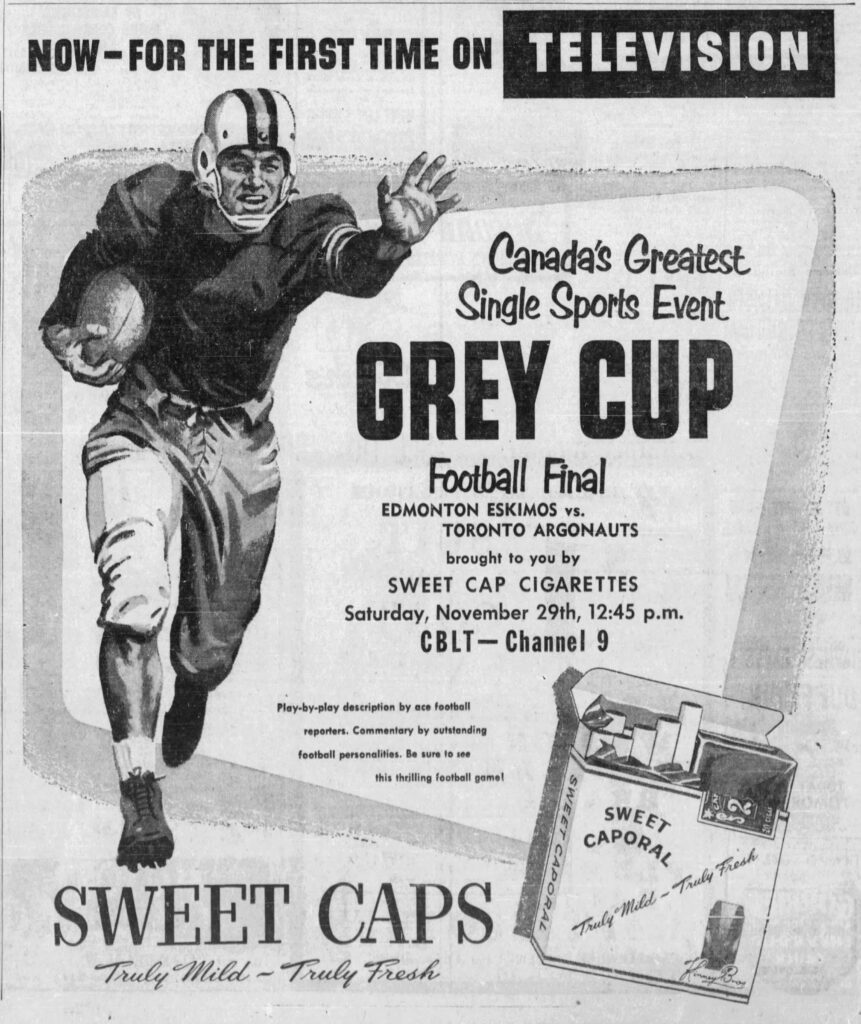
    The decision was soon made to broadcast the upcoming Grey Cup game on CBLT. The Canadian Rugby Union championship was scheduled for Saturday November 29th at Varsity Stadium in Toronto.

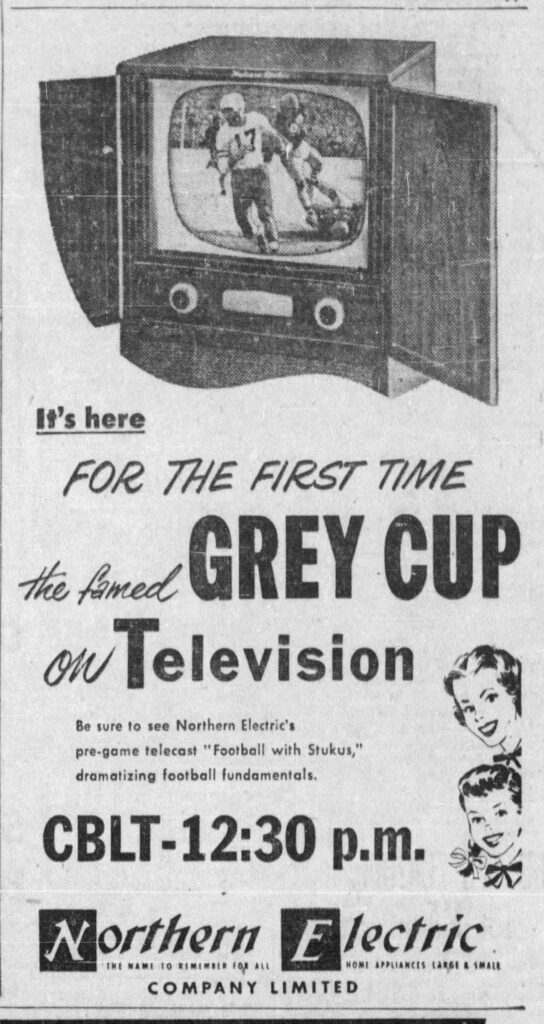
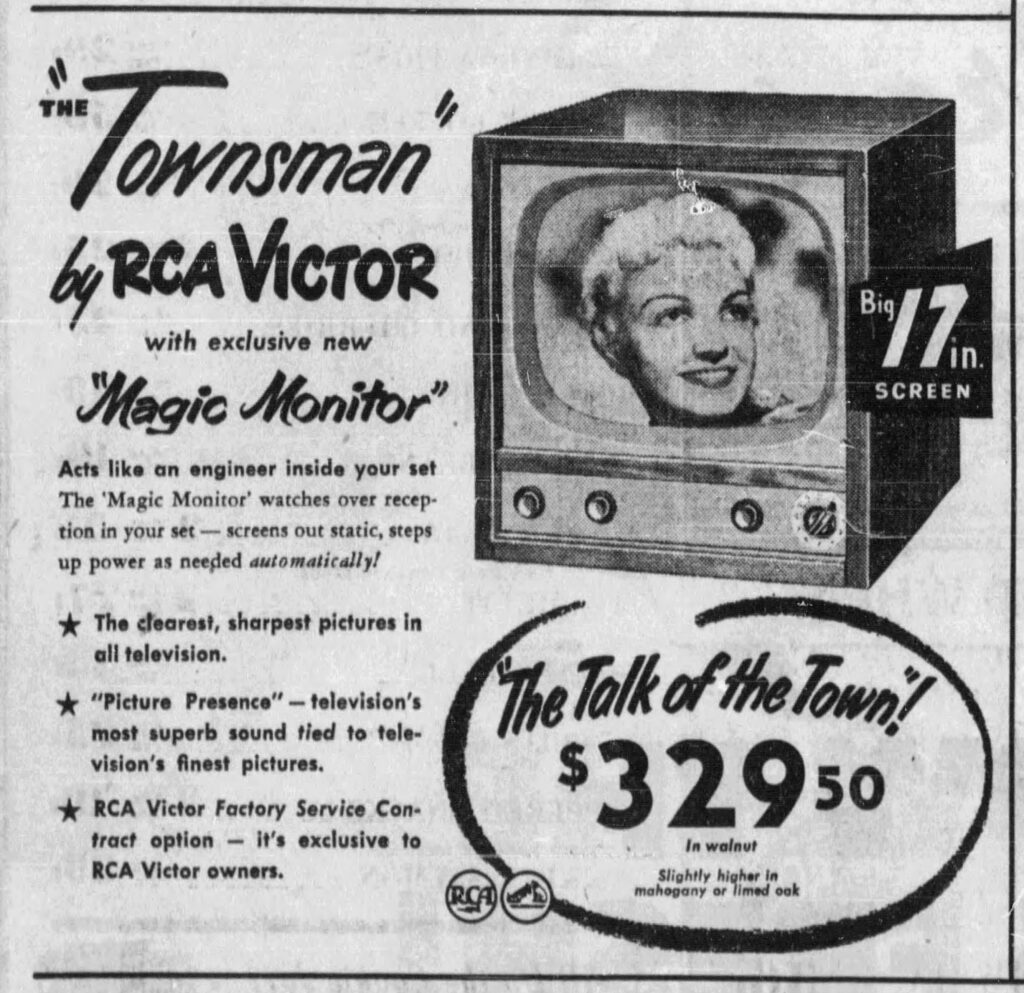
    The novelty factor of the new technology coupled with the popularity of the hometown Toronto Argonauts, who were playing in the championship, helped drive sales for television sets in Toronto. Several ads selling TVs appeared in local newspapers. These didn’t come cheap, but vendors were more than happy to set up affordable payment plans for excited football fans.

    While the Grey Cup game itself was the first Canadian football game ever televised, broadcast crews did a practice run a few days before in the playoff game between the Argonauts and the Sarnia Imperials of the Ontario Rugby Football Union. In those days, the ORFU still challenged for the Grey Cup. The Toronto-Sarnia Grey Cup semi-final game at Varsity Stadium was used as the dress rehearsal for the big game. The 1952 Grey Cup commentators Norm Marshall and Larry O’Brien were actually chosen after an audition for the roles was held during the Sarnia game.

    Notes about the TV practice run done during the Grey Cup semi-final between Toronto and Sarnia (Toronto Star, 27 November 1952)

    Pubs in and around Toronto with television sets were packed on the day of the game. Meanwhile, in nearby Hamilton, Westinghouse set up several TVs so that employees and friends could watch the game. The broadcast even included a short pre-game show hosted by Annis Stukus.

    In the end, the Argonauts defeated Edmonton by a score of 21-11 in front not only record crowd at Varsity Stadium but also tens of thousands of television viewers in the Toronto area. A new era for the Grey Cup and for Canadian television was here.


    Sources:

    Patskou, Paul. “The First Televised Grey Cup Game.” Canadian Football Research Society. Accessed October 28, 2025. https://www.canadianfootballresearch.ca/the-first-televised-grey-cup-game/.

    The Toronto Star, 27 November 1952

  • Five Canadian Football Players Lost in 1956 Plane Crash Part II

    The 1956 plane crash that claimed the lives of five Canadian football players garnered widespread newspaper coverage across Canada and parts of the United States.

    Melvin Becket, Mario DeMarco, Gordon Sturtridge, and Ray Syrnyk of the Saskatchewan Roughriders and Calvin Jones of the Winnipeg Blue Bombers were aboard Trans-Canada Air Lines Flight 810 when it crashed into a remote area of British Columbia.

    Here is a sampling of news articles about the tragedy:

    Regina Leader-Post front page, December 10, 1956
    Front page of the Regina Leader-Post on December 10, 1956.
    Regina Leader-Post article about Mario DeMarco
    Heart-breaking article in the Regina Leader-Post (December 10, 1956) expressing hope that Mario DeMarco and Melvin Becket would somehow survive the disaster.
    Iowa City Press-Citizen front page, December 10, 1956
    Front page of the Iowa City Press-Citizen (December 10, 1956) with a focus on Calvin Jones, who was a standout college player at the University of Iowa before joining the Winnipeg Blue Bombers.
    Saskatoon Star-Phoenix front page, December 10, 1956
    Front page of the Saskatoon Star-Phoenix on December 10, 1956.
    Fediverse Reactions
  • Five Canadian Football Players Lost in 1956 Plane Crash

    On Sunday, December 9, 1956, tragedy struck Canadian football when five professional players lost their lives in one of the country’s worst aviation disasters.

    Trans-Canada Air Lines Flight 810 left Vancouver that evening bound for Calgary with 62 passengers and crew onboard. Among the passengers were four members of the Saskatchewan Roughriders (Melvin Becket, Mario DeMarco, Gordon Sturtridge, and Ray Syrnyk) and Calvin Jones of the Winnipeg Blue Bombers. They were returning from Vancouver, where the 1956 Canadian Football Council all-star game was played the previous day.

    About an hour after takeoff, the plane crashed into Mount Slesse, near Chilliwack, BC. All 62 people aboard the aircraft died. The crash site is in a remote area of British Columbia, which made recovery efforts virtually impossible. The remains of both the plane and the victims remain at the site to this day.

    Here is a closer look at the five players who were lost in the disaster:

    Melvin Becket was a native of Chicago, Illinois. He was drafted by the NFL’s Green Bay Packers but opted to play for the Saskatchewan Roughriders. His wife was expecting their child just after Christmas.

    Mario DeMarco was an American from New Jersey. He and Melvin Becket were not only teammates; they were also business partners of a local gas station in Regina. The DeMarco–Becket Memorial Trophy is awarded to the Most Outstanding Offensive Lineman in the CFL’s West Division.

    Calvin Jones was an African-American from Ohio who came to Canada to play professional football with the Winnipeg Blue Bombers after a standout college career at the University of Iowa. He missed an earlier flight out of Vancouver so was instead put on the ill-fated TCA Flight 810.

    Gordon Sturtridge was a native of Winnipeg, where he started his professional football career. He was a three-time western all-star and played four seasons with Saskatchewan. His wife Mildred was also aboard the flight. They left behind three young children.

    Ray Syrnyk was a native of Saskatoon and played on the 1953 Saskatoon Hilltops junior championship team. He was the youngest (22) of the five players lost.

    Find A Grave Memorial for Trans-Canada Airlines Flight 810 Victims

    Sources:
    The Province, 10 December 1956
    The Regina Leader-Post, 10 December 1956
    The Saskatoon Star-Phoenix, 10 December 1956