Blog

  • Tigers, Wildcats Merge to Form the Tiger-Cats

    Depending on the criteria chosen and who you ask (relax, Argo fans!) the city of Hamilton boasts Canada’s oldest football club. The Hamilton Foot Ball Club was founded on November 3, 1869. Yes, they spelled football with two words back then. The team played in the Ontario Rugby Football Union from 1893 to 1906 before joining the new Interprovincial Rugby Football Union in 1907.

    A news article in the Hamilton Spectator announcing the founding of the Hamilton Foot Ball Club
    A news article announcing the founding of the Hamilton Foot Ball Club
    (The Hamilton Spectator, 4 November 1869, p 2.)

    The team wore black and orange and later black and yellow uniforms and were known as the Tigers. It was this Tigers team that played in the second Grey Cup in 1910.

    In 1941, the Tigers suspended play as a result of the Second World War. The IRFU itself shut down a year later. To fill the void, the Hamilton Wildcats were formed and played in the ORFU, winning the Grey Cup in 1943. Due to the high number of air force personnel playing for the team, the club was known as the Flying Wildcats during the war years.

    After the war ended, the IRFU and the Hamilton Tigers resumed play. Unfortunately, the Hamilton market couldn’t support two football teams. Both the Tigers and the Wildcats found themselves competing for business and facing financial challenges. After a dispute with the IRFU, the Tigers and Wildcats actually swapped leagues for a couple of seasons with the Tigers playing in the ORFU and the Wildcats joining the IRFU in 1948.

    Article announcing merger of the Hamilton Wildcats and Hamilton Tigers
    “Merger of Wildcats, Tigers, Completed.” The Hamilton Spectator, 31 January 1950, p 24.

    Finally, a group of Hamilton citizens pushed for the amalgamation of the Tigers and Wildcats. It was clear that Hamilton could sustain only one team, especially with the growing professionalization of the game of football.

    Thus, in 1950, the Hamilton Tigers and the Hamilton Wildcats merged into one club and became the Hamilton Tiger-Cats.


    This is the sixth of a series of posts that will explore the stories behind the names of the existing Canadian Football League teams. See the previous post on the Winnipeg Blue Bombers.

  • The Blue Bombers of Western Football

    The Winnipeg Blue Bombers. Boxing legend Joe Louis. Labatt Breweries. And the Toronto Blue Jays. Believe it or not there’s an interesting connection between these four entities spanning several decades.

    The Winnipeg Football Club was established in 1930. They were originally called the Winnipeg Rugby Football Club but dropped the “Rugby” from the team’s name not long after being formed. The team was unofficially known simply as the Winnipegs or the ‘Pegs for short. In the early days, the club wore green and white uniforms before quickly adopting blue and gold as their team colours. This colour choice plays an important part of the story as you will see.

    In 1935, Winnipeg travelled east to Hamilton and beat the hometown Tigers 18-12 in the Grey Cup. The victory gave the Winnipegs the distinction of becoming the first western team to win the Grey Cup championship. Enthusiastic crowds welcomed home the Winnipegs, and businesses lined up to congratulate the new champions of “Canadian rugby.”

    Hudson's Bay Company advertisement congratulating the Winnipegs on their 1935 Grey Cup victory
    Hudson’s Bay Company advertisement congratulating the Winnipegs on their 1935 Grey Cup victory (source: The Winnipeg Tribune, 10 December 1935, page 17)

    Around the same time, an African American by the name of Joe Louis was taking the professional boxing world by storm. He was given the racialized nickname “The Brown Bomber” by American media. The story goes that a local Winnipeg journalist named Vince Leah, catching wind of the “Brown Bomber” nickname, referred to the Winnipegs as the “Blue Bombers of Western Football.”

    The name stuck, and the football club became known as the Winnipeg Blue Bombers ever since.

    Winnipegs All Set to Open Campaign (1936)
    Media started referring to the Winnipegs as the “Blue Bombers” in 1936. (source: The Winnipeg Tribune, 5 September 1936, page 21.)
    Reference to the "Blue Bombers" as the name of Winnipeg's football team
    The Super Bombers (source: The Winnipeg Tribune, 31 October 1936, page 29.)

    In the 1950s, Labatt Breweries introduced a new brand of beer in the Manitoba market. With its colourful blue labelling, Winnipeg football fans referred to the beer as Labatt “Blue.” Labatt eventually adopted the name officially and became a sponsor of the Blue Bombers and the CFL.


    Fast forward a couple decades later. Toronto was awarded an expansion franchise in Major League Baseball. Labatt Breweries had a significant ownership stake in the new team and wanted to leverage its Labatt Blue brand. Toronto’s other two sports teams – the Argonauts and the Maple Leafs – both had blue as a team colour. The writing was on the wall. Toronto’s new sport team was also going to be blue. So, the Toronto Blue Jays were born.


    Further reading:

    Football in Winnipeg (Manitoba Museum)

    Labatt Blue origins (Labatt website)


    This is the fifth of a series of posts that will explore the stories behind the names of the existing Canadian Football League teams. See the previous post on the Saskatchewan Roughriders.

  • The Rouge in American Football?

    Last week’s post centred around the debate about abolishing the rouge in Canadian football. This week let’s take a different approach to the single point and ask the following: What if the rouge were adopted into the American game?

    While there is certainly no ongoing debate over such a move, it actually has been discussed before. In fact, the rouge has even been used in exhibition scrimmages in American college football. Below are a few news articles from the late 1930s about the possibility of the North Central Intercollegiate Athletic Conference incorporating the Canadian rouge into the U.S. game.

    Article in the Montreal Star (1938) about American college conference adopting the rouge.
    Source: The Montreal Star, 1 Dec 1938, page 31. (newspapers.com)

    The pro-rouge camp was led by Charles Aaron West, the head coach at the University of North Dakota. Interestingly, the main argument for adopting the single-point rouge was that it would be an easy and effective way to break tied games. Plus, the rouge was deemed a reward to teams who moved the ball downfield by giving them the opportunity to simply kick for singles.

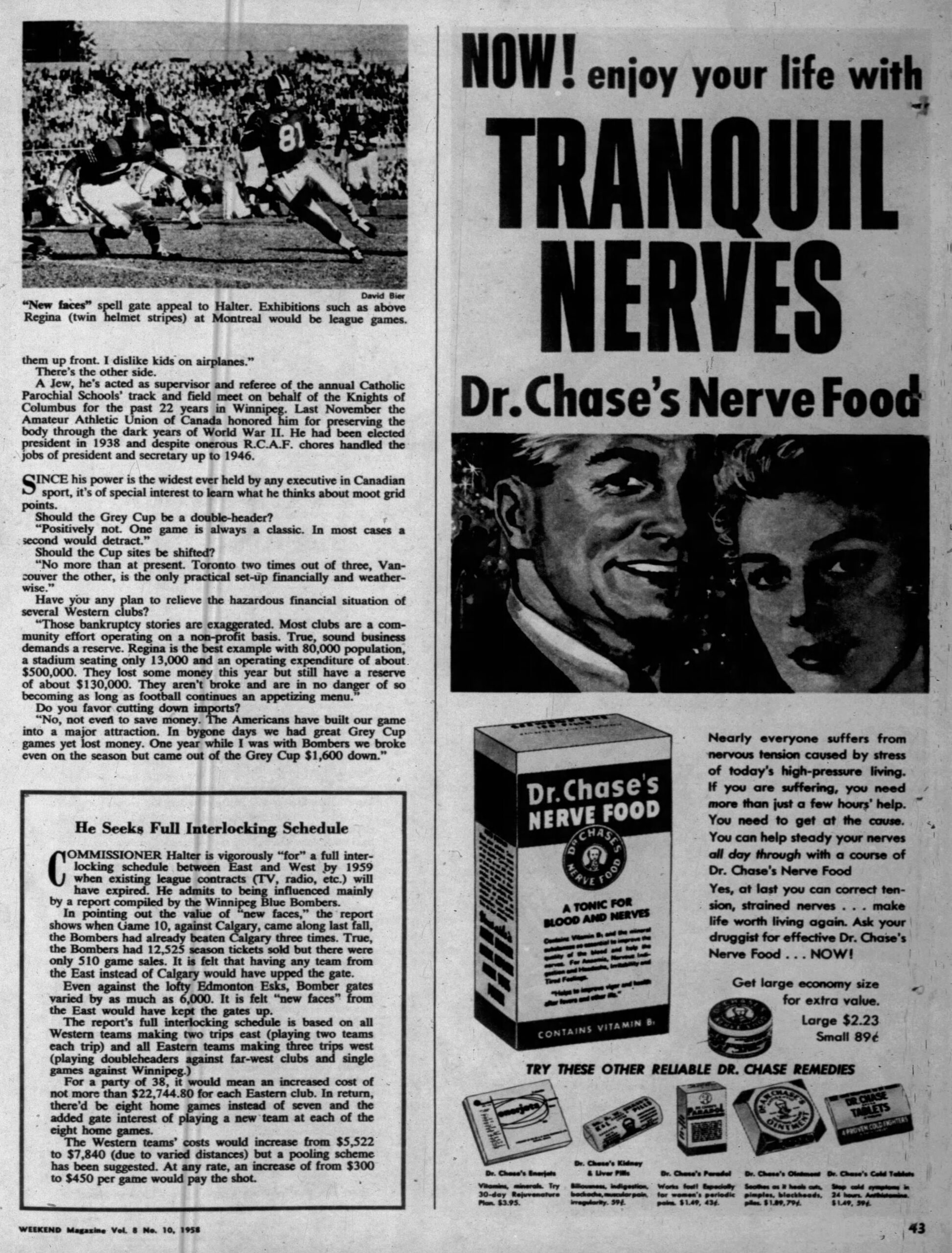
    Canadian Press Article in the Brantford Expositor about an American Winnipeg Blue Bomber in favour of the rouge
    Source: The Brantford Expositor, 2 Dec 1938, page 21. (newspapers.com)

    Of course, the Canadian rouge was ultimately not adopted and used in the broader U.S. college football game. But, Coach West and others certainly saw merit in the play. In 1946, West headed north and became the head coach of the Winnipeg Blue Bombers. His love for the Canadian rouge would have made the move a natural fit. Throughout history, the unique rules and nuances of Canadian football have been embraced by numerous American football coaches and players alike.

    Article in the Edmonton Journal (1939) about U.S. college coaches liking the Canadian rouge.
    Source: The Edmonton Journal, 27 June 1939, page 15. (newspapers.com)

    But, just imagine what it would be like today had Charles West got his way back in 1939. Would Americans be questioning whether the Rose Bowl or Super Bowl should be won on a missed field goal?

  • Debating the Rouge…in 1912

    Quintessentially Canadian. Quirky. A reward for failure. Embarrassing. All of these have been used to describe a scoring play unique to Canadian football: the rouge.

    The rouge (or a single) is a one-point score awarded to the team who kicks the ball into their opponent’s end zone and when the ball is not returned or kicked back out of the end zone by the opposing team. This can be as a result of a kickoff, punt, or missed field goal.

    If the opposing team doesn’t get the ball out of their end zone or if the ball passes the dead ball line at the back of the end zone, a single point is scored for the kicking team.

    From time to time a debate ensues over whether to keep or get rid of the rouge. Most CFL and Canadian football fans argue it’s an integral part of the Canadian game both strategically and culturally. But, others say its inclusion rewards failure (because a point is often scored on a missed field goal) or, worse, makes the CFL look unprofessional or gimmicky.

    Regardless, the debate over the rouge is nothing new. Below is an article that appeared in the Toronto Star in 1912 about abolishing the rouge in Canadian football. Remember, back then Canadian football was often referred to as rugby.

    The main argument in this article seems to be that getting rid of the rouge would encourage more touchdowns and drop kicks – and that teams would no longer be able to take advantage of strong winds to score single points.

    Source: The Toronto Star, 19 November 1912, page 13. (newspapers.com)
  • Saskatchewan Roughriders is Our Name

    Green is the Colour
    Football is the Game
    We’re all together and Winning is our aim
    So Cheer us on through the sun and rain
    Saskatchewan Roughriders is our name

    It’s a familiar tune to many CFL football fans across the country. The chorus ends with the line, “Saskatchewan Roughriders is our name.” So, just when and why did Regina’s football team become the Roughriders? As you will see, it’s… well…a bit complicated.

    The Regina Rugby Club was founded in 1910. They played in the Saskatchewan Rugby Football Union along with teams in Saskatoon and Moose Jaw. The SRFU joined the Alberta and Manitoba leagues to form the Western Canada Rugby Football Union in 1911.

    As early as 1912, the Regina club was being called the Roughriders or Rough Riders. The August 31, 1915 edition of the Regina Leader references the Regina Rough Riders as they kick off the 1915 season.

    An early reference to the Regina Roughriders in the Saskatoon Daily Star in 1912
    An early reference to the Regina Roughriders (The Saskatoon Daily Star, 19 October 1912, page 22)
    Regina Rough Riders Lift Lid of 1915 Season in the Regina Leader
    Source: The Regina Leader, 31 August 1915, page 2 (via newspapers.com)

    The early Regina team had a question of identity not only when it came to the club name but also around deciding which team colours to use. The original colours of the Regina Rugby Club were purple and gold. Then, blue and white. Finally, they settled on red and black. In an alternative universe is there a team called the Saskatchewan RedBlacks?

    After 1915, the “Rough Riders” moniker seemed to fall out of favour. The local newspaper went back to referring to the team simply as the Regina Rugby Club. But, in 1924, according to official team history, the Regina Rugby Club formally became the Regina Roughriders. After the Second World War, the team became the Saskatchewan Roughriders to represent the entire province and eventually changed their team colours to the familiar green and white.

    Regina now Saskatchewan Roughriders article in the Winnipeg Tribune in 1946.
    Source: The Winnipeg Tribune, 3 June 1946, page 14 (via newspapers.com)

    So, what is a “Rough Rider” or “Roughrider” anyway? The most likely answer is that it is a reference to the trainers or “rough riders” who broke wild horses on the Prairies. There is a strong suggestion that the Roughrider name was chosen to pay homage to the “rough riders” of the North-West Mounted Police.

    An alternative theory is that the Roughriders were named after future United States president Teddy Roosevelt’s Rough Rider cavalry regiment in the Spanish-American War of 1898. However, it’s generally accepted that the Roosevelt/Rough Rider connection is associated more with the Ottawa Rough Riders who played in the East.

    Yes, this is where we need to mention that for a long period of time in Canadian football (up to 1996) there were two teams that shared the Rough Riders/Roughriders moniker, each with a distinct yet connected history. This anomoly probably deserves its own blog post at some point.

    There is good article about the “Roughriders” name written by Rob Vanstone posted last year on the Sasktchewan Roughriders’ website. Check it out here: https://www.riderville.com/2024/12/09/rob-vanstone-the-name-game-100-years-of-roughriders/

    So cheer us on through the sun and rain…Saskatchewan Roughriders is our name!


    This is the fourth of a series of posts that will explore the stories behind the names of the existing Canadian Football League teams. See the previous post on the Edmonton Elks.