

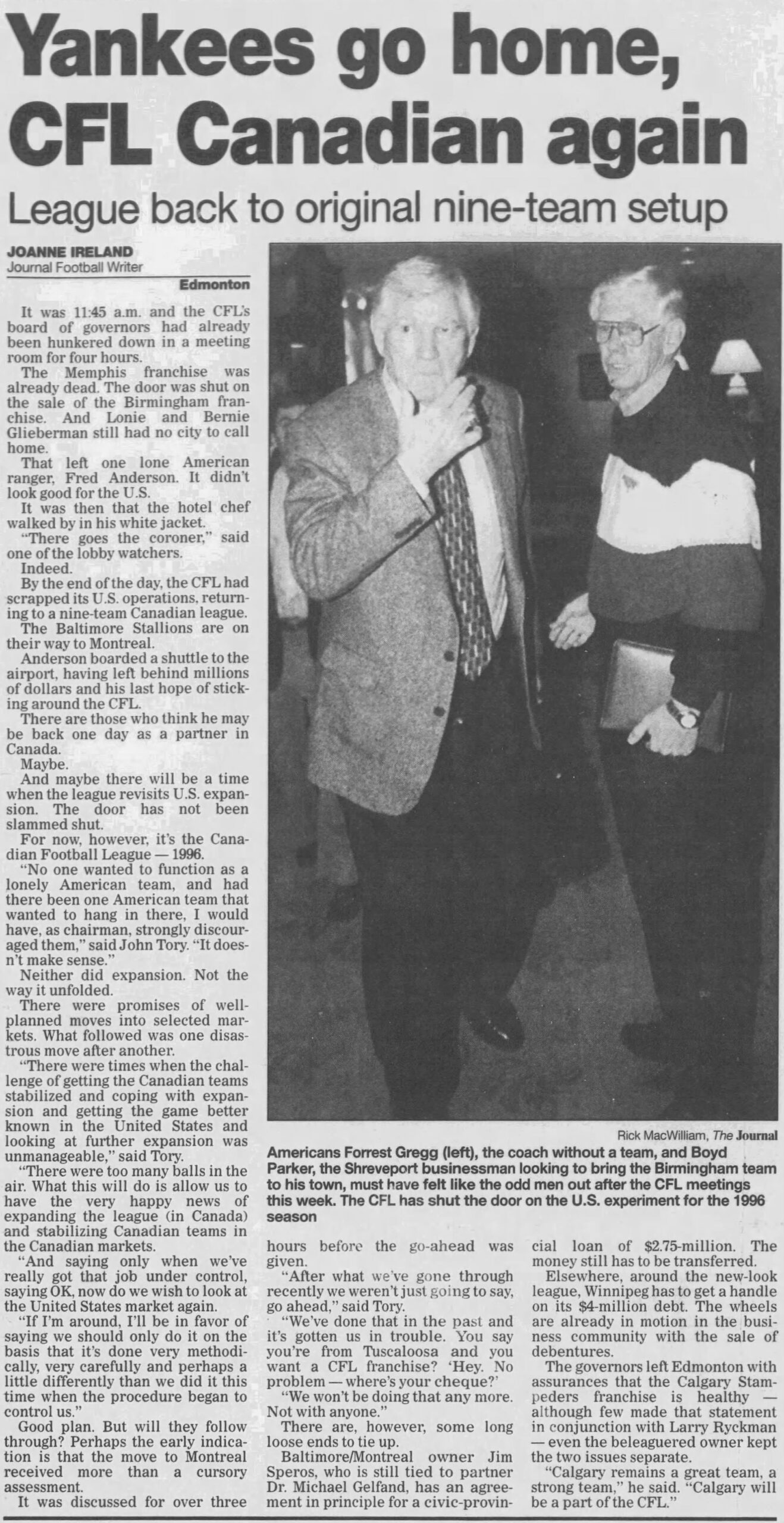
On Friday February 2, 1996, the Canadian Football League officially ended its American expansion efforts. During the CFL’s annual winter meetings, the league announced that the Birmingham Barracudas, Memphis Mad Dogs, San Antonio Texans, and Shreveport Pirates were ceasing operations. And the Baltimore Stallions, having just won the Grey Cup a few months earlier, were relocating to Montreal.
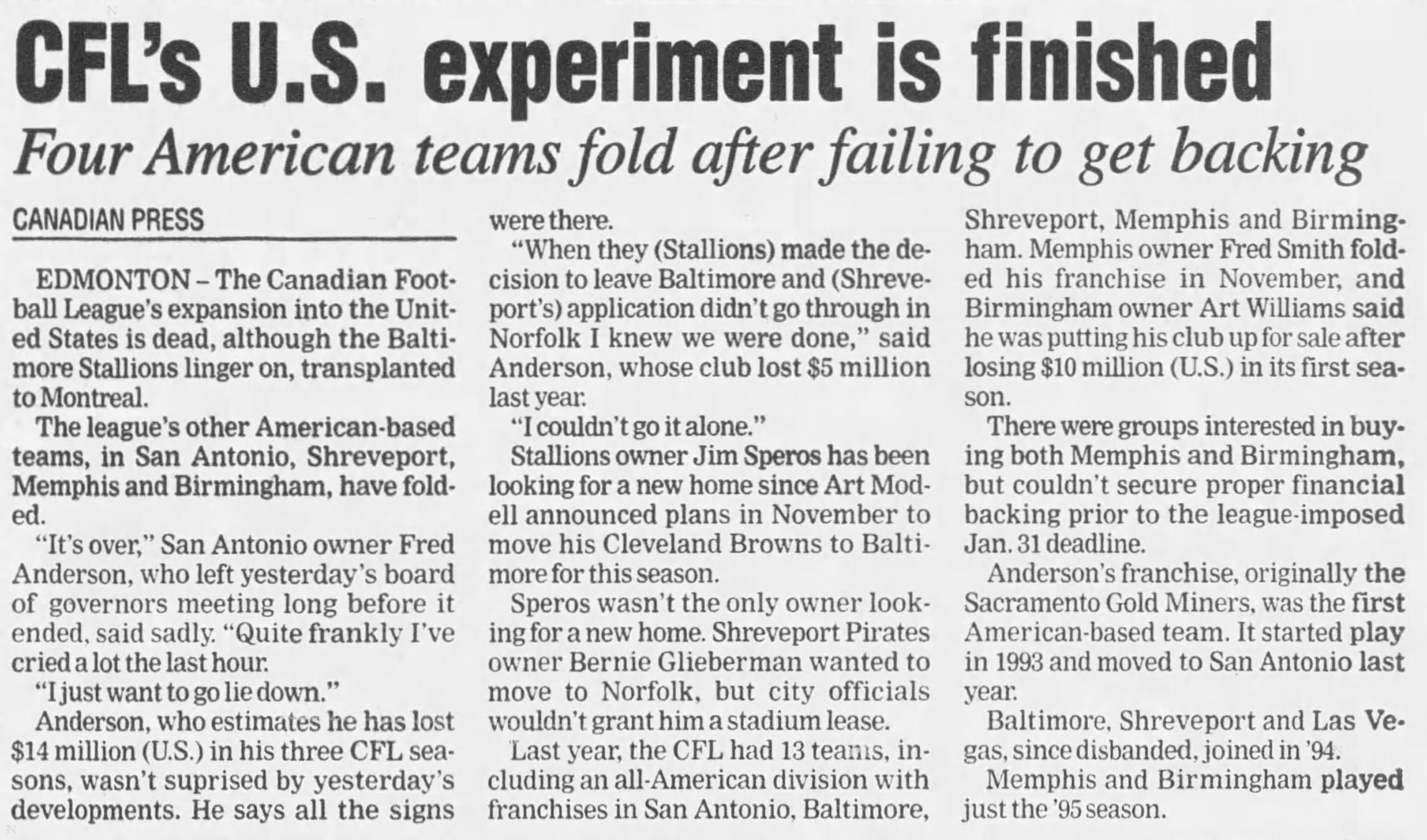
It was game over for the CFL’s grand vision of becoming a North American-wide professional sports league. The promised windfall of expansion fees and the hope of a multimillion-dollar U.S. television deal (all in American dollars to boot) never materialized. I suppose the only silver lining was that U.S. expansion had thrown the CFL a lifeline. For a few years, there was some new blood and some new interest generated. Personally, I enjoyed watching the American teams come to Ivor Wynne Stadium to play the Tiger-Cats. It was sure better than watching the Ti-Cats play the Rough Riders and Argos four times. It added variety and a bit of intrigue.
The writing was on the wall for the CFL’s demise in America once the National Football League announced it was returning to Baltimore. That move ultimately spelt the end for the Stallions in Baltimore. The other chips began to fall.
The Pirates attempted to relocate to Virginia but were unable to secure a stadium lease. A new group tried to purchase the Barracudas and move them to Shreveport, where the CFL enjoyed at least modest support, but were rejected by the CFL. Memphis, despite having one of the wealthiest owners in Fred Smith of FedEx fame, was dead in the water. The Stallions, having run out of options in Maryland, considered a move to Houston, Texas. When they decided to move to Montreal instead, that left the San Antonio Texans as the lone U.S.-based team remaining. “It’s over!” admitted a dejected Fred Anderson, the Texans’ owner. With no other team south of the border, he wasn’t going to go it alone whether he wanted to or not. The CFL was done with its American clubs.
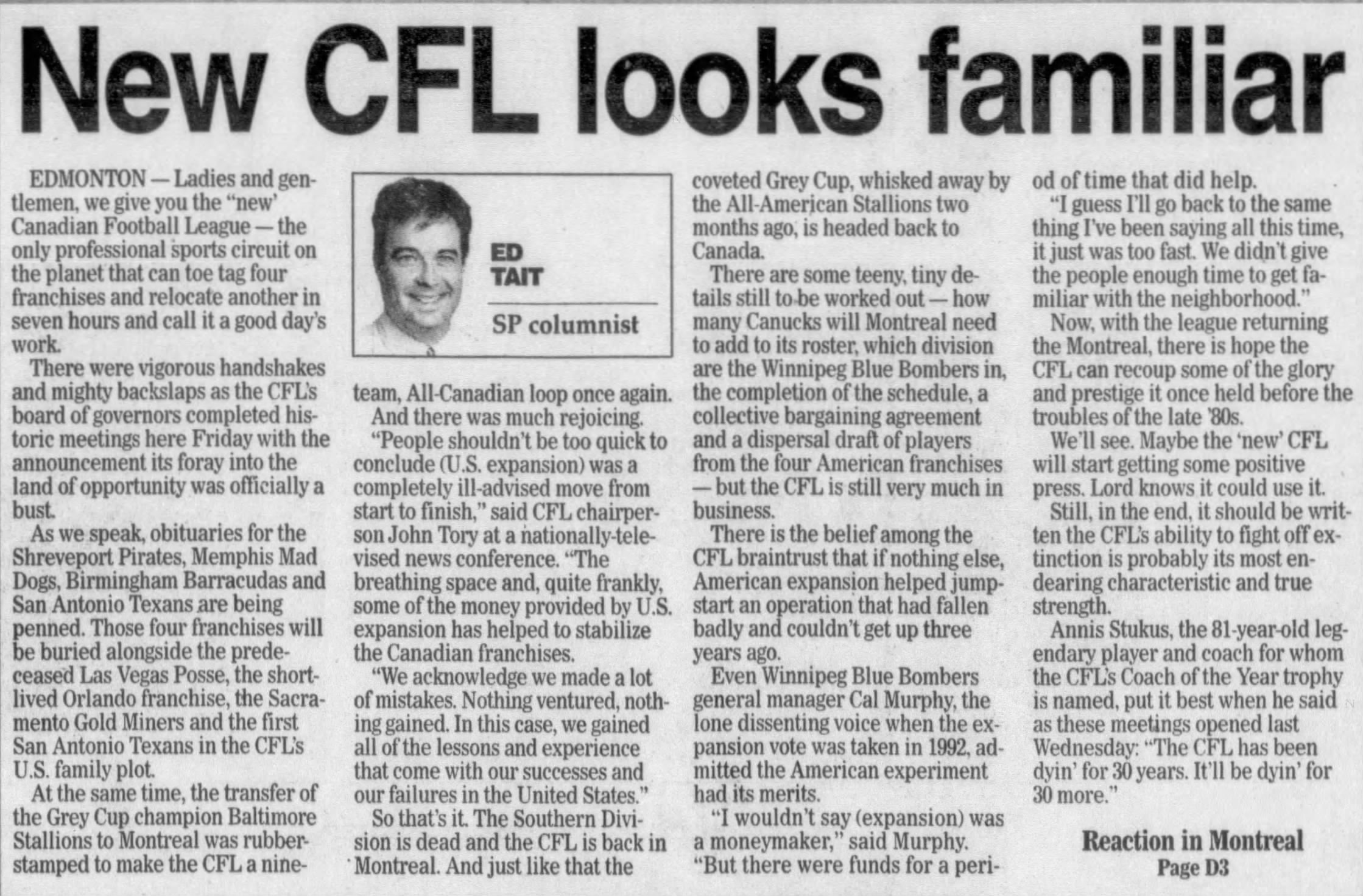
The CFL didn’t close the door permanently on future U.S. expansion and hinted that American teams could possibly return to the league in 1997. But most agreed that was unlikely and that the CFL was going to stick with its new, old all-Canadian lineup.
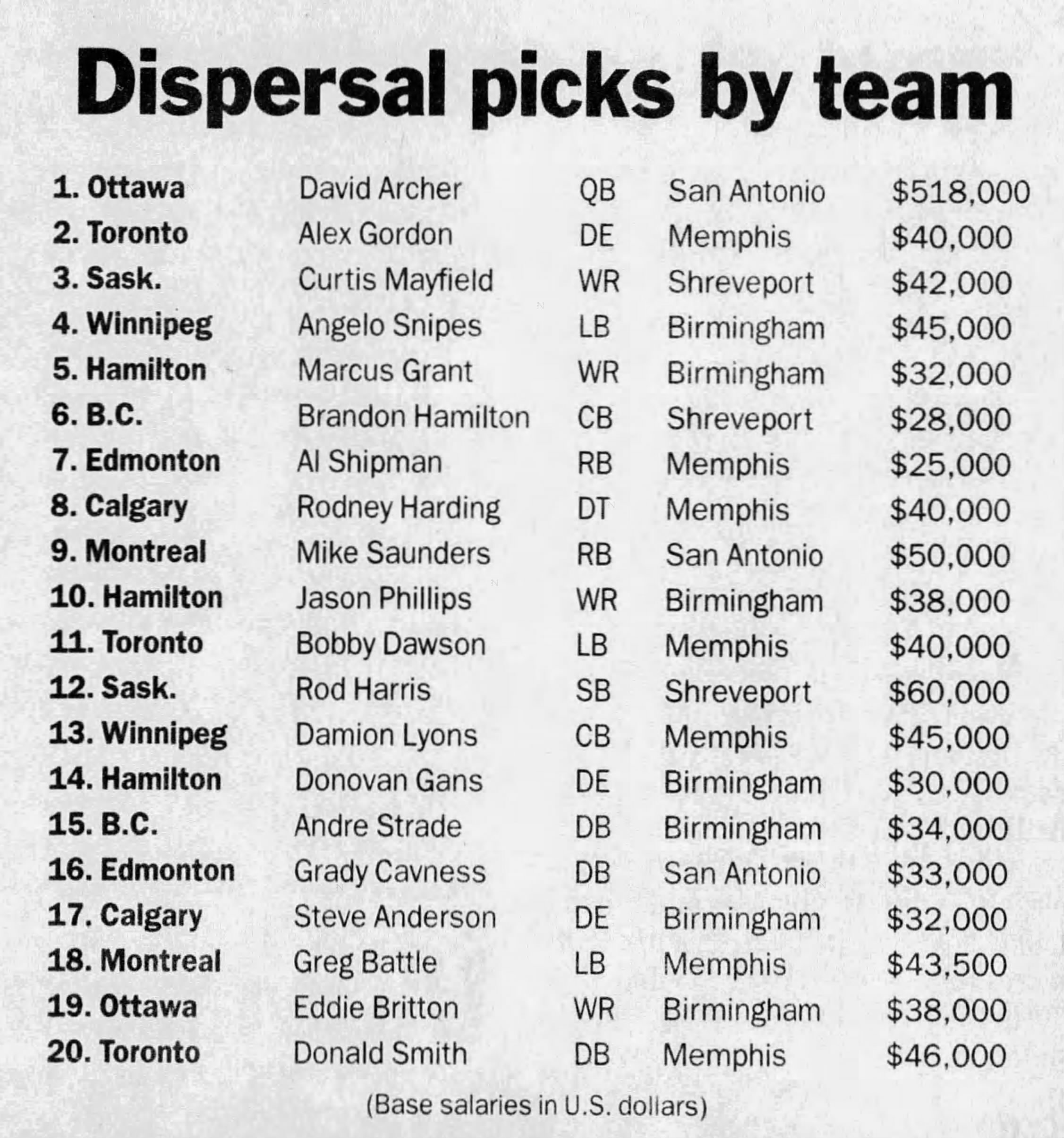
The players signed to the now folded American teams were put into a dispersal draft and divvied up amongst the nine Canadian teams. San Antonio’s quarterback David Archer was chosen first overall by Ottawa. A special expansion draft was held as well to help stock the reincarnated Montreal Alouettes with Canadian players.
The 1996 CFL season kicked off on June 23 in Regina. Four days later, the first CFL game played in Montreal in almost a decade saw the Toronto Argonauts defeat the Alouettes 27-24.
With the CFL’s exit from the U.S., the league launched a bold new marketing campaign highlighting its Canadian roots and unique brand of football. The American dream was no more. The CFL entered its Radically Canadian era.
Sources:
Edmonton Journal, 3 February 1996
Montreal Gazette, 3 February 1996
Ottawa Citizen, 8 March 1996
Saskatoon Star Phoenix, 3 February 1996




Leave a Reply